Trump’s proposed $2,000 tariff checks have ignited a heated debate on their feasibility and potential impact.
Story Snapshot
- Trump proposes $2,000 checks funded by tariff revenue.
- Checks target mid-2026 for distribution.
- Legislative approval and agency confirmation are pending.
- Experts question feasibility and economic impact.
Trump’s Tariff Check Proposal
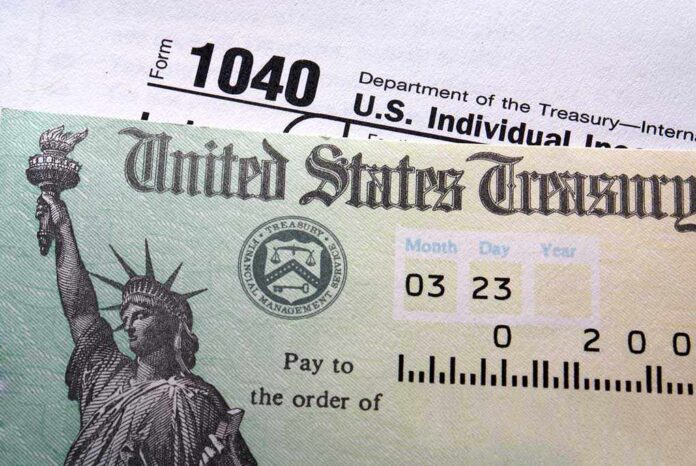
President Donald Trump has unveiled a plan to distribute $2,000 “tariff dividend” checks to Americans, drawing from tariff revenue rather than traditional tax sources. Aimed for mid-2026, these checks are part of Trump’s campaign strategy to bolster voter support. Despite the bold promise, this proposal lacks formal legislative backing and confirmation from relevant federal agencies. Experts are skeptical about the feasibility, citing concerns over cost, economic impact, and the reliability of tariff revenue as a funding source.
Trump’s allies are fervently lobbying Congress to pass this initiative, yet no formal bill has been introduced as of November 2025. The proposal is distinct in its use of tariff income, a revenue stream that arose during the trade wars of the Trump administration from 2018 to 2020. These tariffs, primarily targeting imports from China, generated significant revenue. However, the volatility of this income raises questions about its sustainability for funding nationwide payments.
Historical and Economic Context
Direct cash payments to citizens are not a novel concept in U.S. economic policy. During the Great Recession and the COVID-19 pandemic, the federal government issued stimulus payments to alleviate economic hardship. These were typically funded by federal tax revenue and borrowing. Trump’s current proposal diverges by using tariffs, marking a shift in the funding mechanism and timing. Yet, the plan remains a campaign promise rather than an established policy, with ongoing legislative discussions but no concrete action.
The U.S. economy is grappling with inflationary pressures, and while direct payments are appealing to voters, the means of financing such initiatives are contentious. The proposal’s impact on the economy, federal debt, and inflation is a matter of debate among economic experts, who caution against relying on tariffs as a stable funding source. The potential for increased consumer spending must be weighed against the risk of exacerbating inflation and federal debt.
Stakeholders and Their Roles
Key stakeholders in this initiative include Donald Trump and his campaign allies, who are the primary advocates. The U.S. Congress holds the authority to approve legislation and funding, while the Treasury Department would be responsible for administering the payments if the plan proceeds. Economic experts and the Federal Reserve provide analysis on the feasibility and economic implications, though they lack decision-making power.
Trump allies urge Congress to back his $2,000 tariff checks as president claims they’ll be sent in ‘mid 2026’ https://t.co/J9MGWA4n7Y
— chatEMPIRE (@Chatempireng) November 18, 2025
For Congress, the challenge lies in balancing fiscal responsibility with political pressures. Trump’s allies are pushing hard to sway legislative action, hoping to shape public opinion and build momentum for the proposal. The American public, as potential recipients of the checks, stands to gain direct financial benefits, making this a politically charged issue with significant implications for the upcoming 2026 midterm elections and beyond.
Current Developments and Expert Analysis
As of November 2025, Trump’s proposal is mired in political and economic debate. No formal legislative action has been taken, and no federal agency has confirmed the program. Trump’s assertion of sending checks by mid-2026 remains a campaign pledge rather than a confirmed policy. Economic experts are divided, with many questioning the reliability of tariff revenue to fund such a large-scale initiative. They warn of potential negative economic effects, including inflation and increased federal debt.
Supporters argue that direct payments provide immediate relief and are a fair use of tariff revenue. Critics, however, highlight the logistical, economic, and political challenges involved. The proposal’s future hinges on congressional action, agency confirmation, and the broader economic context. As discussions continue, stakeholders must consider the long-term implications for the U.S. economy and political landscape.
Sources:
Axios: Trump’s $2,000 tariff checks would cost $450B, study says
LiveNOW FOX: Tariff dividend: Trump says when he thinks checks would be issued
AZCentral: When will the $2000 stimulus check come? Here’s what Trump says