A catastrophic train collision in Spain has exposed decades of ignored infrastructure problems and regulatory failures, raising serious questions about government oversight of critical transportation systems.
Story Snapshot
- Two high-speed trains collided near Córdoba, Spain, killing 39 and injuring 292 after one derailed on “perfectly renovated” track
- The Madrid-Andalusia rail line suffered 18+ incidents since 2022, including cable thefts and power failures, with no corrective action taken
- Transport Minister calls crash “tremendously strange” despite €700 million in recent track upgrades completed in May 2025
- All high-speed services suspended indefinitely, stranding thousands and disrupting Spain’s critical transportation network
Deadly Collision Exposes Infrastructure Negligence
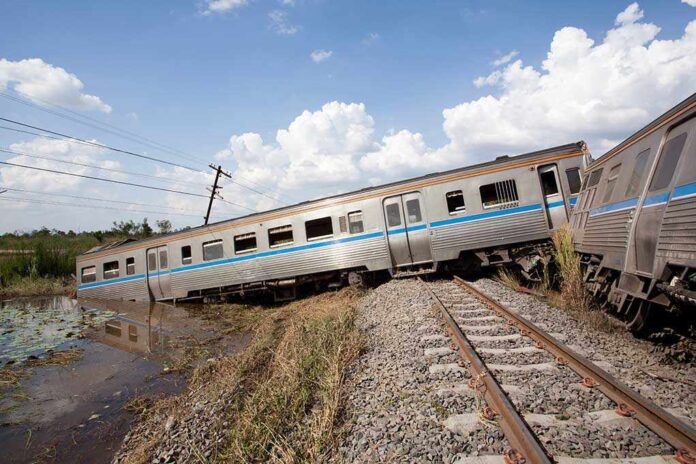
On January 18, 2026, an Iryo high-speed train carrying approximately 300 passengers derailed near Adamuz, Córdoba, crossed into oncoming traffic, and collided head-on with a Renfe train traveling from Madrid to Huelva. The crash occurred at 7:39 PM on a straight section of track that officials described as being in “perfect condition” following a €700 million renovation completed just eight months earlier. The collision sent Renfe’s front carriages tumbling down a 4-meter embankment, killing at least 39 people and injuring 292 others.
Pattern of Ignored Safety Warnings
The disaster highlights a troubling pattern of regulatory indifference that should alarm anyone concerned about government accountability. Since 2022, the Madrid-Andalusia line experienced more than 18 serious incidents, including signaling failures, overhead power line problems, and frequent cable thefts in rural areas. Despite these repeated warning signs, transportation authorities took no meaningful corrective action. This represents exactly the kind of bureaucratic negligence that undermines public safety and wastes taxpayer resources through reactive rather than preventive measures.
Emergency Response Hampered by Remote Location
Rescue operations proved extraordinarily challenging due to the crash site’s remote location near Adamuz, with darkness complicating nighttime efforts. Passengers were forced to break windows to escape the wreckage while local residents provided blankets and water. Emergency teams deployed 15 vehicles and 40 personnel, including firefighters, the Military Emergencies Unit, Red Cross, and Civil Guard. Transport Minister Óscar Puente acknowledged the rescue teams’ heroic efforts while expressing bewilderment at how such a catastrophic failure could occur on recently upgraded infrastructure.
The casualty count steadily climbed throughout the night, rising from an initial 21 deaths to 39 confirmed fatalities by early January 19. Of the 292 injured passengers, 122 required hospitalization, with 15 listed in critical condition. Antonio Sanz, Andalusia’s Health Chief, described it as a “very difficult night” for regional medical facilities overwhelmed by the sudden influx of trauma patients requiring immediate care.
Systemic Failures Demand Accountability
This tragedy exposes fundamental problems with Spain’s approach to infrastructure management that mirror issues seen in other government-controlled systems. The involvement of both private operator Iryo and public operator Renfe creates potential conflicts over liability and responsibility. Prime Minister Pedro Sánchez has promised a thorough investigation, but citizens deserve answers about how €700 million in upgrades failed to prevent a crash that Minister Puente admits is inexplicable given the track conditions and modern equipment involved.
The immediate suspension of all Madrid-Andalusia high-speed services demonstrates the broader impact of this regulatory failure on Spain’s transportation network. Thousands of passengers found themselves stranded, with stations from Madrid’s Atocha to Córdoba forced to remain open overnight. This disruption will have lasting economic consequences for tourism and business travel, while raising serious questions about the reliability of government-managed infrastructure projects across Europe’s high-speed rail networks.
Sources:
High-speed trains collide after one derails in southern Spain, killing at least 21
21 killed, 100 injured after high-speed train collision in Spain