Could America soon operate without an income tax, relying solely on tariffs for government funding?
Story Overview
- Trump proposes eliminating federal income tax for Americans earning under $150,000.
- Plan suggests replacing lost revenue with tariffs on imported goods.
- The proposal is viewed as a bold shift from taxing citizens to taxing imports.
- Democrats express skepticism, citing economic risks and legislative challenges.
Trump’s Bold Tax Proposal
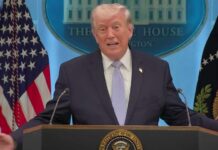
In a move that could redefine American taxation, President Donald Trump has proposed eliminating federal income taxes for individuals earning under $150,000 annually. He suggests replacing the lost revenue with tariffs on imported goods, reviving a 19th-century approach to funding the government. This proposal comes during Trump’s second term, with Commerce Secretary Howard Lutnick describing it as an aspirational goal tied to balancing the federal budget. The idea was further amplified in a CBS News interview, where Lutnick detailed the plan’s ambition.
Trump reiterated the concept during a Thanksgiving call to service members, claiming that the revenue from tariffs would be “so enormous” it could fund the government without needing income taxes. Such a plan could potentially relieve 76-90% of Americans from federal income tax obligations, as most earners fall under the $150,000 threshold. However, the proposal has faced pushback from Democrats and economic experts, who warn of the potential risks and feasibility challenges.
Historical Context and Challenges
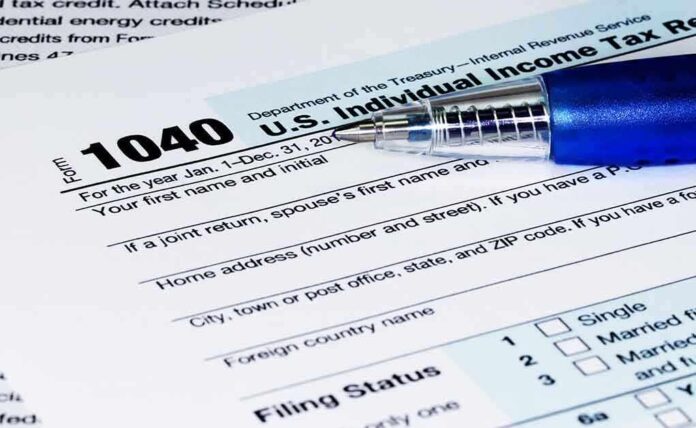
The federal income tax was established by the 16th Amendment in 1913, and abolishing it has been a fringe conservative idea. Trump’s proposal mirrors past initiatives like the FairTax Act, which sought to replace the income tax with a national sales tax. The idea of funding the government through tariffs instead of taxes harks back to the pre-1913 era when tariffs comprised most of the revenue. Trump’s plan, however, is unique in its scale and timing, coming amid a narrow GOP majority in Congress and aggressive tariff hikes.
Critics argue that while the proposal might sound appealing, the math doesn’t add up. Economic analysts highlight that relying solely on tariffs could lead to significant revenue shortfalls, inflation, and higher consumer prices. The plan’s feasibility depends heavily on legislative approval and the economic impact of heightened tariffs, which could strain trade relations and affect domestic prices.
Impact and Implications
If implemented, the proposal could have far-reaching implications. In the short term, it could relieve a significant portion of Americans from federal income taxes, providing financial relief to low and middle-income earners. However, the long-term impacts could include revenue shortfalls, inflation, and increased consumer prices due to tariffs acting as a “hidden consumer tax.” The proposal also raises concerns about the sustainability of funding social programs like Social Security, which could face a $1.5 trillion shortfall over ten years without income tax revenue.
The political implications are significant, as the proposal becomes a rallying cry for the GOP while facing strong opposition from Democrats. The debate highlights a broader ideological divide over taxation and funding government operations, with Trump’s proposal representing a significant shift towards economic nationalism and populism.
Expert Perspectives
Industry experts and analysts offer mixed opinions on the proposal. The Tax Policy Center points out the potential fiscal costs of exemptions and the unmodeled nature of a full income tax elimination. Analysts caution that tariffs, while potentially lucrative, act as indirect taxes on consumers, ultimately raising prices. Some experts suggest exploring targeted tariffs and a simpler tax code as more viable alternatives.
Proponents argue that the proposal could return America to a “richer” era before the income tax, while opponents raise concerns about economic chaos and the risk of Supreme Court challenges. The proposal remains aspirational, with no formal policy released, and faces significant hurdles in Congress and among economic experts who question its feasibility and impact.