
A U.S. Navy fighter jet fired live cannon rounds at an Iranian oil tanker in international waters, disabling it amid a fragile ceasefire and fragile peace talks—highlighting how elite-driven foreign entanglements risk dragging Americans into endless conflicts.[3][4]
Story Snapshot
- U.S. F/A-18 Super Hornet from USS Abraham Lincoln disabled M/T Hasna’s rudder with 20mm cannon fire after warnings.[1][3][4]
- Incident enforces Trump administration’s April 12 blockade of Iranian ports during four-week ceasefire.[2][3]
- Second such Navy action; prior destroyer disabled another vessel last month.[1][2]
- No video, crew statements, or legal basis publicly released, fueling transparency concerns.[3][6]
- Action ties to Project Freedom amid rising U.S. gas prices over $4/gallon from Strait disruptions.
Incident Details in Gulf of Oman
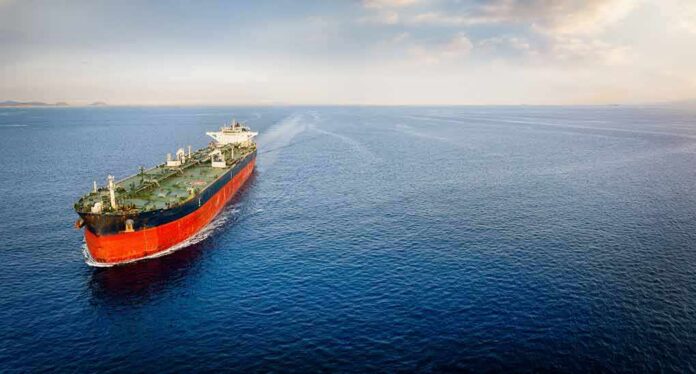
U.S. Central Command forces observed the Iranian-flagged, unladen oil tanker M/T Hasna transiting international waters toward an Iranian port in the Gulf of Oman on May 6, 2026, around 9 a.m. Eastern Time. American forces issued multiple warnings, informing the vessel it violated the U.S. blockade imposed April 12 via President Trump’s Truth Social announcement. The crew failed to comply.[1][3][4]
A Navy F/A-18 Super Hornet, launched from the aircraft carrier USS Abraham Lincoln (CVN 72), fired several 20mm cannon rounds at the tanker’s rudder. This precise strike disabled the vessel without sinking it or reporting casualties. CENTCOM stated Hasna is “no longer transiting to Iran,” marking the first confirmed use of aircraft cannon against a blockade runner.[1][2][3]
Blockade Context and Prior Enforcement
The blockade targets ships entering or departing Iranian ports as part of Project Freedom, securing the Strait of Hormuz after Operation Epic Fury concluded. Last month, USS Spruance fired inert rounds into M/V Touska’s engine room in the Arabian Sea, disabling it before Marines boarded. U.S. forces also sank six Iranian small boats threatening civilian ships.[1][2][7]
This incident occurred during a four-week ceasefire, as President Trump pressures Iran for a deal to end the war and reopen shipping lanes. CENTCOM emphasized forces act “deliberately and professionally” to ensure compliance, with the blockade remaining in full effect.[3][4][5]
“U.S. forces disabled the tanker’s rudder by firing several rounds from the 20mm cannon gun of a U.S. Navy F/A-18 Super Hornet launched from USS Abraham Lincoln (CVN 72). Hasna is no longer transiting to Iran.” https://t.co/KP0XSS57xR
— Lucas Tomlinson (@LucasFoxNews) May 6, 2026
Unresolved Questions and Broader Risks
No public video, radar logs, audio of warnings, or post-incident boarding reports confirm the tanker’s course or crew response. CENTCOM released no imagery or squadron details. The blockade lacks cited UN resolutions or congressional authorization beyond Trump’s announcement, raising international law questions.[3][6]
Americans across the political spectrum face $4-plus gas prices from Strait tensions, straining families and farms amid elite negotiations. Conservatives decry globalist entanglements eroding America First; liberals worry about endless wars widening divides. Both see government prioritizing foreign adventures over domestic dreams, echoing deep state frustrations.
Sources:
[1] The Latest: US military fires on Iranian-flagged oil tanker as Trump presses for deal to end war
[2] Trump puts Iran deal on the clock with one-week ultimatum, Fox host says
[3] US forces fire at, disable Iran-flagged tanker trying to evade blockade
[4] Navy Super Hornet fires on, disables Iranian tanker attempting to run blockade
[5] US military fires on Iranian-flagged oil tanker in Gulf of Oman
[6]
[7] US fires on Iranian oil tanker as Trump pressures Tehran for deal to …