Russia and Belarus just practiced how to fight – and potentially fire – a nuclear war on NATO’s doorstep, while insisting it is all just “defensive.”
Story Snapshot
- Moscow and Minsk ran the Zapad 2025 war games, openly rehearsing non-strategic nuclear operations and hypersonic missile use near NATO borders.
- Belarus claims the drills were about repelling a “hypothetical enemy,” but scenarios and locations point straight toward Poland and Lithuania.
- NATO officers were invited as “observers,” yet Russia deepened nuclear integration with Belarus under its expanding nuclear umbrella.
- The exercises echo the pre-Ukraine invasion pattern, raising hard questions for U.S. defense, deterrence, and Trump-era America First policy.
Zapad 2025: Nuclear Rehearsal Framed as ‘Defensive’ Drill
Russian and Belarusian forces gathered roughly 13,000 troops for the Zapad 2025 exercise, a recurring set of war games now explicitly tied to nuclear planning and deployment near NATO’s eastern flank. Belarusian Defense Minister Viktor Khrenin described the scenario as repelling a “hypothetical enemy” and retaking lost territory, language that avoids naming NATO but clearly echoes classic East–West confrontation planning.[1][2] Officials insist the drills are defensive, yet the chosen geography and scale send a very different signal to neighboring states.
The exercise ran across Belarus, western Russia, and adjacent seas, with maneuvers concentrated around Barysaw and in areas near the borders with Poland and Lithuania.[1][2] Belarusian and Russian descriptions emphasized command-and-control procedures for non-strategic nuclear weapons, including planning for their potential use and practicing how decisions would move from political leaders to battlefield commanders.[3][4] This is no mere tabletop discussion: it is a rehearsal of how to fight through a nuclear crisis, not simply how to avoid one, and it tightens Moscow’s grip over Belarusian defense policy.
𝗕𝗥𝗘𝗔𝗞𝗜𝗡𝗚 Belarus has launched battlefield nuclear weapons drills in coordination with Russia.
Belarus confirmed on May 18 that its military has begun exercises focused on the deployment and operational use of tactical nuclear weapons stationed inside the country.
The… pic.twitter.com/1G1n0GM4I5— Bagelis Poulos (@BagelisPoulos) May 18, 2026
Nuclear-Capable Missiles and Simulated Strikes Near NATO Territory
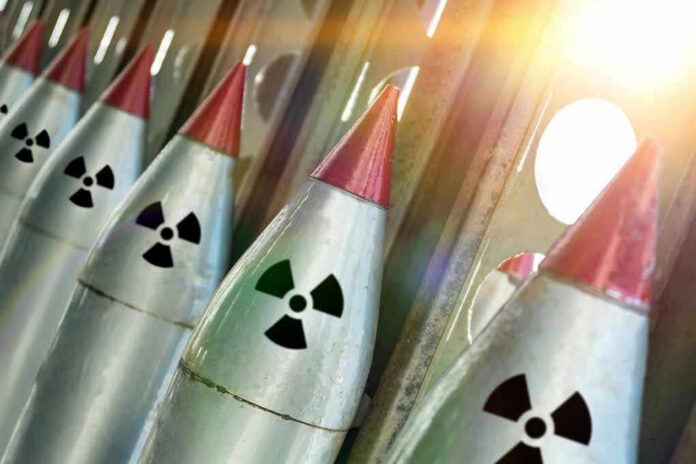
Reporting from multiple outlets confirms that Zapad 2025 included what Belarusian officials called “planning and the consideration of the application of non-strategic nuclear weapons,” along with evaluation and deployment drills for the Oreshnik mobile intermediate-range missile system.[3][4] Russia first unveiled Oreshnik in a 2024 strike on Ukraine, and it is understood to be a hypersonic ballistic missile capable of carrying nuclear or conventional warheads, dramatically shrinking warning times for any target in Europe.[3][4] Incorporating this system into Belarus-based exercises highlights how close Russia wants those capabilities to NATO borders.
Belarusian strongman Alexander Lukashenko has publicly confirmed that his forces practiced launches of tactical nuclear weapons alongside Russian units, while Russian videos showcased nuclear-capable Iskander-M missile units operating in neighboring Kaliningrad.[3] Belarus had already agreed to host Russian nuclear weapons under a security treaty, and Zapad 2025 effectively operationalized that political decision by integrating Belarus under Russia’s nuclear umbrella in doctrine and training.[3][4][5] For Americans watching from afar, this means another Kremlin-aligned regime, deeply hostile to Western interests, now trains routinely with theater nuclear options aimed at our allies and bases.
Transparency Theater: NATO Observers and Western Alarm
Minsk tried to blunt criticism by inviting military attachés from nine North Atlantic Treaty Organization (NATO) states, including U.S. officers, to observe portions of the drills and touting the move as proof of “openness and transparency.”[2] Belarusian media even highlighted footage of two U.S. Air Force lieutenant colonels shaking hands with Khrenin as cameras rolled.[2] That stagecraft does not change the substance: these same observers watched simulated nuclear strikes, urban assaults, and operations against so‑called “illegal armed groups,” a catch-all label Russia has used before for opposition forces.[2][3]
NATO states, especially Poland and Lithuania, responded with heightened alert and their own exercises earlier in the summer, treating Zapad 2025 as a serious escalation rather than a routine training event.[2][4] Analysts point out that the last large Russia–Belarus drill cycle on this scale preceded the 2022 full‑scale invasion of Ukraine, when Moscow used “exercises” to position troops and equipment for offensive operations.[4] That history erodes any trust in current assurances from Minsk and Moscow, and it reinforces why many in the West see these nuclear-linked drills as coercive signaling or rehearsal for potential aggression, not harmless deterrence.
What It Means for U.S. Security and America First Policy
For American conservatives, the message is clear: while Washington liberals once chased climate summits and globalist talking points, Moscow steadily pushed nuclear forces closer to our allies, betting that a distracted West would blink. Russia’s decision to treat Belarus as an extended launchpad, complete with hypersonic-capable systems like Oreshnik and tactical warhead infrastructure, raises the stakes for any crisis in Eastern Europe.[3][4][5] Every new exercise normalizes the idea of nuclear use in regional conflict, something no serious defender of Western civilization can ignore.
Trump’s America First approach demands a sober, interests-based response rather than panic or appeasement. That means pressing European allies to shoulder real defense burdens, hardening U.S. bases and missile defenses, and refusing to let global institutions or arms-control rhetoric mask what is happening on the ground. At the same time, Americans must recognize that reckless spending, energy dependence, and open-ended foreign commitments weaken our hand exactly when adversaries are practicing how to fight under a nuclear shadow. Zapad 2025 is a reminder: strength, clarity, and constitutional government at home are the best answer to nuclear posturing abroad.
Sources:
[1] YouTube – Zapad 2025 | Russia & Belarus Unleash Massive Nuclear-Linked Drill
[2] Web – Russia and Belarus Stage Simulated Nuclear Strike During Zapad …
[3] Web – Belarus, Russia Practice Nuclear Operations
[4] Web – Russia-Belarus military drills start this week. Here’s what to know
[5] Web – Nuclear weapons in Belarus: What we Know – ICAN