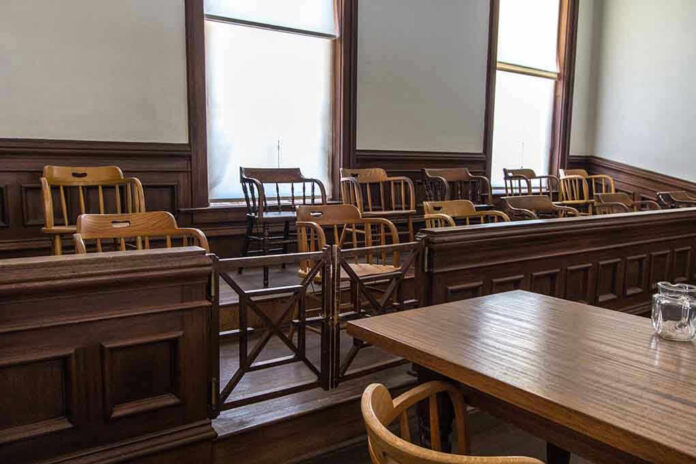
An accused Trump assassin’s claim of racism in jury selection exposes courtroom tensions while raising alarms about ongoing threats to America’s leaders and the erosion of common-sense justice.
Story Snapshot
- Ryan Routh, accused of attempting to assassinate Donald Trump, is representing himself in a high-stakes federal trial in Florida.
- Routh publicly accused prosecutors of racism after two Black jurors were struck, triggering a Batson challenge and heated courtroom debate.
- The trial follows a recent wave of political violence, including a separate attempt on Trump’s life just weeks prior.
- The episode highlights persistent risks to political figures and exposes cracks in the justice system’s handling of high-profile threats.
Accusation of Racial Bias Disrupts High-Profile Trial
Jury selection in the federal trial of Ryan Routh, charged with the attempted assassination of Donald Trump, quickly escalated into controversy as Routh accused federal prosecutors of racism in open court. Routh, acting as his own attorney, filed a Batson challenge—alleging racial bias after two Black potential jurors were struck from the pool. Judge Aileen Cannon, presiding in Fort Pierce, Florida, denied the challenge after prosecutors cited language barriers and claimed no knowledge of the jurors’ race. The tense exchange underscores how courtroom procedures can become battlegrounds for wider debates, even as current and former president’s lives remain central to the case.
Routh’s outburst and self-representation mark a unique chapter in the federal prosecution of attempted political assassinations. With limited legal training and only restricted access to standby counsel, Routh faces an uphill battle against experienced federal attorneys seeking conviction on serious charges, including attempted assassination of a major presidential candidate and firearms violations. The jury ultimately seated consists of 12 members—seven women and five men, with a racial makeup including four white men, one Black man, six white women, and one Black woman—plus four white alternates. The composition immediately became a flashpoint as Routh insisted the jury lacked sufficient Black representation, further inflaming already high tensions.
Heightened Security and Legal Scrutiny After Prior Attacks
The Routh trial unfolds in the wake of another attempted assassination targeting Trump in Pennsylvania just weeks earlier. In that incident, Trump was grazed by a bullet, prompting the Secret Service to overhaul security protocols for all major candidates. Routh allegedly planned his Florida attempt for weeks, aiming a rifle at Trump as he played golf at his West Palm Beach club on September 15, 2024. A Secret Service agent’s rapid intervention forced Routh to flee before firing. The back-to-back attacks illustrate a disturbing surge in political violence, placing unprecedented pressure on law enforcement and the courts to deliver swift, decisive justice and reinforce protections for public figures.
Federal authorities now face rigorous scrutiny—not only to prove the charges against Routh, but also to demonstrate that the justice system can handle high-profile threats without succumbing to procedural distractions or claims of bias. Judge Cannon, already admonishing Routh for improper communication with standby counsel, is tasked with balancing due process against the imperative of maintaining order in a courtroom charged with national significance. Legal experts note that self-representation in federal criminal trials is rare, especially in cases with such high stakes, and warn that procedural missteps could complicate both the trial’s outcome and its public perception.
Broader Implications for Security and Constitutional Values
The implications of the Routh case extend far beyond the fate of one defendant. In the short term, the trial has prompted increased security for political candidates nationwide, as well as renewed debate over the fairness and transparency of jury selection. Long-term, the outcome could set legal precedents on both Batson challenges (claims of racially biased jury selection) and the complexities of self-representation in federal court. For conservatives, the spectacle of a defendant leveraging racial accusations in the aftermath of an attempted assassination on a former and sitting president raises concerns about the justice system’s priorities, the potential for procedural gamesmanship, and the need to remain vigilant against threats to constitutional order and American values.
Alleged Attempted Trump Assassin Complains He Doesn’t Have Enough Black People On Jury https://t.co/0OvDZEme5D
— IJR (@TheIJR) September 10, 2025
As opening statements begin, the trial is expected to last two to four weeks. The proceedings will be closely watched not only for their verdict, but for how the justice system responds to an era of heightened political violence and attempts to undermine the safety of American leaders. Conservatives, in particular, will be following the case as a bellwether for whether the courts can uphold order, resist distractions from progressive narratives, and ensure that those who threaten the nation’s highest offices are held fully accountable.
Sources:
Jury selected in case of man who allegedly tried to kill Trump at golf club
Jury seated at trial of man accused in Trump assassination attempt