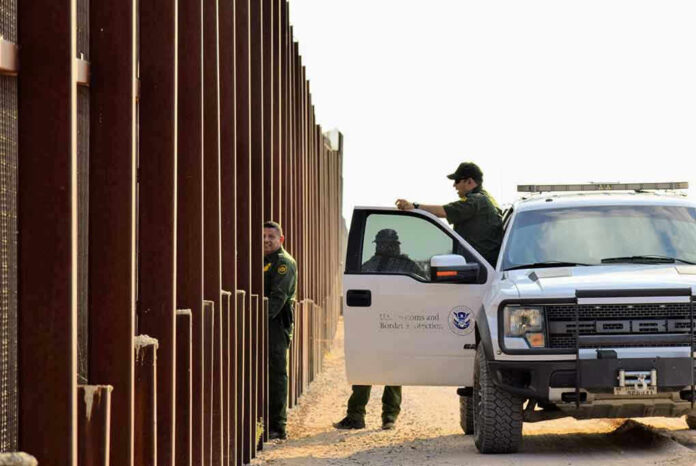
As the U.S. continues to grapple with the complexities of border security, a recent surge in apprehensions at the southern border has highlighted the challenges facing the current administration. Despite a significant drop in at-entry apprehensions, the overall issue remains a contentious point of discussion, especially with new policies and funding allocations aimed at reinforcing border security.
At a Glance
- Apprehensions at U.S. borders have seen a mixed trend, with a notable drop in at-entry apprehensions but overall figures remaining high.
- The current administration has implemented new policies to secure the borders, including the construction of physical barriers and enhanced enforcement.
- A recent reconciliation bill includes significant funding for states supporting border security initiatives, such as Texas’s Operation Lone Star.
- State and local governments are receiving federal funds for border-related enforcement activities.
Border Security Policy Shifts
Recent changes in U.S. border security policy have been marked by a series of executive orders aimed at tightening border control. These orders focus on establishing physical barriers, deterring illegal crossings, and enhancing collaboration with state and local law enforcement agencies. The administration’s policy emphasizes the need to secure the nation’s borders from what it describes as an “invasion,” with measures including the deployment of temporary barriers and increased personnel deployment. The shift in policy has also been accompanied by a travel ban affecting citizens from 12 countries, further tightening entry into the U.S. This move reflects a broader effort to restrict unauthorized immigration, aligning with the administration’s stance on border security.
Funding and Legislative Developments
In May 2025, the House Rules Committee approved a manager’s amendment to the reconciliation bill, which includes significant funding for border-related activities. The bill allocates $12 billion for states supporting immigration enforcement and $10 billion for constructing border barriers. Additionally, $3.5 billion is set aside for reimbursements to state or local governments for immigration-related costs. However, these provisions faced challenges due to reconciliation rules, necessitating clarifications to ensure compliance with existing statutes. These funding measures underscore the federal government’s commitment to bolstering state-led initiatives like Texas’s Operation Lone Star, which has already spent over $11 billion on immigration enforcement.
Operational Successes and Challenges
Customs and Border Protection (CBP) has reported a 93% drop in apprehensions at the southwest border from April 2024 to April 2025, attributed to sustained deterrence and enforcement efforts. This success is partly due to collaborative operations with other federal agencies and state or local law enforcement, such as Operational Tidal Wave in Florida, which resulted in the arrest of over 1,100 criminal noncitizens in a single week. Despite these operational successes, the broader challenge of managing illegal migration remains complex. The administration’s policies have been met with both support and criticism, reflecting the deep divisions in public opinion and political discourse on immigration and border security.
Conclusion
The U.S. border security landscape continues to evolve, with policy shifts and legislative actions aimed at addressing what many perceive as a critical issue. While recent data shows a decline in certain types of apprehensions, the overall debate remains contentious. As the administration pursues its policies, it faces challenges from both within and outside the government, highlighting the enduring complexity of border security in American politics.
Sources:
Tracking 2025 Changes to U.S. Border Security Policy
What’s in the 2025 Reconciliation Bill So Far?
CBP’s Primary Mission Areas in 2025