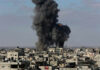


Amidst rising tensions, Israel’s latest offensive on Gaza City ignites a humanitarian crisis, raising international concerns over alleged rights violations.
Story Highlights
- Israel’s ground offensive aims to seize Gaza City, leading to mass civilian displacement.
- Thousands of Palestinians flee as violence and destruction escalate.
- International bodies scrutinize Israel, alleging potential human rights violations.
- Hamas counteroffensive intensifies, complicating the humanitarian landscape.
Israel’s Strategic Offensive and Its Implications
Israel launched a major ground offensive named Operation Gideon’s Chariots II, targeting Gaza City, a key Hamas stronghold. This military action, approved by Israeli leadership, seeks to dismantle Hamas’s military infrastructure and secure hostages. The operation has sparked a mass exodus, with thousands of Palestinian civilians fleeing amidst the chaos. Israel’s strategic objectives include dismantling Hamas’s military presence while imposing new security measures.
In response, Hamas has initiated a counteroffensive, Operation Moses’ Staff, complicating the situation further. The Al-Qassam Brigades, Hamas’s armed wing, continues to resist Israeli advancements, leveraging urban combat tactics. The conflict has resulted in significant casualties on both sides, with civilians caught in the crossfire. Meanwhile, the international community closely monitors the situation, urging restraint and humanitarian relief efforts.
Humanitarian Crisis and International Response
The offensive has exacerbated an already dire humanitarian situation in Gaza City. The Integrated Food Security Phase Classification (IPC) confirmed famine conditions, highlighting the severity of the crisis. Thousands of displaced civilians face shortages of food, water, and medical supplies. International organizations, including the United Nations, have called for immediate humanitarian aid access and ceasefire negotiations to prevent further escalation.
Accusations of potential war crimes have surfaced, with a UN commission report alleging genocide by Israeli forces. This has drawn widespread condemnation and prompted calls for accountability. Israel, however, maintains that the operation is a necessary measure against terrorism and remains committed to minimizing civilian harm. The conflicting narratives underscore the complex dynamics at play in this enduring conflict.
Potential Long-term Consequences
The ongoing conflict could have far-reaching implications for the region. The potential depopulation and destruction of Gaza City raise concerns about the long-term stability and reconstruction efforts. The conflict may further entrench animosities, complicating future peace negotiations. Additionally, regional power dynamics could shift, with increased international pressure on Israel potentially leading to sanctions or legal actions.
As the situation unfolds, the humanitarian sector faces significant challenges in delivering aid amidst the conflict. The international community must navigate diplomatic channels to mitigate the crisis and support affected populations. This complex scenario underscores the urgent need for sustainable solutions to achieve lasting peace in the region.
Sources:
Wikipedia: 2025 Gaza City offensive