

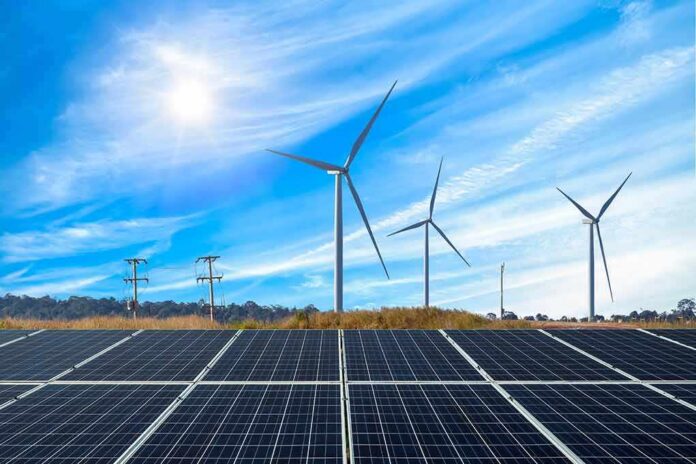
NRDC says President Trump’s energy agenda could erase up to 540 gigawatts of new clean power and raise family power bills.
Story Snapshot
- NRDC projects a loss of 390–540 gigawatts of planned wind, solar, and storage capacity.
- NRDC estimates $700 billion in foregone power investment and an average $230 yearly bill increase.
- The White House says ending clean-energy subsidies protects ratepayers and boosts reliable domestic supply.
- Independent analyses warn rolling back credits tends to raise electricity rates for households.
NRDC’s warning on lost projects and higher bills
Natural Resources Defense Council (NRDC) released an analysis warning that current federal energy actions could slash between 390 and 540 gigawatts of expected wind, solar, and battery projects over the coming decade. The group ties the drop to rolled-back tax credits, new tariffs, and buybacks of offshore wind leases. NRDC says the change would kill about $700 billion in energy investment and raise average household electricity bills by about $230 per year if policies stay on course.
Utility Dive reported the range and drivers of the projected loss, citing NRDC’s policy analysis team. The report says the hit would include projects that had lined up under prior incentives and market trends. The upper end of the range reflects deeper tax credit rollbacks and extended barriers to new grid projects. The analysis frames these losses as foregone additions, not shutdowns of existing plants, which means slower growth rather than a sudden drop in current power supply.
What the White House says the policy is trying to fix
The White House says President Trump moved to end subsidies for wind and solar because they are described as unreliable and often tied to foreign supply chains. A 2025 fact sheet says ending these subsidies supports energy dominance, national security, and the fiscal health of the nation. A 2026 fact sheet adds that domestic oil, natural gas, and coal output rose under Trump, which the administration links to lower consumer prices and more reliable supply.
The administration also highlights a Ratepayer Protection Pledge and efforts to speed permits on federal lands and waters. Officials say faster approvals, more pipelines, and expanded drilling bring down costs and protect families from price shocks. They argue that wind and solar displace steady resources and need backup, making the grid less stable if built too fast. They present these steps as pro-consumer and pro-reliability, not anti-technology for its own sake.
Independent forecasts on electricity prices and timing risks
Outside research groups have tested what happens when federal clean-energy tax credits go away. Resources for the Future projects that repealing technology-neutral credits would raise national average electricity rates by about five to seven percent in 2030, with larger impacts by 2035. That shift translates into an annual bill increase of roughly seventy-five to one hundred dollars per household in their modeling, depending on the scenario and region.
🇺🇸 TRUMP — NEWS FLASH
The NRDC predicts that Trump administration policies, including new tariffs and the removal of tax credits, could cause the US to lose up to 540 GW of renewable energy capacity over the next ten years.$QQQ #SPY #TRUMP
— NasdaqTerminal (@NasdaqTerminal) August 28, 2026
Reuters has also reported that the faster phaseout of credits has driven a rush to finish projects before deadlines. Analysts warn this can push up contract prices for wind and solar, with some early Texas data showing sharp increases. They note that builders face higher borrowing costs and supply constraints, so abrupt policy change can magnify risk. Those factors can slow additions to the grid just as demand rises from data centers, factories, and hotter summers.
Why this fight hits a national nerve
Families on fixed incomes fear higher bills, while many workers fear losing good jobs if projects stall. Communities near oil and gas fields want steady paychecks and local tax dollars. Many people on both sides doubt Washington’s promises. They see lobbyists fighting over subsidies while outages, heat waves, and aging wires still threaten daily life. This shared concern is simple: leaders keep shifting rules, and regular people pay when plans change midstream.
How to read the dueling claims
NRDC’s numbers are large because they count projects that were expected under past rules. Those are not guaranteed builds. Some could be delayed, resized, or moved. The White House points to near-term price relief from more fossil fuel supply, but that does not erase modeling that shows higher long-term rates when clean-energy credits end. The core tradeoff is timing: cheaper power later from steady clean buildouts versus near-term supply from fossil fuels while clean projects slow.
What matters next for consumers
State regulators will decide how much new generation, storage, and transmission gets built. Grid operators will set rules that reward steady supply and fast response. Congress could still tweak tax credits or tariffs, which would change costs again. Households will feel the outcome on monthly bills. If credits fade and permitting stays tight, most models point to slower clean buildout and higher prices. If rules stabilize, financing risk drops, and build costs tend to fall.
Sources:
zerohedge.com, utilitydive.com, nrdc.org, energy.senate.gov
© patriotpostnews.com 2026. All rights reserved.