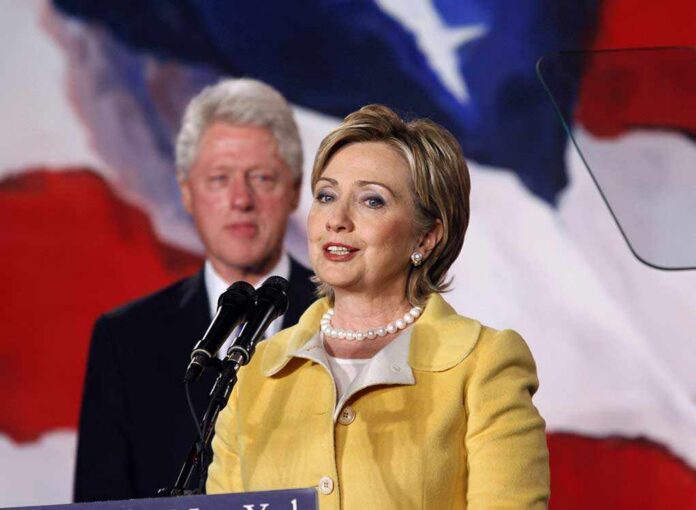
After months of dodging subpoenas, Bill and Hillary Clinton are now agreeing to sit for in-person testimony in a House Epstein probe—only after Congress moved toward contempt.
Quick Take
- The House Oversight Committee secured a major compliance win after the Clintons initially refused in-person testimony and skipped scheduled depositions.
- The Clintons’ agreement is conditional and not fully finalized, with no specific deposition dates publicly set yet.
- Chairman James Comer has not formally dropped contempt pressure, signaling the committee still views enforcement as leverage until testimony happens.
- Official House documentation shows a long paper trail of back-and-forth, including the committee’s insistence that in-person testimony was mandatory.
Subpoena Defiance Collides With Congressional Enforcement
House Oversight and Government Reform Committee investigators are pressing forward with a Jeffrey Epstein-related inquiry that has pulled in high-profile names, including former President Bill Clinton and former Secretary of State Hillary Clinton. After initially resisting, both Clintons notified committee staff on February 2, 2026, that they would accept demands for in-person depositions on mutually agreeable dates. Their reversal came as contempt proceedings were advancing, and the political clock in Washington was running out.
The record laid out in committee materials and related reporting shows the dispute was not a one-off scheduling conflict. Investigators issued subpoenas to ten individuals, and the Oversight Committee later highlighted that only the Clintons stood out for refusing to comply with the in-person requirement. That matters because congressional subpoenas are not suggestions; compliance is a core tool for legislative oversight. When prominent figures refuse, it tests whether Congress will defend its authority or allow delay tactics to become precedent.
A Tight Timeline: Missed Depositions, Written Declarations, and Contempt Votes
The timeline described in the underlying documentation is unusually specific. Bill Clinton failed to appear for a scheduled deposition on January 13, 2026, and instead submitted a written declaration shortly after his required appearance time. His counsel had sent a final letter the prior day laying out reasons for non-compliance, while the committee had already communicated earlier that in-person testimony was mandatory. In January, the committee moved forward on a bipartisan basis with contempt measures after missed depositions.
The pressure intensified as contempt resolutions approached the procedural pipeline. On February 3, 2026, the House Rules Committee postponed advancing contempt of Congress resolutions while negotiations continued. That delay created a narrow window for attorneys and lawmakers to reach terms, but it also underscored that the dispute was not fully resolved. If the committee believes a witness is using negotiation simply to run out the clock, postponement can quickly turn back into a vote—especially when public interest is high.
Why the Clintons Reversed Course—And What Still Isn’t Settled
The Clintons’ attorneys indicated they would appear for depositions if the committee agreed not to move forward with contempt proceedings. Chairman James Comer, however, publicly signaled that he was not immediately dropping criminal contempt pressure and that deposition dates had not yet been provided. That gap is central: agreeing “in principle” is not the same as showing up under oath at a set time and place. Until dates are locked, the committee’s leverage remains the prospect of enforcement.
The available reporting also captures the Clintons’ earlier framing of the investigation as political theater aimed at embarrassing President Trump’s political rivals. That claim is an assertion by the witnesses, not a factual finding about the probe’s merit. What is documented is simpler and more concrete: subpoenas were issued, the committee insisted on in-person testimony, and the Clintons initially refused that condition. The committee’s approach suggests lawmakers viewed the testimony as relevant to Epstein’s network and contacts.
Oversight Power, Rule-of-Law Expectations, and Public Confidence
For Americans frustrated by years of selective accountability in Washington, the biggest immediate consequence is procedural: the Oversight Committee appears to have reasserted that high-profile political figures cannot simply ignore subpoenas without consequences. That principle is tied to constitutional checks and balances, because Congress cannot investigate effectively if witnesses can stonewall until the news cycle changes. The Clintons’ conditional capitulation, coming just as contempt measures loomed, highlights why enforcement tools exist.
Longer term, the substance of any deposition could shape what the public learns about Epstein’s relationships and the broader system that protected well-connected people for years. At this stage, the reporting does not describe what the Clintons will say or what documents may be produced, and the terms remain unsettled. What is clear is that the committee is treating compliance as the baseline—and, for now, that posture is forcing movement from witnesses who previously resisted.
The next key milestone is straightforward: firm dates, sworn testimony, and a clear decision on whether contempt is withdrawn or merely delayed. If the committee backs off too early, it risks signaling that defiance pays. If it keeps pressure until depositions are completed, it reinforces a basic standard most Americans already live under: when you are lawfully summoned, you show up and answer questions—no special rules for powerful families.
Sources:
Bill and Hillary Clinton will now testify before Congress