The most unsettling part of the Renee Good shooting is not just that an ICE agent killed her, but that his own video captures him spitting out “f**king b**ch” as she lay dying, forcing Americans to confront what that says about power, restraint, and respect for life.
Story Snapshot
- A Minneapolis ICE operation ended with driver Renee Nicole Good fatally shot on January 7, 2026.
- The shooter recorded the encounter on his own phone, capturing both gunfire and his reaction.
- His words “f**king b**ch” after firing now define public perception more than any official memo.
- The case crystallizes long‑running debates over federal force, video evidence, and basic human dignity.
A fatal stop in a city already on edge
Minneapolis residents woke up to learn that yet another law-enforcement killing had unfolded on their streets, this time involving a federal immigration officer rather than a city cop. On January 7, 2026, ICE agents attempted to stop a vehicle driven by Renee Nicole Good, and within moments, gunfire turned a routine roadway into a crime scene. The precise mechanics, how fast the car moved, what commands were shouted, remain locked in investigative files and the agent’s own phone.
Local TV did not need dramatic narration to make people watch; the raw angle from inside the ICE vehicle did that on its own. Viewers saw what the agent saw in the seconds before he fired, then heard his voice cut through the ringing aftermath. However investigators later frame the threat assessment, the immediate human story is brutally simple: a woman is shot dead during a federal enforcement contact, and the only unfiltered commentary comes from the man who pulled the trigger.
When the camera belongs to the shooter
The most striking feature of this case is not that video exists, but whose hands held the camera. Unlike a standard police body-cam, this was a phone in the ICE agent’s own vehicle, capturing his perspective and emotions without the usual institutional framing. For a public deeply skeptical of edited statements and polished press conferences, that vantage point carries unusual weight. It strips away the distance between citizen and state and allows viewers to listen in on the raw moment power is exercised.
From a conservative, law-and-order perspective, video should, in theory, be a friend to any officer who acted reasonably under threat. Americans who respect the rule of law expect dangerous jobs to be done firmly but fairly. That is precisely why the language caught on this recording is so jarring. If the force was necessary, many citizens can accept that harsh reality; what they struggle to square with common-sense decency is an officer cursing a mortally wounded woman instead of immediately demonstrating calm control and a focus on preserving life.
Language, character, and the trust problem
Americans understand that high-adrenaline encounters trigger ugly words. They also know that government agents carry both weapons and enormous discretion, and that character under stress matters. The phrase “f**king b**ch,” aimed at Renee Good in the seconds after bullets flew, does more than offend polite sensibilities; it raises hard questions about mindset, respect, and whether contempt seeped into a split-second judgment. That is exactly why the audio has become the shorthand for the entire incident.
No serious observer should pretend that one expletive automatically proves unlawful conduct. But dismissing the language as meaningless also misreads how trust works in a constitutional republic. Citizens give armed agents extraordinary authority on the assumption they will act with restraint and basic respect for the human beings they encounter, including suspects. When the only unscripted glimpse we get sounds more like a bar fight than a disciplined professional, it feeds a broader narrative that some corners of federal enforcement see certain lives as disposable.
Minneapolis, ICE, and the politics of video
This shooting did not occur in a vacuum. Minneapolis still lives with the scars and reforms that followed the killing of George Floyd, and residents now view every fatal encounter through that lens. Into this environment steps ICE, a federal agency already polarizing in national politics. Supporters argue it enforces duly enacted laws and protects communities; critics charge it with heavy-handed tactics and inadequate accountability. A phone video of a fatal shot, followed by a crude insult, drops squarely into that preexisting fight.
For conservatives who prioritize secure borders and strong enforcement, this creates an uncomfortable tension. They reject efforts to abolish ICE or handcuff officers facing legitimate threats, yet they also insist that government power be constrained by moral standards and clear rules. The Good case tests whether leaders will defend the principle of robust enforcement while still demanding higher expectations of professionalism than what the video suggests. Shrugging off the optics and tone as irrelevant would concede the moral high ground.
What accountability should look like
Reasonable people across the spectrum should agree on a few basics. First, full facts matter more than cherry-picked clips. Investigators must scrutinize the totality of the encounter—vehicle movement, commands, alternatives to shooting, and policy on firing into cars. Second, the agent’s words, captured in his own hand, are evidence about his state of mind that jurors, internal reviewers, and citizens have every right to weigh. Transparency on both fronts is the only path to legitimate outcomes.
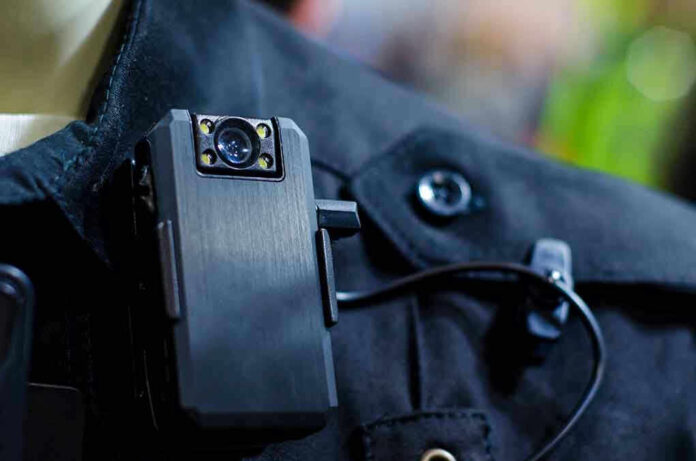
Beyond this specific case, conservatives who value limited but effective government have an opportunity to lead on reforms that strengthen trust without neutering officers. Standardized cameras for federal agents, clear rules for releasing footage, and serious consequences for unprofessional post-incident conduct could align enforcement practice with community expectations. The alternative is a slow erosion of legitimacy, where each new video, especially one like this, recorded by the shooter himself, pushes more Americans to doubt whether those with badges see the people they confront as fellow citizens or just problems to be crushed.