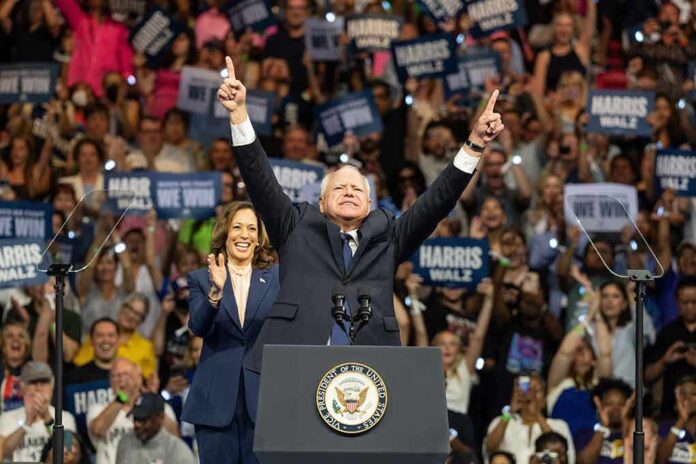
Governor Tim Walz’s decision to exit Minnesota politics amid scandals raises questions about leadership and accountability.
Story Snapshot
- Tim Walz, embroiled in scandals, will not seek a third term as Minnesota Governor.
- The Feeding Our Future fraud case and handling of an ICE-related shooting highlight controversies.
- Walz’s tenure marred by delayed response to George Floyd riots and COVID policies.
- His exit is seen as a victory by critics, aligning with broader Democratic challenges.
Walz’s Controversial Tenure
Tim Walz, a Democrat, first took office as Minnesota Governor in 2019. His leadership faced scrutiny over several issues, notably the Feeding Our Future scandal, where 90 individuals allegedly misappropriated funds intended for child nutrition. This scandal, among others, has cast a long shadow over his administration, drawing criticism from various quarters, especially conservatives who view his governance as emblematic of broader Democratic failings.
The controversy extends to Walz’s handling of an ICE-related shooting in Minneapolis. Walz prematurely blamed an ICE agent for the incident involving Renee Good, which many saw as an attempt to prioritize immigrant protection over law enforcement accountability. This incident further fueled the narrative that Walz’s leadership often placed him at odds with federal immigration enforcement.
Scandals and Leadership Challenges
Walz’s tenure has been punctuated by significant challenges. His response to the 2020 George Floyd riots drew criticism for the delayed deployment of the National Guard, an action that many believed exacerbated the unrest. Moreover, his COVID-era policies, including a public reporting line for violations, were seen as intrusive by critics and added to the perception of overreach.
Despite these controversies, Walz pursued progressive policies, often clashing with federal directives. His stance on immigration, particularly in supporting Somali communities against the backdrop of Trump’s TPS suspension, underscored a commitment to progressive ideals but also alienated certain voter bases.
The Exit Strategy
In January 2026, Walz announced he would not seek a third term, ostensibly to focus on state issues like crime. This decision came after reflecting with family and advisers during the 2025 holiday season. However, critics argue that his withdrawal is less about a renewed focus on governance and more an acknowledgment of the untenable position his administration found itself in due to ongoing scandals.
The announcement was followed by a pivot to promote the implementation of paid family leave, a policy touted as transformational, with 12,000 applications submitted shortly after the rollout. This move is seen as an effort to leave a positive legacy while deflecting attention from the controversies.
Implications and Future Outlook
Walz’s decision not to run for reelection has significant implications for Minnesota politics. In the short term, it avoids a potentially scandal-ridden campaign. In the long term, it opens the field for new leadership and possibly a shift in state policies. The Democratic-Farmer-Labor Party (DFL) is already adapting its strategies, focusing on influencer engagement to reach youth and swing voters, a move seen as crucial after their 2024 electoral setbacks.
The broader impact on the Democratic Party and its governance strategies remains to be seen. Minnesota’s political landscape is poised for change, influenced by the outcomes of ongoing investigations and the effectiveness of the DFL’s new engagement strategies. As Walz steps back, the scrutiny on his administration’s past actions continues, shaping the narrative for future state leadership.