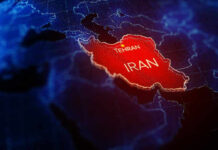

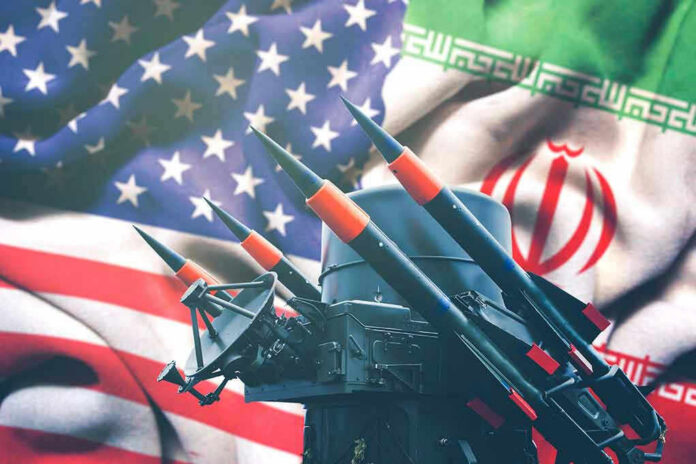
Tehran has issued chilling threats to launch missile and drone strikes against American military bases across the Middle East, putting thousands of U.S. troops in the crosshairs as tensions with the Trump administration reach a dangerous boiling point.
Story Snapshot
- Iranian regime outlets released propaganda videos showing U.S. bases like Al Udeid in Qatar and Incirlik in Turkey within missile firing range
- Supreme Leader Khamenei threatened to sink U.S. warships while Iran’s UN ambassador declared all American regional assets “legitimate targets”
- The U.S. withdrew hundreds of troops from Al Udeid and Bahrain bases in February 2026 as precautionary measures amid escalating strike warnings
- Iran threatens to disrupt the Strait of Hormuz, which handles 20% of global oil traffic, while fortifying Gulf islands with mines
Iranian Regime Escalates Threats Against American Forces
Tehran ramped up its intimidation campaign against U.S. military installations throughout the Middle East following President Trump’s warnings over Iran’s brutal crackdown on anti-government protesters. State-affiliated media outlet Defa Press outlined four specific retaliation options on January 20, 2026, including direct missile strikes on American bases. Days later, regime operatives circulated videos displaying U.S. facilities within Iran’s missile range, and propagandists unveiled a mural in Tehran depicting a burning American aircraft carrier. These aren’t empty gestures from a weakened adversary. Iran possesses missiles capable of reaching targets up to 1,864 miles away, potentially armed with chemical or nuclear warheads.
The Iranian regime’s UN Ambassador Amir Saeid Iravani formalized these threats in a February 23, 2026 letter to the United Nations, declaring all U.S. regional military assets legitimate targets for retaliation. Supreme Leader Ali Khamenei personally threatened to sink American warships on February 17, demonstrating the threats come from the highest levels of Iran’s leadership. This represents a significant escalation from last year’s modest missile attack on Al Udeid, which Iran telegraphed in advance. Defense analysts warn Iran’s expanded capabilities and domestic political pressures make a more forceful response likely this time. The regime views attacking nearby U.S. bases as easier and more effective than striking distant Israeli targets.
Trump Administration Responds With Military Buildup
President Trump deployed what he described as a “massive Armada” toward Iran on January 28, 2026, via Truth Social, triggering alarm bells in Tehran. The military buildup mirrors the scale of the 2003 Iraq invasion, featuring substantial naval assets positioning throughout the Persian Gulf region. Trump gave Iran a 10 to 15 day ultimatum for nuclear deal compliance while warning strikes could occur within days. However, the administration’s options face significant constraints as regional allies Saudi Arabia and UAE denied the use of their airspace for potential strikes, while the UK blocked base access amid the Chagos dispute. The absence of an aircraft carrier in the immediate region further complicates American military posture.
Strategic Vulnerabilities Put American Troops at Risk
Iran’s Islamic Revolutionary Guard Corps specializes in asymmetric warfare tactics designed to exploit America’s regional vulnerabilities. Their strategy combines long-range missiles, drone swarms, underwater drones, fast attack speedboats, and proxy forces to overwhelm U.S. defenses. The regime has fortified Gulf islands like Tunb and Abu Musa while laying mines in strategic waterways. These tactics threaten not just military installations but global energy security, as Iran can disrupt the Strait of Hormuz chokepoint. The withdrawal of hundreds of U.S. troops from Al Udeid in Qatar and bases in Bahrain during February 2026 signals genuine concern about Iranian strike capabilities. This precautionary repositioning acknowledges the serious danger facing American personnel stationed within easy reach of Iran’s missile arsenal.
The current standoff exposes how decades of failed diplomatic approaches and restrictions on American military action have emboldened the Iranian regime. While Trump pursues maximum pressure to force nuclear concessions or enable regime change through supporting Iranian protesters, Tehran calculates it can deter American strikes through credible threats against vulnerable bases. The regime’s February 17 live-fire drills that temporarily closed the Strait of Hormuz demonstrate their willingness to follow through. Energy markets remain on edge as any conflict could spike oil prices dramatically, hitting American consumers and the global economy. The situation demands American strength and strategic clarity, not the weakness and appeasement that characterized previous administrations’ failed Iran policies.
Sources:
2026 Iran–United States crisis – Wikipedia
Iran Attacks Greater Strikes – Stars and Stripes
Confrontation Between the United States and Iran – Council on Foreign Relations
Ten Predictions for the Potential US Strikes on Iran – Atlantic Council