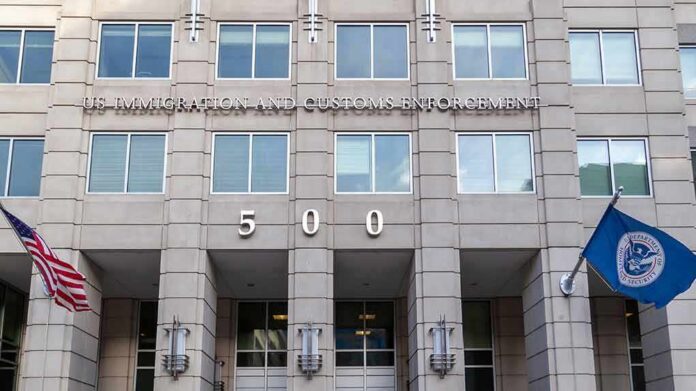
Maryland Governor Wes Moore faced questions about an illegal immigrant accused of raping a teenage girl, and instead of focusing only on the victim, he pivoted to attacking federal immigration enforcement tactics.
Quick Take
- Abdoulaye Dia, 36, an illegal immigrant from Guinea, is charged with raping and kidnapping a teen girl in Montgomery County, Maryland, on September 15.
- Federal officials say Dia crossed the border illegally in 2023 and was released under the Biden administration, then had a prior sex abuse arrest in New York.
- Governor Wes Moore told CNN he wants violent offenders “in handcuffs” within 24 hours, but also criticized a “Trump/Vance ICE operation” as illegal under state law.
- Rep. Brandon Gill accused Moore and other Democrats of treating rape victims as “collateral damage” in the immigration debate.
- National research shows a real split: some studies link enforcement crackdowns to lower crime reporting, while others show falling shares of ICE arrestees have criminal convictions.
Illegal Immigrant Charged In Teen Rape Case
Montgomery County police arrested Abdoulaye Dia, a 36-year-old rideshare driver from Lanham, Maryland, after a teenage girl reported he raped her in a parking lot on September 15. Dia worked for the Empower rideshare service and now faces first-degree rape, kidnapping, second-degree assault, and a third-degree sex offense charge.
The Department of Homeland Security confirmed Dia is in the country illegally. Officials say he crossed the border in Arizona in 2023 and was released under the Biden administration’s policies. He also had a prior sex abuse arrest in New York City before the Maryland case surfaced.
Police believe Dia deliberately drove past the girl’s home, stopped in a parking lot, and assaulted her during the ride. The case quickly became national news, with conservative outlets tying it to broader debates about sanctuary-style policies and border enforcement under the prior administration.
Moore Shifts Focus To ICE During CNN Interview
CNN asked Governor Moore directly about the case during a September 21 interview. Moore said, “I want the people of my state to understand that I have no tolerance for violent offenders, period and full stop.” He added that anyone who commits a violent crime in Maryland should be “in handcuffs in 24 hours”.
Moore did not stop there. He quickly turned to federal immigration enforcement, questioning “are we supporting a Trump/Vance ICE operation that continues to violate the basic laws of our state.” He said that violation “also is not going to be tolerated,” shifting the conversation from the victim to policy disputes with Washington.
This was not Moore’s first clash with federal immigration enforcement. In August, he criticized a large ICE operation in Maryland and Virginia, saying “deploying untrained, unqualified, and unaccountable agents to sweep through our communities and spread fear is not a public safety strategy” and that it “does not make us safer”.
Republican Lawmaker Calls Response ‘Collateral Damage’
Representative Brandon Gill pushed back hard on Moore’s answer. He argued Democrats like Moore treat victims of crimes committed by illegal immigrants as an afterthought while defending limits on ICE cooperation. Gill framed Moore’s comments as part of a pattern where immigration messaging takes priority over the people actually harmed.
CNN presses Wes Moore over a 17 year old girl’s alleged rape as the Maryland governor defends limits on ICE cooperation while insisting he will work with federal authorities to arrest violent offenders#NYI pic.twitter.com/mBlaRJ8b9a
— NewYork-Insight (@NewYork_Insight) September 20, 2026
Maryland law currently restricts local police from cooperating with certain ICE operations, a policy Moore has defended in the past as protecting constitutional policing. Critics argue that stance conflicts with his promise to hold violent offenders accountable within 24 hours, since local police often depend on federal partners for immigration status checks.
What The Research Says About Enforcement And Safety
Independent research on this debate shows a mixed picture. Some studies find that stepped-up interior immigration enforcement can reduce crime reporting, because immigrant communities grow afraid to contact police at all. One survey found over 60% of respondents said they would be less likely to report a crime under heavier enforcement.
Other research points the opposite way. A study published in the Proceedings of the National Academy of Sciences found only about one in three people arrested by ICE during President Trump’s second term have an actual criminal conviction, even as overall arrest numbers rose sharply. That gap fuels arguments on both sides: supporters of stricter enforcement point to cases like Dia’s as proof of failed screening, while critics say broad sweeps catch mostly non-violent people.
Both camps agree on one thing: the system that let Dia stay in the country after a 2023 border crossing and a New York arrest did not stop him before the Maryland attack. That failure, more than any political talking point, is what worries voters across the spectrum who want government to actually protect communities instead of scoring points.
Sources:
thegatewaypundit.com, yahoo.com, wfmd.com, foxnews.com, townhall.com, fox5dc.com
© patriotpostnews.com 2026. All rights reserved.