Hundreds of residents blocked roads in Portsmouth as police escorted about 140 Channel arrivals ashore, turning a rescue into a tense street standoff that exposed deep anger over border control and public order.
Story Snapshot
- About 140 people arrived by small boat near Eastney; emergency services led the rescue.
- Hundreds of protesters blockaded roads and ferry access; police used dispersal powers.
- Officers were injured and vehicles damaged; investigations are underway.
- The government condemned “thuggish” behavior while defending peaceful protest rights.
What Triggered The Portsmouth Standoff
Officials said a small boat headed toward the Hampshire coast on 6 September. The Maritime and Coastguard Agency deployed lifeboats, a helicopter, and an aeroplane, alongside rescue teams. Border Force and local police supported the effort. After landing at Eastney, authorities moved about 140 people ashore for safety and transport. The scale of the rescue and its visibility drew crowds. That rescue, not a rumor or hoax, set the stage for the later protest.
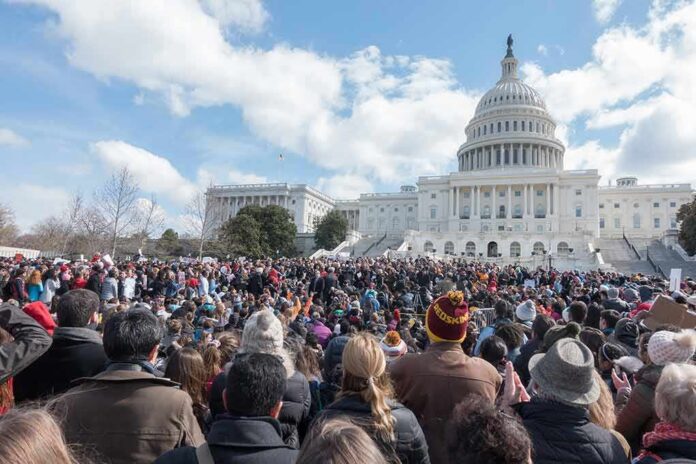
Hampshire and Isle of Wight Constabulary announced a dispersal order around Eastney Landing. Officers warned people to avoid the area and said those who did not comply could be arrested. Protesters gathered in large numbers and blocked roads to stop coaches from leaving the city. The crowd tried to hinder the transfer of arrivals to processing sites. Police worked to clear routes and keep vehicles moving, raising tensions at several choke points.
Public Order Clashes And Police Response
Police reported injuries to a small number of officers and damage to vehicles during the operation. The force opened investigations into assaults and criminal damage tied to the confrontation. Video from the scene showed baton use and spray as lines formed and broke. The agency later sought to identify suspects. These facts anchor the event as a serious public order incident, not only a political rally or symbolic protest.
National leaders condemned the disorder while stressing protest rights. A government spokesperson said the right to peaceful protest is fundamental but must not cross into disorder. That message framed the blockade as a line-crossing act while affirming lawful assembly. The statement matched a pattern seen after similar protests, where officials highlight safety and order as core duties of the state.
How Authorities Framed Border Control Amid The Unrest
The Home Office said individuals from the landing would be taken outside Hampshire for processing “in the normal way.” The department said it is bearing down on dangerous crossings and restoring border control. It also cited progress this year with lower June-to-August arrivals than recent years. Those claims aim to show gains against smuggling networks, even as high-profile crossings still spark local flashpoints like Portsmouth.
ITV and the Coastguard reports underscored the human risk at sea, noting a large dinghy and extended time in the Channel. That rescue frame competes with the blockade frame onshore. One side sees a safety mission that must move fast. The other sees a system that strains local order and trust. Both can be true at once: the same night can hold a real rescue at sea and a real breakdown in community calm on land.
Why This Matters Beyond Portsmouth
Portsmouth’s clash reflects a wider cycle. A visible landing triggers a local protest. Police shift focus to keeping order. Government decries violence while pointing to border efforts. The core grievance over control and fairness stays unresolved. People on the right see weak enforcement and rising costs. People on the left see harsh tactics and fragile lives at risk. Many beyond party lines see a state that talks tough yet fails to deliver stable, workable outcomes.
What We Still Do Not Know
Officials have not detailed how long transfers were delayed or whether operations changed after the protest. Reports name injuries and damage but do not specify final arrest totals from the first night. Claims that any charity had advance notice remain unproven in the current record. Without logs and timelines, it is hard to judge whether planning gaps worsened tensions. The facts we have support three points: the landing, the blockade, and the harm to people and property.
Bottom Line For Readers
Rescue teams did their job at sea. Police enforced order on land. Protesters tried to stop buses, saying the system has failed. Government vowed firmness on both borders and public order. Yet the scene in Portsmouth shows a familiar knot: visible crossings that fuel anger, and a state response that manages the moment but not the mistrust. Until policy results match promises people can feel, flashpoints like this will keep returning to Britain’s coast.
Sources:
thegatewaypundit.com, bbc.com, itv.com, yahoo.com, news.sky.com
© patriotpostnews.com 2026. All rights reserved.