Treasury Secretary Scott Bessent proposes shifting a criminal investigation of Federal Reserve Chair Jerome Powell from the Justice Department to the Senate Banking Committee, potentially clearing the path for President Trump’s Fed nominee while raising serious questions about politicized probes and government overreach.
Story Snapshot
- Bessent floats Senate Banking Committee probe to replace DOJ investigation of Powell over Fed renovation cost overruns
- Senator Thom Tillis blocks confirmation votes on Trump’s Fed nominee Kevin Warsh until Powell investigation concludes
- Committee agrees to proceed with hearings despite Tillis hold, with Powell’s term expiring mid-May 2026
- Proposal exposes GOP fractures as administration seeks to install new Fed leadership amid questions about central bank independence
Powell Investigation Creates Nomination Roadblock
Treasury Secretary Scott Bessent announced February 13, 2026, that the Senate Banking Committee agreed to advance confirmation hearings for Kevin Warsh as Federal Reserve Chair despite an ongoing Justice Department investigation into current Chair Jerome Powell. The DOJ probe, led by U.S. Attorney Jeanine Pirro, focuses on Powell’s congressional testimony regarding a Federal Reserve headquarters renovation project that ballooned over budget. Powell disclosed the criminal investigation in early February, characterizing it as political pressure from the Trump administration to force rate cuts before his term expires in mid-May 2026.
Bessent’s Strategic Pivot to Senate Oversight
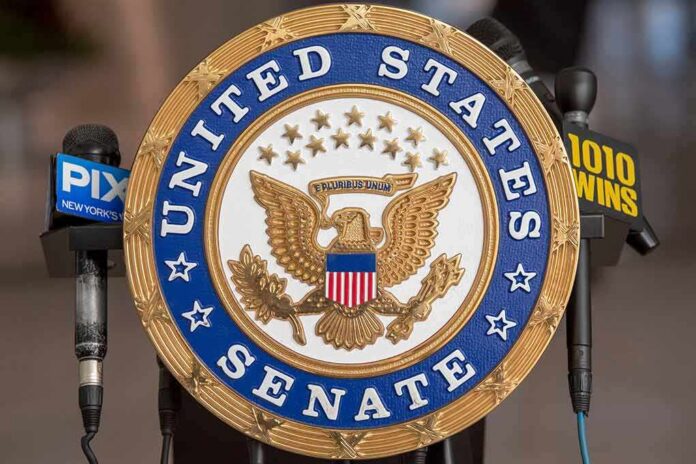
During meetings with Senate Republicans on February 10-11, Bessent proposed that the Senate Banking Committee conduct its own investigation into the Fed renovation instead of relying on the Justice Department. The Treasury Secretary emphasized the importance of getting hearings underway for continuity, stating the need to maintain Fed integrity and independence through a smooth leadership transition. Senate Banking Committee Chair Tim Scott agreed to proceed with hearings, calling Powell’s handling of the renovation project “incompetence” rather than criminal behavior. This maneuver appears designed to satisfy concerns about accountability while bypassing the DOJ investigation that has stalled the nomination process.
Tillis Hold Threatens Fed Leadership Timeline
Senator Thom Tillis, a retiring North Carolina Republican on the Banking Committee, maintains a procedural hold blocking votes on Fed nominees until the DOJ investigation concludes through either cessation or Powell’s exoneration. Tillis reaffirmed this position February 12, creating a significant obstacle despite supporting Warsh’s qualifications for the position. President Trump nominated Warsh, a former Fed Governor, last month but has not formally transmitted the nomination to the Senate. The White House urged quick confirmation to “get Fed back on track,” but Bessent’s distinction between hearings and votes means Tillis’s blockade on the actual confirmation vote remains intact, potentially creating a Fed leadership vacuum after Powell’s departure.
Constitutional Concerns Over Partisan Fed Pressure
The situation raises troubling questions about Federal Reserve independence and the weaponization of government investigations for political ends. Powell’s claim that the DOJ probe represents administration pressure to manipulate monetary policy strikes at the heart of central bank autonomy that protects Americans from politically-motivated economic decisions. While accountability for wasteful government spending on the renovation project is legitimate, the timing and nature of a criminal investigation into congressional testimony appears designed to force Powell’s exit. Bessent’s proposal to shift oversight to the Senate may reduce immediate political tensions, but it sets a dangerous precedent for congressional intervention in Fed operations that could further erode the institution’s credibility and independence from executive branch control.
Market Implications and Economic Uncertainty
Financial markets face uncertainty as the Fed leadership transition becomes mired in political maneuvering at a critical moment for monetary policy. Bessent expects inflation to reach the Fed’s 2% target by mid-2026, but achieving this goal requires consistent policy direction that could be jeopardized by a prolonged vacancy or rushed confirmation process. The financial sector watches closely as Warsh, known for hawkish monetary views, prepares for potential confirmation hearings without a clear timeline for an actual vote. GOP lawmakers view the Senate probe compromise as preferable to DOJ involvement, with one calling it “better for Committee than DOJ,” yet skeptics predict Tillis will not yield without the Justice Department dropping its investigation entirely, potentially requiring direct intervention from President Trump to resolve the impasse.
Sources:
Republicans suggest Senate, not Justice Department, investigate Powell
Bessent: Senate Banking Committee agreed to proceed with Warsh hearings