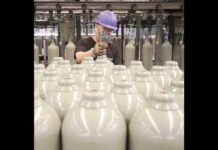
The historic Frito-Lay plant in Rancho Cucamonga, birthplace of the iconic Flamin’ Hot Cheetos, has permanently closed its production lines after 55 years, leaving longtime employees to package their final batches of America’s favorite snacks.
Key Takeaways
- Frito-Lay’s Rancho Cucamonga manufacturing plant officially closed on June 9, 2025, ending a 55-year legacy in Southern California
- The facility was historically significant as the birthplace of Flamin’ Hot Cheetos in 1991
- Employees produced their final batches of Cheetos, Tostitos, Doritos, and Funyuns before the closure
- While manufacturing has ceased, warehouse and transportation operations will continue at the location
- PepsiCo Foods U.S. has committed to providing ongoing financial and health benefits to affected workers
End of an Era for Iconic Snack Production
After more than half a century of operation, the Frito-Lay manufacturing plant in Rancho Cucamonga has permanently ceased production. The facility, which had been a cornerstone of the local community since 1970, shut down its production lines on June 9, 2025. PepsiCo Foods U.S., the parent company of Frito-Lay, officially confirmed the closure on June 11. This marks the end of an era for snack production in Southern California, with employees having produced their final batches of beloved snacks including Cheetos, Tostitos, Doritos, and Funyuns.
The closure of this manufacturing facility represents more than just the end of a business operation—it’s the loss of a significant piece of snack food history. Most notably, the Rancho Cucamonga plant holds the distinction of being the birthplace of Flamin’ Hot Cheetos, which were first produced there in 1991. This spicy snack innovation has since become one of America’s most popular chip varieties, generating billions in sales and spawning numerous flavor variations and brand extensions over the decades.
Impact on Workers and Community Response
The closure directly impacts the manufacturing workforce that has been the backbone of the operation for many years. While the exact number of affected employees has not been disclosed, the loss of these manufacturing jobs represents a significant blow to the local economy. However, PepsiCo has stated that not all operations at the facility will cease. Several departments, including warehouse and transportation, will continue to function at the location, providing some continuity for a portion of the workforce.
In response to the closure, PepsiCo Foods U.S. has expressed its commitment to supporting the affected employees during this transition. The company has acknowledged the contributions of its manufacturing team and the broader Rancho Cucamonga community over the past five decades. According to company statements, Frito-Lay will provide ongoing financial assistance and health benefits to displaced workers, demonstrating an effort to mitigate the personal impact of this business decision.
Economic Factors and Business Realities
While specific reasons for the closure haven’t been explicitly stated, the decision likely reflects the challenging economic realities facing many American manufacturers today. Rising operational costs in California, including higher energy prices, increased taxes, and stringent regulatory requirements, have made it increasingly difficult for manufacturing operations to remain profitable in the state. This closure follows a pattern seen across various industries, with companies consolidating operations to more business-friendly locations.
For the community of Rancho Cucamonga, the closure represents the loss of a longstanding employer and industrial landmark. The 55-year presence of the Frito-Lay plant had made it an institution in the area, with generations of local families having worked within its walls. As manufacturing continues to face challenges across America, this closure serves as a reminder of the changing economic landscape and the difficult choices companies must make to remain competitive in a global marketplace.