Donald Trump warns House Republicans that losing the midterms could lead to a third impeachment attempt.
Story Snapshot
- Trump urges GOP to pass the SAVE Act for voter ID laws.
- He links midterm success to avoiding impeachment.
- States like California oppose the voter ID requirements.
- Trump’s speech intensifies the political divide over voter integrity.
Trump’s Bold Call to Action
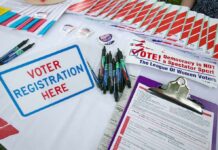
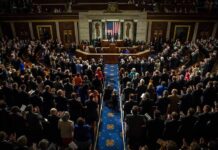
On January 6, 2026, President Donald Trump addressed House Republicans, pressing them to pass the SAVE Act. This legislation aims to mandate proof of U.S. citizenship for federal voter registration. Trump warned that failure in the midterms could lead to another Democratic impeachment attempt, claiming Democrats would use any opportunity to remove him from office. He criticized states such as California for resisting voter ID laws, suggesting opposition equates to supporting election fraud.
Trump’s remarks highlight a deep political rift over election integrity. The SAVE Act has become a keystone of this debate, with the president positioning it as essential for ensuring fair elections. Proponents argue it will prevent noncitizen voting, a claim often contested by those who point out its rarity. Trump’s impeachment fears are seen as a strategy to galvanize Republican voters and lawmakers to prioritize the bill’s passage before midterms.
Historical Context and Challenges
The SAVE Act is not new. It was introduced to the 119th Congress as H.R. 22, building on Republican concerns over noncitizen voting risks despite existing federal prohibitions. The bill demands states verify voter citizenship using documents like REAL ID-compliant identification. While Republicans see it as necessary for election integrity, Democrats argue it disenfranchises marginalized groups, citing surveys indicating millions lack easy access to required documents.
Efforts to pass the SAVE Act have previously stalled due to Democratic opposition in the Senate. However, with Republicans gaining Senate control following the 2024 elections, the bill’s prospects have improved. Trump’s return to the presidency further bolsters the push, with House Republicans making it a top priority in the current legislative session.
Key Stakeholders and Dynamics
Trump, as the driving force behind the SAVE Act, seeks to fortify voter integrity while safeguarding his political future. Key supporters include Rep. Chip Roy, the bill’s author, and Sen. Mike Lee, who publicly endorses it. Conversely, Senate Minority Leader Chuck Schumer has vowed to block the legislation, labeling it as voter suppression. Governor Gavin Newsom of California has also voiced opposition, challenging the premise of widespread noncitizen voting.
Power dynamics in Congress remain pivotal. While Republicans currently control the Senate, the Democratic filibuster poses a significant hurdle. Trump’s influence is wielded through speeches and social media, rallying GOP lawmakers and their base to support the bill. The outcome of this legislative battle may significantly impact the 2026 midterm elections and the broader political landscape.
Current Developments and Implications
Trump’s recent speech underscores the urgency of passing the SAVE Act, coinciding with a voter ID amendment initiative in California nearing the signature threshold for a ballot measure. House Republicans have prioritized the bill in their session rules. As the political rhetoric intensifies, the potential consequences of its passage are profound.
Short-term implications include disrupting current voter registration processes, particularly in states with online or automatic systems. Long-term effects could involve significant shifts in voter rolls, with citizenship verification becoming standard practice. The legislation also introduces legal avenues for challenging noncitizen registrations, placing additional pressure on election officials.