
With a single social media post, Donald Trump may have triggered the most consequential shift in U.S. nuclear weapons policy in a generation—raising questions that could redraw the boundaries of global security.
Story Snapshot
- Trump’s order to resume U.S. nuclear weapons testing breaks a 33-year moratorium.
- The directive was announced unilaterally—without congressional consultation—moments before a summit with China.
- International norms, longstanding treaties, and the balance of nuclear deterrence now hang in the balance.
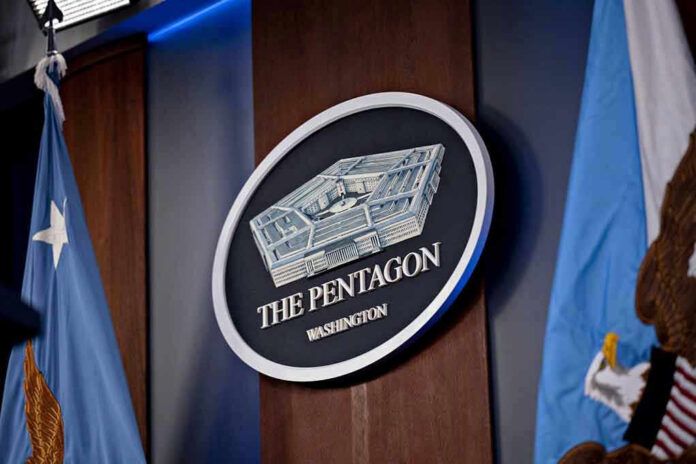
- The Pentagon faces intense scrutiny as it weighs the logistics, legality, and wisdom of restarting tests.
The Day Trump Pressed “Reset” on Nuclear Testing
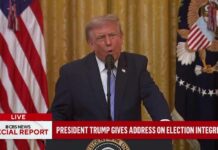
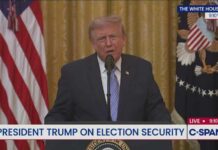
At 7:12 a.m. on October 30, 2025, Donald Trump’s Truth Social post landed like a seismic shockwave: he’d ordered the Pentagon to resume nuclear weapons testing “on an equal basis” with Russia and China. For Americans who recall the atomic anxiety of the Cold War, the announcement felt like a time machine set to reverse. The timing—just hours before Trump’s scheduled meeting with Chinese President Xi Jinping at the APEC summit in South Korea—was no accident. The message: the U.S. would not trail its rivals in nuclear capability or willpower. The world watched, waiting for the next shoe to drop.
The directive’s delivery—blunt and unsanctioned by Congress—instantly sparked a firestorm. Why bypass the legislative branch and international partners? According to Trump, the move was necessary to “match” the actions of other nuclear powers. As American officials scrambled for briefing notes, China’s delegation bristled, Russian state media gloated, and non-proliferation advocates sounded alarms. The Pentagon, caught between the Commander-in-Chief and the Constitution, began quiet preparations for a policy Americans thought had been mothballed for good.
Breaking a 33-Year Silence: History and Precedent
The United States last detonated a nuclear device underground in 1992. After decades of atmospheric and underground testing, a global consensus—if not a binding treaty—emerged: nuclear tests must end. The Comprehensive Nuclear-Test-Ban Treaty (CTBT), opened for signature in 1996, was signed by the U.S., Russia, and China but never ratified. Still, a de facto global moratorium took hold, with only North Korea openly violating it this century. Trump’s order threatens to shatter that fragile peace, inviting rivals to follow suit and risking a return to the era of radioactive clouds and mushroom-shaped brinkmanship.
Unilateral moves in nuclear policy are rare, but not unheard of. North Korea’s tests have drawn universal condemnation; the U.S. has maintained its arsenal through subcritical experiments that stop short of a nuclear explosion. Yet, the threat of live testing—especially from a superpower—has always been the ultimate taboo. Trump’s directive, lacking congressional buy-in or international coordination, could set a precedent for executive overreach in matters of global consequence.
The Players: Motives, Power, and Fallout
Donald Trump’s motivations are clear: project American strength and deter rivals, regardless of diplomatic niceties. The Pentagon’s role is more fraught—tasked with obeying the order, but also with navigating a web of legal, environmental, and operational obstacles. Congress, blindsided and sidelined, is now under pressure to assert its constitutional authority over matters of war and peace. For China and Russia, the announcement is both a provocation and a potential opening; both could use the pretext to accelerate their own testing or modernization programs. Global watchdogs at the IAEA and United Nations brace for a new era of uncertainty, where arms control agreements may become museum pieces.
Non-proliferation advocacy groups, meanwhile, are mobilizing. They warn that restarting tests risks environmental disaster, undermines public health, and shreds U.S. credibility on non-proliferation. The balance of power between the executive branch, Congress, and international bodies is now in flux, with the stakes measured not in votes, but in kilotons.
What Happens Next: Unanswered Questions and High Stakes
As of this writing, no nuclear tests have taken place. The Pentagon is reportedly conducting internal reviews, but with no official guidance or timeline released. Congress is expected to hold hearings, and legal scholars are already challenging the president’s authority to unilaterally order such a dramatic shift. Market watchers eye defense stocks for signs of volatility, while communities near potential test sites—Nevada, Alaska—revisit old fears. Environmental groups and peace activists are preparing for a renewed fight, anxious about fallout both literal and figurative.
The biggest unknown: will China or Russia respond in kind? If so, the world could witness a new nuclear arms race, undoing decades of hard-won restraint. The CTBT, already on life support, could become a dead letter. The environmental and public health risks of renewed testing, once considered a closed chapter, would return to the foreground. For the defense industry, the prospect of massive new contracts looms; for diplomats, a new Cold War chill settles in. The story is only beginning—and its next chapters could reshape the world order.
Sources:
Trump Orders Pentagon to Match Other Nations’ Nuclear Testing