Russia claims the U.S. has abruptly canceled the next round of diplomatic talks aimed at restoring relations, signaling a deepening freeze in bilateral ties as the Ukraine conflict continues with no resolution in sight.
Key Takeaways
- The U.S. has canceled a third round of diplomatic talks with Russia, according to Russian Foreign Ministry spokesperson Maria Zakharova, leaving efforts to restore embassy operations in limbo.
- Despite two previous meetings in Riyadh and Istanbul that showed some progress, diplomatic relations between the U.S. and Russia remain at their lowest point since the Cold War.
- President Trump’s efforts to broker a ceasefire in Ukraine have stalled, with both sides unwilling to make significant concessions, causing frustration in Washington.
- Both countries continue operating their diplomatic missions with minimal staff due to mutual expulsions and sanctions, severely hampering normal diplomatic functions.
- President Zelenskyy warns that American diplomatic silence only emboldens Putin, calling for stronger U.S. action on the Ukraine conflict.
Russia Announces Unexpected Cancellation of Diplomatic Talks
Russian Foreign Ministry spokesperson Maria Zakharova made headlines on June 16 by claiming that the United States had unilaterally canceled the next round of planned diplomatic talks. These discussions were specifically designed to address the deteriorating state of relations between Moscow and Washington, with a focus on restoring normal embassy operations and potentially making progress on the Ukraine conflict. The cancellation represents a significant setback in the already strained relationship between the two nuclear powers, which has seen no substantial improvement despite initial hopes following President Trump’s return to office.
“The U.S. has canceled the next round of talks with Russia on restoring diplomatic relations, Russian Foreign Ministry spokesperson Maria Zakharova claimed on June 16,” said Maria Zakharova
The previously scheduled diplomatic sessions were part of a broader initiative to “eliminate irritants” and normalize relations that have been severely damaged since Russia’s military actions in Ukraine. Two earlier rounds of talks took place in February in Riyadh and in April in Istanbul, but according to Russian officials, these discussions failed to yield meaningful results. The State Department had initially characterized the April 10 talks as having a “constructive approach,” focusing particularly on restoring stable banking services for diplomatic missions, but the sudden cancellation suggests deeper unresolved issues.
Embassy Operations Remain Crippled by Sanctions and Staff Shortages
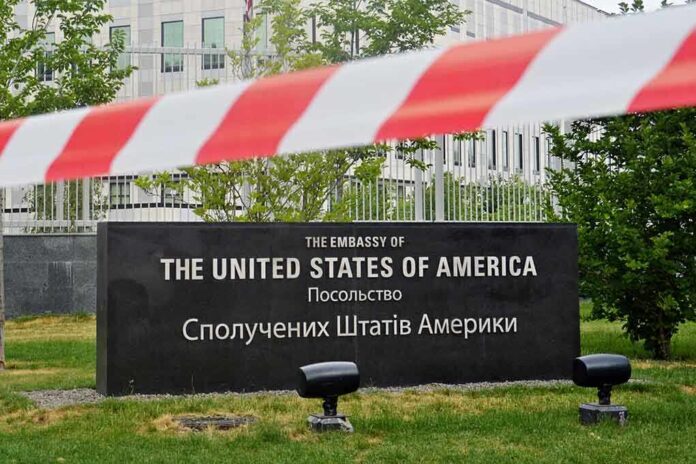
Both the Russian and American diplomatic missions continue operating under extraordinary constraints. Years of tit-for-tat diplomatic expulsions have left both embassies severely understaffed, while Western sanctions have created significant operational challenges. The practical consequences are dire, with visa services drastically reduced, consular assistance limited, and normal diplomatic functions severely hampered. This deterioration in basic diplomatic infrastructure represents a return to Cold War-style restrictions, making even routine matters unnecessarily complicated.
“Despite some progress, the American side is not yet ready to seriously address the difficulties hampering the embassies’ work,” stated Kremlin aide Yuri Ushakov
Kremlin aide Yuri Ushakov’s statement highlights the Russian position that Washington is not prepared to make the necessary concessions to restore normal diplomatic functions. Russian officials have consistently claimed that American unwillingness to lift sanctions affecting diplomatic operations remains the primary obstacle to progress. The situation leaves thousands of citizens from both nations without adequate consular services, business interests unable to receive diplomatic support, and the basic channels for bilateral communication severely constricted at a time when direct dialogue is critically needed.
Ukraine Conflict Remains the Central Obstacle
President Trump’s administration has made efforts to broker a ceasefire and eventual peace agreement in Ukraine, but these attempts have been met with skepticism and resistance from multiple parties. The fundamental positions of Moscow and Kyiv remain irreconcilable, with Russia refusing to withdraw from occupied territories and Ukraine unwilling to accept the loss of its sovereign territory. This deadlock has reportedly frustrated the President, who had hoped for quicker progress toward ending the conflict as part of a broader reset in U.S.-Russia relations.
“America’s silence, and the silence of others around the world, only encourages (Russian President Vladimir) Putin,” said President Volodymyr Zelenskyy
President Zelenskyy’s warning about the dangers of American diplomatic silence underscores Kyiv’s concern that any perceived U.S. disengagement could embolden Russian aggression. The Ukrainian leader has consistently called for stronger American action rather than compromise, creating additional complexity for Trump’s administration as it attempts to balance various strategic interests. The cancellation of diplomatic talks represents another setback for those hoping for quick progress, with the prospect of meaningful negotiations now pushed further into an uncertain future.
Uncertain Path Forward for U.S.-Russia Relations
With the third round of talks now canceled and no replacement date announced, the path forward for U.S.-Russia diplomatic relations remains unclear. Russian officials have expressed hope that the pause will not be prolonged, but there has been no official American comment on the cancellation or any potential future meetings. This diplomatic silence from Washington leaves observers questioning whether the administration has decided to take a harder line with Moscow or is simply reassessing its approach before reengaging. Either way, the immediate prospects for significant improvement in bilateral relations appear dim.
“We hope that the pause taken by them (the U.S.) will not become too long,” said Maria Zakharova
The current impasse represents a significant challenge for President Trump’s foreign policy agenda. His administration had signaled interest in resetting relations with Russia while simultaneously ending the Ukraine conflict, but the reality has proven far more complex than anticipated. With embassies operating at minimum capacity, diplomatic channels constrained, and the Ukraine conflict showing no signs of resolution, the relationship between the world’s two largest nuclear powers remains dangerously frozen. Without renewed diplomatic engagement, these tensions risk further escalation at a time when global stability demands constructive dialogue.