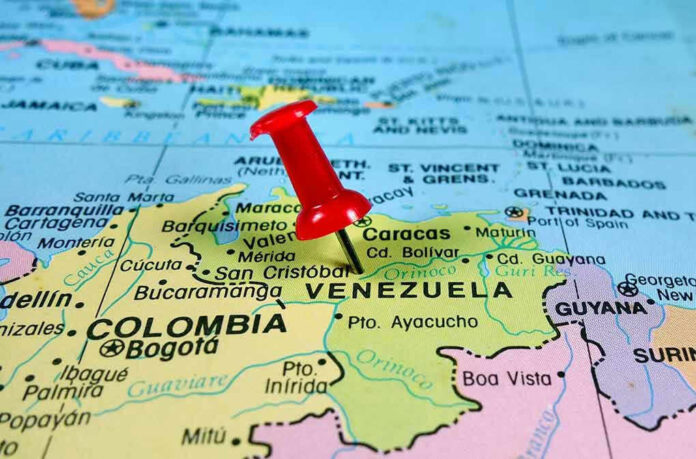
As tensions simmer in Venezuela, the global community watches closely, but the applause for U.S. military action remains elusive.
Story Overview
- U.S. escalated its stance against Venezuela following the disputed 2024 election.
- Trump administration’s actions included sanctions and military deployments.
- U.S. allies coordinated on sanctions but refrained from endorsing military actions.
- Maduro’s capture has not dismantled his regime’s foundation.
Escalating U.S. Actions in Venezuela
The U.S. took a hardline approach following Venezuela’s disputed presidential election in July 2024. Nicolás Maduro’s controversial win led to immediate backlash, with the U.S., EU, UK, and Canada imposing new sanctions upon his inauguration in January 2025. The Trump administration, determined to combat what it labeled “narco-terrorism,” escalated its efforts by designating Venezuelan cartels as foreign terrorist organizations and deploying naval forces to Venezuelan waters.
These moves marked a significant departure from previous strategies, blending sanctions with overt military actions. However, despite these aggressive tactics, U.S. allies did not explicitly endorse military escalations. While they aligned on sanctions, they refrained from applauding the military interventions, reflecting a cautious stance towards the U.S.’s unilateral actions.
Maduro’s Capture and Its Aftermath
By early 2026, the U.S. captured Maduro, a move intended to destabilize his regime. Yet, despite this high-profile capture, the foundation of his government remained intact. The capture was part of a broader strategy to counter the Cartel de los Soles, which the U.S. accused Maduro of leading. The operation, however, drew mixed reactions globally. While some praised the U.S. for taking decisive action against a narco-terrorist, others criticized the legality and potential repercussions of such military interventions.
Mexico, in particular, condemned the U.S. military actions as illegal, highlighting regional tensions and the complexity of international relations in Latin America. The capture has not brought about the anticipated regime change, underscoring the resilience of Maduro’s government despite external pressures.
Global and Regional Reactions
The global reaction to the U.S.’s actions in Venezuela was far from unanimous. While some Latin American countries expressed support for the sanctions, they stopped short of endorsing military interventions. The absence of explicit applause from U.S. allies for military actions suggests a cautious approach, balancing the need to address drug trafficking with respect for sovereignty and international law.
The U.S. Congress also played a crucial role, with bipartisan efforts to limit unauthorized military strikes in Venezuela, reflecting domestic concerns over the executive’s expansive military actions. As the situation unfolds, the U.S. continues to signal potential land strikes, although these plans face significant political and international hurdles.
Long-term Implications
The capture of Maduro and the ongoing military operations have significant implications for U.S.-Latin American relations. In the short term, these actions have heightened tensions in the Caribbean and strained relations with countries like Colombia, which faces sanctions for alleged trafficking tolerance. In the long term, the U.S.’s anti-cartel doctrine sets a precedent for military interventions against narco-states, raising questions about future U.S. foreign policy in the region.
While the immediate impact includes disrupted leadership in Venezuela and strained regional ties, the long-term effects could reshape the dynamics of U.S. engagement in Latin America. As the U.S. navigates these complex relationships, the balance between combating drug trafficking and respecting regional sovereignty remains a delicate and contentious issue.
Sources:
Wikipedia: United States sanctions during the Venezuelan crisis
Fortune: Venezuela Regime Post-Maduro Capture
Congress.gov: Overview of Sanctions