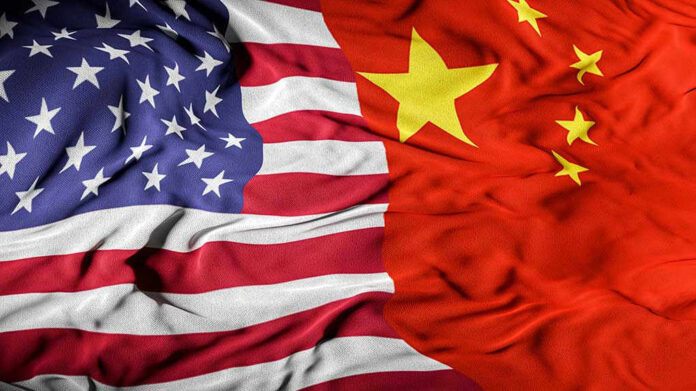
Markets don’t just rise and fall—they convulse when the world’s two economic titans sign a deal that promises peace yet delivers shockwaves of uncertainty.
Story Snapshot
- The new US-China trade deal sparked global market volatility as investors scrambled to interpret its implications.
- Details on tariffs, technology, and enforcement remain murky, fueling both hope and skepticism.
- Stakeholders from governments to multinational corporations are navigating unprecedented risk and opportunity.
- Analysts warn that implementation will determine whether this deal marks a true turning point or another false dawn.
Announcement Ignites Market Turbulence Worldwide
The 2025 announcement of a fresh US-China trade accord sent global financial markets into a tailspin. Stock indices across New York, Shanghai, London, and Frankfurt swung wildly within hours, while currency and commodity prices lurched in response to breaking headlines and official statements. Investors, conditioned by years of tariff battles and broken promises, raced to reposition portfolios amid the uncertainty. Equity markets posted sharp losses, only to rebound as optimism clashed with deeply rooted skepticism about the deal’s staying power.
Financial institutions reacted with caution, citing the lack of published details on tariff reductions, technology transfers, and enforcement mechanisms. Currency traders, wary of sudden policy shifts, drove both the dollar and yuan into brief rallies before profit-taking set in. Commodities, especially those with supply chains exposed to both nations, saw double-digit price moves. The immediate aftermath was marked by volatility rather than consensus, with market participants demanding clarity before committing to new bets.
Deal Scope Expands; Uncertainty Deepens
The new agreement stands apart from prior deals due to its sweeping scope. Negotiators claim to have addressed not just tariffs but also contentious issues like intellectual property protection, forced technology transfer, and reciprocal market access. For multinational corporations—think Apple, Boeing, Huawei—the stakes are enormous. These companies have watched supply chains whiplash for years, and now must weigh the risk of sudden regulatory changes against the promise of renewed stability.
Yet, the absence of a comprehensive text and clear enforcement mechanisms leaves room for doubt. Both US and Chinese officials have issued statements emphasizing “mutual respect” and “enforceable commitments,” but neither side has outlined concrete steps for monitoring compliance. Working groups have been formed to hammer out technical details, but history suggests that implementation will be fraught with political interference and potential reversals. Investors remain acutely aware that optimism can evaporate quickly if the deal’s promises prove hollow.
Global Ripple Effects Reshape Risk and Opportunity
The deal’s announcement has reverberated far beyond Wall Street and Beijing. Emerging economies, particularly those with strong export ties to either the US or China, have seen sudden capital outflows and currency swings. Commodity-dependent nations are grappling with price volatility as supply chains recalibrate. For US farmers, the prospect of regaining access to Chinese markets brings hope, but previous cycles of boom and bust temper expectations.
US-China new deal sends markets reeling https://t.co/eUQ8nsVG7L via @@YahooFinance
— Stanley Oakley (@StanleyOakley4) October 27, 2025
Consumers might benefit from lower prices on select goods if tariffs are rolled back, but inflationary pressures and ongoing supply chain disruptions complicate the picture. The Federal Reserve, already operating in a precarious monetary environment, must now weigh the economic impact of the deal against persistent domestic headwinds. Political leaders in both countries face mounting pressure from hardliners and industry lobbies, raising questions about the durability of any détente.
Expert Perspectives Highlight Risks and Rewards
J.P. Morgan Global Research notes that equity markets will likely remain range-bound until the deal’s full terms are disclosed and credible enforcement mechanisms are put in place. Their analysts suggest a bull case for global equities if broad agreements and improved sentiment take hold, but caution that unresolved implementation risks could quickly reverse any gains. Market commentary from Meyka estimates a potential 1.2% boost to global GDP if the deal holds, but warns that geopolitical tensions and structural rivalry may undermine long-term benefits.
Academic experts argue that the US-China relationship is defined by deep strategic competition, and that trade deals alone cannot resolve underlying conflicts. Optimists see the accord as a necessary step to avoid further disruption, while skeptics point to a history of unmet commitments and question the deal’s enforceability. Realists advise vigilance, contingency planning, and a sober recognition that the world’s most important economic relationship remains fragile.
Sources:
J.P. Morgan Global Research: US Tariffs
Meyka: US-China Trade Deal Progress & Impact on Global Markets