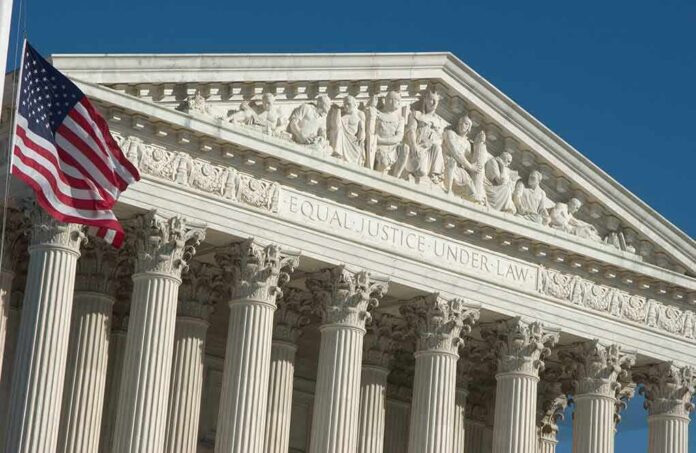
Supreme Court’s decision in the Minnesota case sets a significant precedent for age-related gun control laws.
Key Insights
- The Supreme Court rejected an appeal from Minnesota to revive a ban on gun-carry permits for young adults, citing a violation of the Second Amendment.
- The justices upheld a ban on guns at the University of Michigan, declining to hear an appeal regarding the right to be armed on campus.
- No justice dissented in either the Minnesota or Michigan case.
- The actions suggest the Supreme Court’s reluctance to further explore the constitutional right to “keep and bear arms.”
- The decision not to hear the Minnesota case was unexpected, as both sides sought Supreme Court review, and there is inconsistency in lower court rulings on the issue.
Supreme Court Declines to Revisit Minnesota’s Gun-Carry Ban
The Supreme Court recently chose not to reconsider Minnesota’s attempt to enforce a ban on gun-carry permits for individuals aged 18-20. This decision leaves in place a lower court ruling finding the ban to violate the Second Amendment, as it does not specify an age limit for bearing arms.
This outcome could influence future legal and legislative efforts concerning similar age-related restrictions on gun ownership. Currently, Minnesota, along with over 30 other states and the District of Columbia, maintains laws that mirror the age-related restrictions that were just struck down.
Implications of the Court’s Decision
The Minnesota case highlights the ongoing judicial examination of firearm regulations, especially those targeting young adults. A federal appeals court in St. Louis and the 8th U.S. Circuit Court of Appeals previously declared the Minnesota law unconstitutional, emphasizing the Second Amendment provides no specific age restrictions.
This ruling is pivotal in the broader conversation between upholding Second Amendment rights and addressing public safety concerns. Gun control advocates argue that such restrictions are necessary due to the high incidence of gun-related deaths among young adults aged 18-20.
Broader Judicial Attitude Towards Gun Legislation
The Supreme Court’s decision not to hear the Minnesota case indicates a potential reluctance to further interpret the constitutional right to “keep and bear arms,” following a notable 2022 ruling that expanded gun rights. Since then, there has been a consistent pattern of the court turning away gun cases, with the most recent being a challenge to New York’s new gun restrictions.
This reticence aligns with the Supreme Court’s earlier hesitance in other gun rights challenges, including those regarding campus carry laws and other state-imposed bans.
Our win in our Worth v. Jacobson challenge to Minnesota’s 18-20 carry ban has been cemented.
Fuck your gun bans! pic.twitter.com/knpNDcax2k
— Firearms Policy Coalition (@gunpolicy) April 21, 2025
Sources:
- Supreme Court won’t revive Minnesota ban on gun-carry permits for young adults | AP News
- Supreme Court declines to weigh gun ban on young adults in Minnesota
- Supreme Court rejects Minnesota effort to revive ban on young adults from carrying guns
- Supreme Court justices won’t revive a Minnesota ban on gun-carry permits for young adults – Washington Times