California’s governor’s race just served voters a familiar frustration: big problems, big talking points, and no clear plan that breaks through.
Story Snapshot
- A San Francisco debate featuring six gubernatorial candidates produced no breakout winner, largely because the event ran like a Q&A instead of a true clash of ideas.
- Polling showed “Undecided” as the largest bloc at about 23%, underscoring how unsettled Californians feel heading into 2026.
- Democrats mostly united around defending Gov. Gavin Newsom and attacking President Trump, while Republicans focused on cost-of-living and governance failures.
- Steve Hilton pledged support for the eventual GOP nominee, while Chad Bianco declined to make the same commitment—an early test of party discipline.
A Debate That Looked More Like a Forum Than a Fight
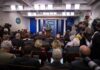
Six candidates—four Democrats (Tom Steyer, Katie Porter, Xavier Becerra, and San Jose Mayor Matt Mahan) and two Republicans (Steve Hilton and Chad Bianco)—met in San Francisco for a statewide debate that observers said produced “no big winner.” The structure mattered: a Q&A format limited direct confrontation, which reduced chances for candidates to draw sharp contrasts on homelessness, energy costs, and immigration—the issues driving daily life for many families.
That format also helps explain why the night’s biggest headline may be the absence of a headline. With no candidate landing a clear “home run,” the debate reinforced a reality that cuts across party lines in 2026: voters feel stuck with institutions that talk a lot but deliver little. When an election is dominated by high dissatisfaction and soft loyalties, a cautious, moderator-driven event can preserve the status quo instead of clarifying choices.
Democrats Targeted Trump While Defending Newsom’s Record
Democrats on stage largely held the same strategic line—criticize President Trump and give Gov. Gavin Newsom passing marks—while sparring over style and biography rather than presenting sharply different governing agendas. Tom Steyer, a polling frontrunner, drew sustained fire not only for being a billionaire but also for business ties opponents linked to prisons and ICE detention centers, turning his wealth into a central campaign liability.
Matt Mahan and Katie Porter pushed that critique hardest, pressing Steyer on whether he would pay higher taxes as a billionaire candidate and arguing California needed leadership measured by results. Xavier Becerra leaned on experience as his differentiator, a common move in crowded primaries when policy daylight is thin. The result was a Democratic field that looked united against Republicans but divided on who should run Sacramento—and not yet able to persuade a large undecided bloc.
Republicans Focused on Gas Prices and “Waste, Fraud and Abuse”
Republicans Steve Hilton and Chad Bianco entered the debate in a different lane: governance and affordability. Hilton pinned California’s roughly $5-per-gallon gas prices on what he called “waste, fraud and abuse” and “Democratic progressive policies,” leaning into a broader conservative critique that one-party control in Sacramento has produced high living costs without matching improvements in safety, housing, or infrastructure. That message is built for a state where families feel squeezed.
Bianco, however, introduced a storyline Republicans usually try to avoid in a close, high-stakes race: uncertainty about unity. He refused to commit to supporting the eventual GOP nominee, unlike Hilton, who did pledge to back the party’s choice. For voters who want a check on Democratic power, unity signals seriousness; disunity signals ego and instability. The exchange matters because California’s “top-two” dynamics can punish fragmented coalitions.
The Political Math: Lots of Democrats, Few Republicans, Many Undecided
The 2026 field reflects an unusual imbalance: roughly 10 Democrats competing against only two Republicans, a structure analysts said could create a Republican advantage if Democrats split their vote while Republicans consolidate. Add in the reported 23% “Undecided” share—the largest bloc—and the race looks less like a referendum on a single personality and more like a test of whether any candidate can convincingly address core, kitchen-table failures without falling back on national talking points.
CA Gubernatorial Debate Night Scorecard: Who Killed It, Who Bombed #news https://t.co/VO0Xf9eu0O
— Filtered News (@filterednews) April 23, 2026
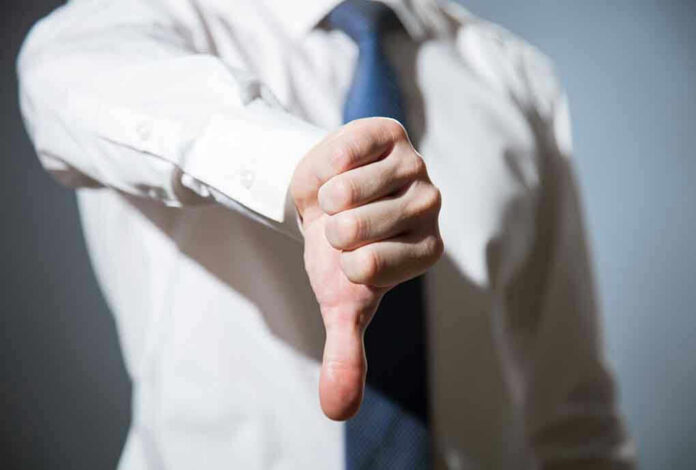
What remains unclear, based on available reporting, is which candidate offered the most detailed, implementable plan and whether any moment shifted voter preferences. Without a full transcript or a granular scorecard, the strongest conclusion is structural: a Q&A debate, a crowded field, and high undecided numbers typically mean the public is still shopping for competence. For Californians weary of homelessness, energy prices, and trust in government, “no winner” is its own indictment.
Sources:
No Big Winner in Statewide Debate of CA Governor Hopefuls