New legislation threatens to give the Secretary of State unchecked power to revoke Americans’ passports based on speech alone, raising alarms about government overreach and the erosion of constitutional rights.
Story Snapshot
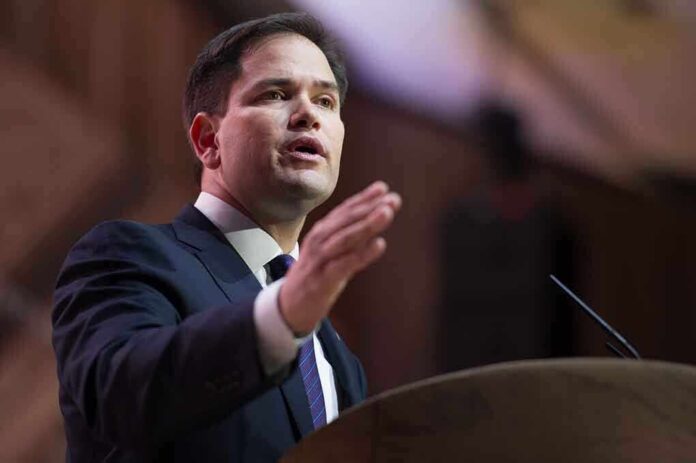
- A proposed House bill would let Secretary of State Marco Rubio unilaterally revoke or deny passports based on individuals’ speech or alleged associations, bypassing due process.
- Civil liberties groups warn the bill undermines First Amendment protections and judicial oversight, risking political abuse against peaceful dissenters.
- The bill is advancing in a Republican-controlled committee despite bipartisan concerns about executive overreach and threats to free speech.
- The move comes amid heightened scrutiny of campus protests and pro-Palestinian advocacy, with minority and activist communities facing increased risk.
Bill Would Grant Secretary Rubio Sweeping Power Over Passports
A bill introduced by Rep. Brian Mast, would empower Secretary of State Marco Rubio to revoke or deny U.S. passports to citizens based solely on their speech or alleged support for groups deemed foreign terrorist organizations. Unlike prior laws, which required a criminal conviction and judicial review, this proposal bypasses court oversight, granting the Secretary unilateral authority to determine who may travel abroad. Critics have labeled this approach a dangerous concentration of power in the executive branch.
The bill arrives during a period of intense debate over national security, free speech, and U.S. policy on Israel and Palestine. Recent actions—such as visa revocations for student activists accused of supporting pro-Palestinian causes—demonstrate the expanding reach of executive agencies. The Department of Homeland Security’s removal of a Tufts University student’s visa after an op-ed supporting the BDS movement illustrates how broad, subjective standards can be used to target dissenters, even absent concrete evidence of terrorism.
Civil Liberties Groups Sound Alarm Over Due Process and Free Speech
Organizations like the ACLU and Freedom of the Press Foundation have condemned the bill for undermining due process and First Amendment rights. Under existing law, only a judge can order a passport revoked for material support of terrorism, and only after a fair hearing. The new bill removes these safeguards, allowing the Secretary to act as “judge, jury, and executioner.” Legal experts warn that the bill’s vague language—enabling action against those accused of “support” or “association”—creates a chilling effect, especially for activists and journalists engaged in controversial advocacy.
Student activists, journalists, and minority communities are among those most likely to be affected. The fear of losing travel rights for expressing unpopular views could stifle legitimate dissent and academic freedom, especially on university campuses where debates over Middle East policy are most heated. The risk of political weaponization is heightened by the bill’s lack of clear standards or independent review mechanisms, making it susceptible to abuse for ideological or partisan purposes.
Supporters Cite National Security, Critics Warn of Executive Overreach
Proponents like Secretary Rubio and Rep. Mast argue the bill is vital for preventing terrorist sympathizers from exploiting U.S. travel documents, claiming it is a necessary response to evolving threats. However, civil liberties advocates counter that existing laws already provide tools to prosecute genuine terrorism while protecting constitutional rights. The failure of similar proposals in the past—such as the “nonprofit killer” clause rejected in July 2025—shows the persistent concern over unchecked executive power and the need to maintain due process even in matters of national security.
The bill’s advancement reflects a broader trend of expanding executive authority, often at the expense of individual liberties and traditional checks and balances. While the stated intent is to safeguard Americans, the real-world impact could be a precedent for government control over fundamental rights—including travel and free expression—based on subjective or politicized criteria.
Ongoing Debate and the Path Forward
The bill is currently in the House Foreign Affairs Committee, with a hearing set for September 17, 2025. Civil liberties groups are mobilizing public campaigns and petitions, warning that the legislation could set a dangerous precedent for future abuses. Bipartisan skepticism persists, but with Republican control of the committee, the bill’s fate remains uncertain. Americans concerned about government overreach, constitutional freedoms, and the integrity of due process are watching closely as the debate unfolds, recognizing that core principles of liberty are at stake.
Sources:
Rubio bill sparks fears of passport revocations over speech
Department of State Policy Provisions Bill – Wikipedia
Petition: Oppose the Department of State Policy Provisions Bill
Secretary of State Marco Rubio remarks to press