A U.S. blockade strike that killed three Indian sailors near Oman is now testing Trump’s vow to use force against Iran’s oil lifeline without dragging America into another endless war.
Story Snapshot
- India has lodged a formal protest and is demanding that U.S. attacks on ships with Indian crews stop immediately.
- U.S. Central Command says the Palau-flagged tanker M/T Settebello was hit only after it defied repeated orders and tried to haul Iranian oil in violation of a naval blockade.
- Three Indian sailors are confirmed dead, putting civilian lives and global shipping safety at the center of the backlash.
- The clash unfolds in the already volatile Strait of Hormuz region, where Iran and its proxies have been striking commercial vessels and threatening world oil flows.
What Happened Off Oman — And Why India Is Furious
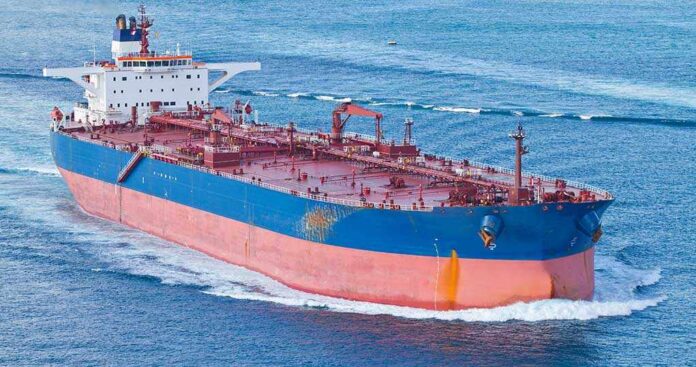
U.S. Central Command says an American aircraft fired a precision weapon into the engine room of the Palau-flagged tanker M/T Settebello in the Gulf of Oman, after the crew “repeatedly failed to comply with directions from American forces.”[1][2] The United States says the ship was trying to move oil from Iran in violation of a naval blockade on Iranian ports and related vessels.[1][2] India says 24 of the 28 crew members were Indian citizens and that three were killed.[2][4]
India’s foreign ministry summoned the top U.S. diplomat in New Delhi and issued what it called a “strong protest” over the deaths.[1][3][5] Officials demanded an immediate end to attacks on commercial ships in the region and stressed that the three tankers hit this week were foreign-flagged and not Indian-owned.[4] Indian leaders are also telling their public that these strikes are feeding panic among about 20,000 Indian seafarers who work across the Gulf.[5] For families back home, this is not about sanctions theory; it is about dads and sons not coming home.
Trump’s Blockade Strategy Against Iran’s Oil Exports
The Settebello incident is part of a broader U.S. effort to choke off Iran’s oil revenue after Tehran and its proxies stepped up attacks on global shipping.[1][2] U.S. reports say that forces have disabled several tankers in the Gulf of Oman this week alone, including the Palau-flagged M/T Marivex and the Guinea-Bissau-flagged M/T Jalveer, for trying to reach Iranian ports or haul Iranian oil.[1][2][4] Central Command describes a pattern of using precision strikes on stacks or engine rooms, rather than seizing ships, to stop “non-compliant” tankers from entering Iran.[2]
At the same time, the U.S. Department of Transportation’s maritime advisory warns that Iran is actively attacking commercial vessels across the Persian Gulf, Strait of Hormuz, and Gulf of Oman using missiles, drones, and armed drone boats. Analysts tracking recent strikes say Iran’s pattern looks like broad disruption, not careful targeting of Western ships. Put simply, the world’s key oil chokepoint is now a live war zone where Iran is trying to prove it can shut off energy flows, and U.S. forces under Trump are trying to cut off the cash that funds that aggression.
India’s Protest, Crew Safety, And The Information Gap
India’s message is focused on civilian safety and freedom of navigation, not on defending Iran or denying that sanctions matter.[1][4][6] New Delhi says three Indian sailors died on Settebello, and media there report this is one of several U.S. attacks in the same week on tankers with Indian crews.[1][4] Indian officials emphasize that at least some of these ships were not blacklisted in U.S. Treasury records and have asked why Indian workers are paying the price for a fight over Iranian oil.[1][7]
Deeply devastated by the tragic news from the Gulf of Oman. Three innocent Indian civilian seafarers — Patnala Suresh, Shivanand Chaurasiya, and Aditya Sharma — have lost their lives following a targeted US precision military strike on the commercial oil tanker, M/T Settebello.…
— Shashi Tharoor (@ShashiTharoor) June 11, 2026
At the same time, India has not publicly released cargo records, voyage data, or radio logs that would prove the tanker was clean or that U.S. warnings never came through.[1][4] On the U.S. side, Central Command’s statement is summarized in press reports, but the underlying strike packet, warning timeline, and battle-damage review have not been made public.[1][2] That leaves everyday citizens looking at two incomplete stories: Washington saying “non-compliant, Iran-linked tanker,” and New Delhi saying “commercial ship, Indian dead, this must stop.”
What It Means For American Conservatives At Home
For conservative Americans, this crisis hits several nerves at once. Many voters support Trump’s hard line on Iran’s radical regime and agree that Tehran’s attacks on shipping and its push for nuclear weapons must have real costs. At the same time, they do not want another open-ended Middle East war or a pattern of U.S. military actions that seem to blur the line between lawful interdiction and risky strikes near civilian crews. The fact that this clash is happening in a corridor that drives world oil prices only raises the stakes for working families already squeezed by years of energy shocks.
Key questions now are basic and fair. Can the administration show clear proof that ships like the Settebello were warned, refused to stop, and were in fact moving Iranian oil?[1][2] Can U.S. forces keep pressure on Iran’s export lifeline while tightening rules to protect innocent crews from harm? And will Congress and the public get enough hard information to judge whether this new blockade pattern matches both the Constitution and common sense?
Sources:
[1] Web – India Demands End to U.S. Ship Attacks After 3 Sailors Killed
[2] Web – May 26, 2026: CENTCOM: U.S. Defensive Strikes Against IRGC …
[3] Web – Lethal Kinetic Strike, June 3, 2026 – southcom
[4] Web – CENTCOM launches new strikes against ISIS targets in Syria
[5] Web – 2026 United States military buildup in the Middle East – Wikipedia
[6] Web – India summons US envoy, protests strike on ship with 24 Indians
[7] Web – India protests US attacks on vessels carrying Indian sailors
© patriotpostnews.com 2026. All rights reserved.