

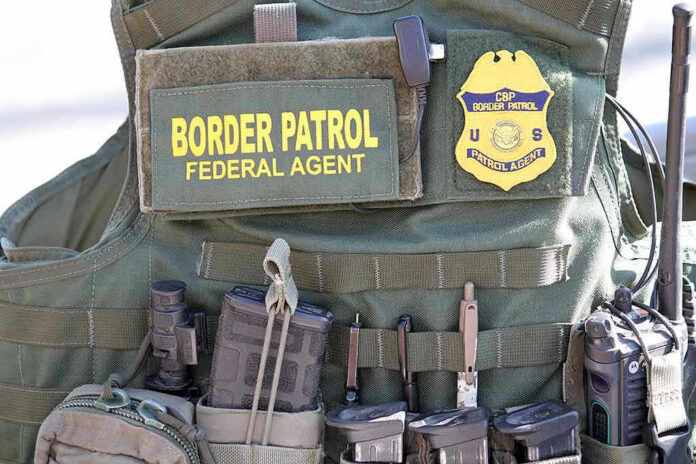
Mexican drug cartels have escalated their war against American law enforcement by placing $50,000 bounties on the heads of ICE and Border Patrol agents, transforming routine immigration enforcement into a deadly game of hunter and hunted.
Story Snapshot
- Drug cartels are offering up to $50,000 bounties for killing U.S. immigration officials
- Advanced surveillance tactics include drone monitoring and coordinated ambush planning
- ICE and CBP agents now face unprecedented personal security threats while performing duties
- Department of Homeland Security confirms the authenticity of these cartel hit contracts
The Price on American Heads
The Department of Homeland Security revealed that Mexican cartels have systematically targeted Immigration and Customs Enforcement officers and Customs and Border Protection agents with monetary incentives for their assassination. These bounties represent a calculated strategy to intimidate and eliminate federal agents who disrupt lucrative smuggling operations. The $50,000 price tag demonstrates the cartels’ financial capacity and their desperation to neutralize effective enforcement.
This bounty system transforms every interaction between agents and suspected cartel members into a potentially lethal encounter. Agents who once focused solely on immigration violations now must consider whether their next arrest could trigger a coordinated assassination attempt. The psychological warfare aspect cannot be understated, as fear becomes a weapon deployed against American law enforcement.
High-Tech Surveillance and Coordinated Strikes
Cartels have upgraded their tactical approaches beyond traditional violence, employing sophisticated drone surveillance to monitor agent movements and identify vulnerable targets. This technological advancement allows criminal organizations to track federal agents’ daily routines, family locations, and operational patterns. The intelligence-gathering operation rivals military reconnaissance, creating detailed profiles of potential victims before executing planned attacks.
Coordinated ambush strategies represent another evolution in cartel tactics, moving beyond spontaneous violence to premeditated assassination plots. These organizations deploy multiple operatives across different locations, creating complex webs of surveillance and strike capabilities. The level of organization required for such operations demonstrates the cartels’ transformation from disorganized crime groups into paramilitary forces.
Border Security Under Siege
The bounty system directly challenges American sovereignty by targeting federal agents tasked with enforcing immigration law. When foreign criminal organizations can effectively terrorize U.S. law enforcement through financial incentives, the fundamental authority of American government comes under attack. This represents more than criminal activity; it constitutes an assault on the nation’s ability to control its own borders.
DHS warned there's credible intelligence that drug cartels have placed bounties of up to $50,000 on ICE and CBP agents. The alleged threats come amid tensions in Chicago and Portland with ICE officials conducting deportation sweeps. @PierreTABC reports. https://t.co/WVP8lSEqFh pic.twitter.com/eivOd26Zod
— World News Tonight (@ABCWorldNews) October 15, 2025
ICE and CBP agents now require enhanced security protocols that fundamentally alter how they perform their duties. Personal protection details, modified work schedules, and restricted public appearances become necessary adaptations to counter cartel threats. These defensive measures inevitably impact operational effectiveness, as resources shift from enforcement activities to agent protection.
The Escalation Imperative
The federal government faces a critical decision point regarding its response to cartel bounties on American agents. Allowing foreign criminal organizations to terrorize federal law enforcement without severe consequences establishes a dangerous precedent that undermines all future enforcement efforts. The response must be proportional to the threat while demonstrating that targeting American agents carries catastrophic consequences for those responsible.
International cooperation with Mexican authorities becomes essential, though complicated by corruption within Mexican law enforcement and government agencies. The cartels’ ability to operate sophisticated assassination programs suggests either complicity or incompetence among Mexican officials tasked with combating these organizations. American security interests may require unilateral action when cooperative efforts prove insufficient to protect federal agents.
Sources:
State Department Narcotics Rewards Program – Mexican Targets