One passenger’s shouted claim about a bomb in his wife’s luggage transformed a routine United Airlines flight into an ordeal that exposed the raw nerves and urgent realities of air travel in 2025.
Story Snapshot
- A United Airlines flight from Dallas to Chicago was forced to make an emergency landing in St. Louis after a bomb threat.
- The threat, made by a passenger about his wife’s luggage, triggered a full-scale evacuation and swift arrest.
- No injuries were reported, but the event caused significant disruption, anxiety, and renewed scrutiny of aviation security.
- The incident highlights both the strengths and vulnerabilities of modern air travel safety protocols.
Bomb Threat Mid-Flight: The Anatomy of an Emergency Landing
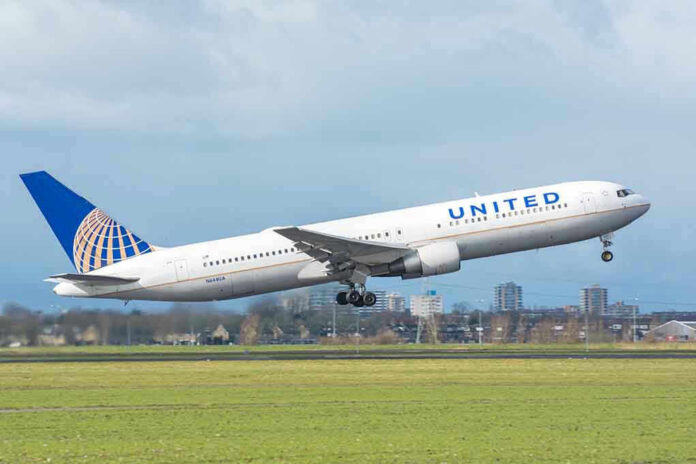
United Airlines flight UA380, a Boeing 737-700, left Dallas on a clear Sunday morning, November 16, 2025, expecting an unremarkable journey to Chicago. Instead, about forty minutes into the flight, the cabin’s routine was shattered by a male passenger, only 26 years old, who loudly insisted there was a bomb stowed in his wife’s luggage. The pilots immediately declared a general emergency, diverting the aircraft to St. Louis Lambert International Airport, where emergency response teams had already mobilized. The plane landed safely on runway 29, but the chaos was far from over: passengers were hustled off and herded to the B concourse, while the bomb and arson unit swept the aircraft for explosives.
The suspect—whose motivation remains unclear—was swiftly arrested. Authorities acted with textbook precision, but the ripple effects of the incident spread beyond the runway. The threat, ultimately determined to be a hoax, forced a hard pause on airport operations and left travelers and crew in a state of collective unease. No bomb was found, but the psychological impact and disruption were real, and the incident quickly became a case study in both the strengths and limits of aviation security.
Security Protocols Tested: What Happens When Threats Become Real
Bomb threats on commercial flights have always been rare, but when they do occur, they unmask the delicate balance between routine and risk in air travel. Lambert St. Louis International Airport, a major Midwest hub, demonstrated its readiness: director Rhonda Hamm-Niebruegge coordinated a seamless evacuation, and law enforcement moved in with practiced discipline. For United Airlines, the incident tested not just their emergency playbook, but also their reputation for passenger safety. The airline, like many others, has faced mounting pressure to reassure a public still wary from years of pandemic-era disruptions and a recent uptick in disruptive passenger incidents.
United flight forced to make emergency landing in St Louis after passenger made bomb threat, report says | The Independent https://t.co/RtJBITyoV0
— FireandAviation TV (@FireandAviation) November 17, 2025
Historically, bomb threats almost always turn out to be false alarms, but the consequences are substantial: flight delays, cascading disruptions to other routes, and an immediate spike in passenger anxiety. In this case, the quick-thinking pilots, the efficient ground response, and the absence of injuries were all positives. But the fact of the threat—however unfounded—forces a broader conversation about the adequacy of pre-boarding security and the unpredictable nature of human behavior at 30,000 feet.
The Stakeholders: Crew, Passengers, and the Broader Public
For the passengers and crew of UA380, the reality of a bomb threat—no matter how quickly resolved—turns a common experience into a trauma. Many were left shaken, and all had their travel plans upended. United Airlines must now navigate both the immediate aftermath and the longer-term reputational fallout. Lambert St. Louis International Airport, under Hamm-Niebruegge’s direction, can point to a successful emergency response, but the event has reignited debate over whether current airport security protocols are keeping pace with evolving threats.
Law enforcement’s role remains central: arresting the suspect, conducting a thorough aircraft search, and now probing the man’s motives. With no bomb found, the question becomes not just one of criminal investigation, but also public reassurance. In the broader community, every such incident becomes a cultural touchstone—fuel for talk radio, cable news, and online forums where anxiety about air travel safety is never far from the surface.
Implications for the Aviation Industry: Security, Scrutiny, and Public Trust
The immediate effects were felt in delayed flights, anxious travelers, and airport staff scrambling to restore normalcy. But the longer-term implications may prove more consequential. Airlines and airports are under renewed pressure to review security protocols, reconsider how they screen passengers, and perhaps invest more in mental health assessments for travelers. Industry experts, from aviation security professionals to academic analysts, agree: while the statistical likelihood of an actual bomb is remote, the psychological and operational impact of threats is profound.
Calls for stricter pre-boarding screening are balanced by warnings not to overreact to isolated incidents, lest travel become even more burdensome and anxiety-ridden. For now, the facts are clear: a single disruptive passenger can upend hundreds of lives and expose enduring vulnerabilities in a system designed to move millions safely every day. The investigation into the suspect’s motives continues, but the industry—and the public—have again been reminded that in aviation, every threat, no matter how improbable, must be treated as real.