
On his first day back in office, President Trump issued blanket clemency to nearly 1,600 individuals convicted of or awaiting trial for offenses related to the January 6, 2021, Capitol attack—an unprecedented act that legal experts warn signals a dangerous erosion of democratic accountability.
Quick Take
- Trump pardoned approximately 1,600 January 6 defendants on January 20, 2025, framing the action as correcting a “grave national injustice” and initiating “national reconciliation”
- Legal scholars and Justice Department officials describe the mass pardons as an unprecedented abuse of presidential power that undermines the rule of law
- Counterterrorism experts warn the pardons may encourage future political violence and signal that crimes committed on behalf of Trump will go unpunished
- The move deepens political polarization and raises questions about the future of accountability in American democracy
The Unprecedented Nature of Presidential Clemency
Presidential pardons have long been controversial, but Trump’s blanket clemency for January 6 defendants stands alone in American history. No prior president has pardoned such a large group for crimes directly challenging the democratic process itself. While presidents from Nixon to Clinton issued contentious pardons, none approached the scope or political nature of this action. The sheer scale—nearly 1,600 individuals—combined with the symbolic message sends ripples far beyond the courtroom.
What the Prosecutions Represented
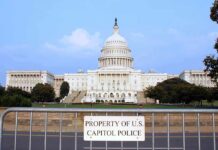
Between 2021 and 2024, federal prosecutors charged over 1,000 individuals involved in the Capitol attack. These weren’t abstract legal matters. Prosecutors pursued cases involving assault on police officers, destruction of federal property, and conspiracy charges. Some defendants belonged to organized extremist groups like the Oath Keepers and Proud Boys. The Justice Department treated these cases as serious threats to the constitutional order. Now, with a single executive action, that prosecutorial work has been systematically dismantled.
The Political Calculation Behind the Move
Trump signaled his intention to pardon January 6 defendants throughout 2022 to 2024, and on December 8, 2024, as president-elect, he promised pardons on his first day in office. This wasn’t spontaneous mercy—it was a calculated political promise kept. The framing as “national reconciliation” masks a more fundamental message: loyalty to Trump comes with protection from legal consequences. For supporters, it’s vindication. For critics, it’s a blueprint for future political violence.
Expert Warnings About Democratic Erosion
Randall Eliason, a law professor at George Washington University, called the pardons an “abuse of power” and a signal that crimes committed on behalf of Trump would go unpunished. Senior Justice Department officials described the action as a “green light” for political violence. Counterterrorism researchers warn that normalizing political violence through pardons creates conditions for future attacks. These aren’t partisan complaints—they reflect genuine concern about institutional damage.
The Immediate and Long-Term Fallout
Immediately, hundreds of prisoners were released or had sentences commuted. Law enforcement and prosecutors faced demoralization. The broader message to potential political actors is stark: attacking federal institutions may carry consequences, but those consequences can be erased with the right political connections. Long-term, the precedent invites future presidents to use clemency as a political tool for rewarding allies rather than as an act of mercy based on justice.
Democracy’s Vulnerability to Executive Power
The Constitution grants presidents broad pardon authority, but that power was designed with an assumption: presidents would exercise restraint and respect the separation of powers. Trump’s action exposes how fragile that assumption truly is. When a president can unilaterally erase accountability for crimes against the democratic process itself, the system’s structural safeguards become theoretical rather than practical. The judiciary and Congress lack effective mechanisms to override such decisions.
What Comes Next
The political and legal landscape has fundamentally shifted. Supporters view the pardons as justice for what they see as politically motivated prosecutions. Critics see a precedent that threatens the rule of law. Some legal ambiguities remain regarding the scope of the pardons, particularly for crimes tangentially related to January 6. As polarization deepens, the question facing Americans is whether democratic institutions can survive when one branch of government systematically dismantles accountability for attacks on those very institutions.
Sources:
Pardon of January 6 United States Capitol attack defendants – Wikipedia
Clemency Grants by President Donald J. Trump (2025-Present) – U.S. Department of Justice