

A federal indictment says a famed “hate watchdog” funneled donor cash through fake accounts to pay a neo-Nazi–linked source.
Story Snapshot
- Justice Department says the Southern Poverty Law Center routed over $3 million through fictitious entities [4].
- An informant tied to the National Alliance allegedly received more than $1 million from 2014 to 2023 [3].
- Charges include 11 counts of wire fraud, false statements, and money-laundering conspiracy [4].
- House questioning highlighted claims of a romantic link and joint bank accounts between an employee and the informant [1].
What the Federal Case Alleges, In Plain Terms
The United States Department of Justice announced an indictment charging the Southern Poverty Law Center with 11 counts, including wire fraud, false statements to a bank, and conspiracy to commit concealment money laundering [4]. Prosecutors say the group used fictitious entities and bank accounts to move donor money while hiding who controlled the funds [4]. The charging document argues donors were misled about how their gifts would be used. These are allegations at the indictment stage, not proven facts in court.
The indictment describes a paid informant program that allegedly sent more than $3 million to individuals tied to extremist groups [4]. One informant, labeled F-9, was said to be affiliated with the neo-Nazi National Alliance and to have worked as a field source for more than a decade [6]. Public reporting based on the indictment says one informant received more than $1 million from 2014 through 2023 while tied to that group [3]. These details form the backbone of the fraud theory.
Why the Allegations Matter to Donors and the Public
This case cuts to trust. Donors give based on mission promises. The Department of Justice alleges the group obtained money through false statements and omissions about how donations would be spent [4]. If proven, that is not sloppy bookkeeping. That is fraud. The alleged use of fake entities and disguised accounts would show intent to hide ownership and control of funds, which is central to any money-laundering conspiracy theory [4]. The facts must be tested in court.
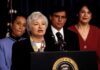
During a House hearing, lawmakers pressed the organization’s leadership on claims tied to the indictment. One exchange cited language that the informant and an employee shared a home, had two joint bank accounts, and were romantically involved [1]. That line of questioning underscores a potential conflict of interest and the risk to donor funds. The official declined to confirm details and denied wrongdoing, pointing to the ongoing case. A hearing clip is not proof; the courtroom record will decide.
Sorting Allegations From Proof Without Spin
Conservatives have long criticized the Southern Poverty Law Center for labeling mainstream religious and policy groups as “hate” organizations. This indictment, if proven, would expose a deeper problem: not just bias, but alleged deception and concealed payments. Still, indictment claims are not convictions. The organization denies the charges and says it will answer them in court, where evidence such as emails, bank records, and source agreements can be weighed against the allegations [1]. Until then, facts should be read with care.
Several details remain limited in the public record. The indictment excerpts do not name the employee in the alleged relationship. They also do not yet show the full set of communications that could prove intent, oversight failures, or personal benefit. Those gaps do not clear the group, but they do mark what the government must still prove. The best test will be transaction-level tracing of donor dollars, shell accounts, and payouts, matched against what donors were told [4][6].
How This Fits a Larger Pattern of Nonprofit Risk
Whatever the verdict, the case highlights a known nonprofit risk. Fraud often grows where oversight is weak, duties are not separated, and management controls can be bypassed. Industry guidance warns about corruption, billing schemes, and misuse of funds, and points to strict segregation of duties, active board oversight, and routine reconciliations as core safeguards [13]. Donors should expect clear disclosures, clean audits, and documented controls. Groups that claim moral authority must meet the highest standard.
Bottom Line for Readers Who Value Accountability
The Department of Justice says a powerful institution used secret channels to pay a source linked to a neo-Nazi group and misled donors in the process [3][4][6]. The organization denies wrongdoing and says the court will sort it out [1]. For citizens who care about truth, limited government, and the rule of law, the path forward is simple: demand evidence, demand audits, and demand consequences if the charges are proven. Equal justice should apply to every group, without exception.
Sources:
[1] Web – SPLC boss funneled $1.2 million to lover in neo-Nazi group — pair even …
[3] Web – SPLC boss funneled $1.2 million to lover in neo-Nazi group
[4] Web – WATCH: Justice Department charges SPLC with fraud over paid …
[6] Web – Federal Grand Jury Charges Southern Poverty Law Center for Wire …
[13] Web – can erase the impact of the civil rights giants that came before us …
© patriotpostnews.com 2026. All rights reserved.