As Turkey locks down protests ahead of a major NATO summit, critics say “national security” is fast becoming a global license to silence ordinary people.
Story Snapshot
- Turkey’s capital Ankara is under a 13-day blanket ban on all public gatherings tied to the NATO summit[3].
- Police and prosecutors have detained more than 200 people, including lawyers, academics and activists, in sweeping “anti-terror” raids[3][6].
- Rights groups call the ban a “disproportionate” and “excessive” attack on free speech and assembly[3][6].
- The crackdown fits a wider global trend where governments use high-profile events to restrict dissent and expand police powers[11][12].
Turkey’s NATO Summit Ban: What Exactly Did Ankara Do?
On June 22, the Ankara Governorate announced a province-wide ban on all public assemblies from June 28 to July 10, the days surrounding the July 7–8 NATO summit in the city[3]. The order blocks marches, rallies, press statements, leafleting, banners, and even small gatherings in public spaces[5]. Officials say the goal is to protect national security, public order, and the safety of visiting delegations, especially around “sensitive” areas like the summit venue and hotel routes[3]. Supporters view this as basic event security. Critics see a de facto mini state of emergency in the capital[5].
The timing of the ban matters. The order took effect just as Turkey prepared to host top leaders of the North Atlantic Treaty Organization, a military alliance it joined in 1952 and still calls central to its security[10]. For many observers, this is not just about crowd control. It is about how governments behave when the world is watching. Some fear Ankara wants to ensure foreign guests see a calm city, not street protests questioning NATO, U.S. policies, or the Turkish government itself[5]. This fear taps into a broader frustration that “image management” has replaced listening to citizens.
Mass Detentions Under “Anti-Terror” Operations
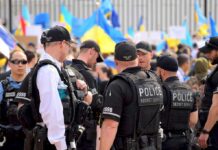
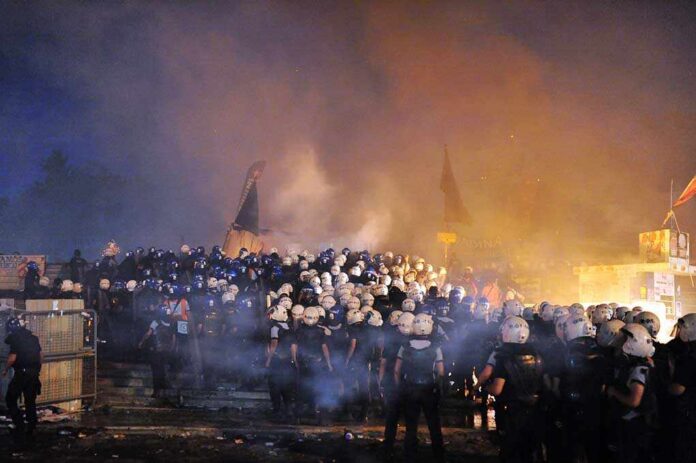
In the days around the ban, Turkish police carried out large raids, detaining at least 209 people in Ankara and other cities[1][6]. The Ankara Chief Public Prosecutor’s Office said 225 people were picked up in operations launched at dawn on June 23, and that the goal was to “decipher the action and activities of terrorist organizations” linked to Islamic State and revolutionary leftist groups[3]. Of those detained, more than 100 were sent to pretrial detention, with others under strict judicial controls like house arrest[3]. Notably, prosecutors did not publish specific charges or detailed evidence for each suspect.
Human Rights Watch reports that those detained include activists, lawyers, academics, and people tied to leftist movements, as well as alleged Islamic State supporters[1]. Amnesty International says many of these individuals were targeted mainly because of their political work or identity, not because they were caught committing violent acts[3]. Rights advocates argue that calling such a broad group “terror suspects” without clear evidence blurs the line between public safety and silencing dissent[6]. This is especially worrying for people on both the right and left who already doubt that elites use security tools fairly.
Rights Groups Warn of a “Blanket” Assault on Basic Freedoms
Amnesty International describes the Ankara measures as a “blanket protest ban” and an “excessive and unjustifiable attack” on the rights to peaceful assembly and expression[3]. Human Rights Watch says the arrest of at least 209 people before the summit shows “ruthless intolerance” of free speech and protest in Turkey today[1]. Legal analysts note that the governorate’s order relies on very general security and public order provisions, rather than a targeted response to specific, proven threats[6]. In plain terms, the state has given itself broad powers first and offered few details later.
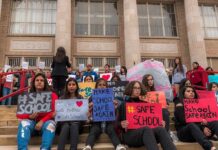
Reports from Turkish and international outlets also point to growing public backlash in Ankara[5]. Students, leftist groups, and anti-NATO protesters have tried to rally, some even defying the ban in smaller gatherings. Their message is simple: the government should not shut down the capital’s political life for nearly two weeks because powerful leaders are in town. For many Americans watching from afar, this echoes fears at home that protests can be squeezed by permits, “security zones,” and vague claims of danger, even when crowds are peaceful[12][16].
A Global Pattern: Security Summits, Silenced Streets
Turkey’s move is not unique. Amnesty International has documented similar bans during major events elsewhere, such as Sri Lanka’s prohibition of protests in Colombo during the 2013 Commonwealth summit, which it called a “blatant attempt to silence criticism” of human rights abuses[10]. In Europe, new research finds a “sweeping pattern” of states restricting protests, often citing national security or public order without solid reasons[11]. These tools include broad bans, heavy police force, and wide surveillance that make people afraid to speak out[11].
Rights groups have condemned a protest ban imposed by Turkey ahead of a Nato summit, as well as the arrest of hundreds of people in a sweeping crackdownhttps://t.co/Fz3NnuvPSE
— Middle East Eye (@MiddleEastEye) June 29, 2026
In the United States, the American Civil Liberties Union and the International Network of Civil Liberties Organizations have tracked a rise in laws since 2017 that limit where and how people can protest, sometimes creating new crimes for demonstrations near certain officials or buildings[12][16]. These trends worry citizens across the political spectrum who feel that governments listen more to corporate donors and global partners than to local voices. When summit security becomes a catch-all excuse to hand police “preventive” powers and shut down public space, it feeds the belief that a deep-state style elite is tightening control while everyday people—whether conservative, liberal, or neither—lose more of the freedom that once defined the American and Western model.
Sources:
[1] Web – Turkey Bans Protests Across Many Provinces Ahead Of Major NATO Summit
[3] Web – Türkiye: Authorities must lift blanket protest ban ahead of NATO …
[5] Web – Rights groups have condemned a protest ban imposed by Turkey …
[6] Web – Ankara faces public backlash over sweeping NATO summit restrictions
[10] Web – Ankara bans public gatherings due to ‘terror alert’ – Al Jazeera
[11] Web – “Rights groups have condemned a protest ban imposed by Turkey …
[12] Web – Turkey: Government must protect Protest and Debate after Ankara …
[16] Web – The Global Suppression of Protest – ACLU of Texas
© patriotpostnews.com 2026. All rights reserved.