
In Britain, a dying teenager was handcuffed and read his rights while his killer’s lie about “racism” shaped police decisions in real time.
Story Snapshot
- Bodycam video shows police arresting 18‑year‑old stabbing victim Henry Nowak as he begs, “I’ve been stabbed” and “I can’t breathe.”
- The killer, Vickrum Digwa, falsely claimed he was the victim of a racist attack, steering officers to treat Nowak as the suspect.
- Police later say they were “misled,” but public anger focuses on why officers ignored clear medical distress.
- The case has sparked protests and debate over whether anti‑racism rules and “identity” claims now override basic duty of care.
What The Bodycam Footage Really Shows
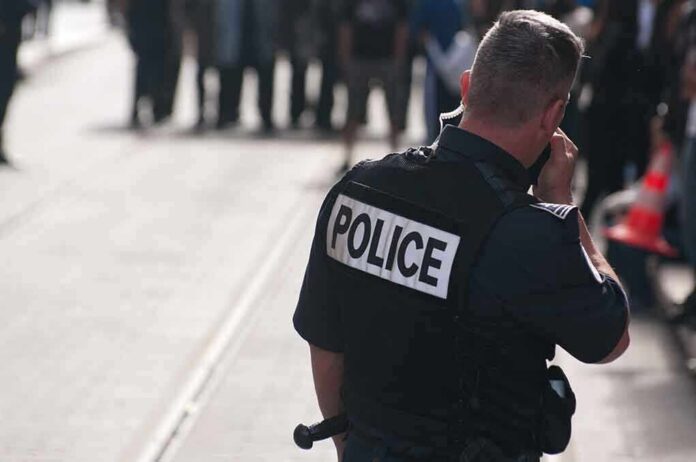
Police body camera footage from Southampton shows 18‑year‑old student Henry Nowak lying on the ground, struggling to breathe and telling officers, “I’ve been stabbed” and “I can’t breathe” again and again. One officer responds, “I don’t think you have, mate,” after only briefly lifting Henry’s shirt, then moves ahead with handcuffing him. The video captures Henry saying he cannot breathe multiple times while officers restrain him and then read him his rights for assault as he fades into silence.
According to BBC reconstructions and other reports, Henry tells officers he has been stabbed at least four times and that he cannot breathe at least seven to nine times before he becomes unresponsive. Instead of treating him first as a medical emergency, the officers treat him as the aggressor in a supposed racist attack, even as his wounds are later found to be unsurvivable. This sequence is why people across the spectrum see the footage not as a minor error, but as a shocking reversal of basic common sense and duty.
How A Lie About Racism Shaped Police Decisions
When police arrived, killer Vickrum Digwa told them he had been racially abused and attacked, claiming Henry had pulled off his turban and targeted him because of his Sikh faith. A 999 emergency call from Digwa’s brother also stressed that Digwa was the victim of racial abuse, reinforcing that storyline before officers ever saw Henry up close. Later, the judge who sentenced Digwa to life in prison with a minimum of 21 years called those racism claims lies, stating that Henry had not said anything racist during the encounter.
This is where many people, left and right, see a deeper problem. Reports and commentary on prior cases show a pattern in British policing where unverified claims of racial victimization by a suspect can trigger rapid restraint of the other party, even when that person is injured. In Henry’s case, the racism narrative appears to have carried more weight than his repeated cries for medical help. Critics argue this looks like “two‑tier policing” driven by identity politics, while others worry that real anti‑racism work will be discredited if officers are seen as blindly obeying any claim of bias.
Official Response: ‘Misled’ Officers And An Ongoing Watchdog Probe
Hampshire Police, the force involved, has said in an official statement that its officers were “misled at the scene” by wrong information, including claims that no weapon was involved. The chief, Alexis Boon, has apologized to Henry’s family, calling the footage “a tragedy, an absolute tragedy,” while also noting that officers did switch to giving aid within minutes, though medical experts later said his wounds could not be survived. For many viewers, that apology feels important but incomplete, because it still leaves the key question: why was a bleeding teenager ever handcuffed and arrested first.
The Independent Office for Police Conduct (IOPC) — Britain’s national police watchdog — has opened a formal investigation into the officers’ actions and how racism accusations influenced their decisions, with a report expected within months. Three officers remain on duty and one has resigned, while local police and crime commissioners are calling for a review of training, culture, and how control rooms guide officers during chaotic incidents. Prime Minister Sir Keir Starmer has said the video left him feeling “sick” and that there are “serious questions for police,” but he has stopped short of calling it proof of a broader systemic failure.
Protests, Politics, And The Trust Gap
The footage has triggered protests and, in some places, riots in Southampton and beyond, with crowds angry that a victim was treated as a suspect while his killer stood nearby. Far‑right figures such as Tommy Robinson and Nigel Farage have seized on the case to claim “anti‑white racism” and “two‑tier policing,” pointing to the way officers seemed to believe Digwa’s racism story without evidence while doubting Henry’s stabbing claim. Their involvement has made the debate louder but also more toxic, letting officials and media dismiss some criticism as politically motivated.
🚨 UK Cops Face Probe Over Henry Nowak Death
🇬🇧 The Henry Nowak Case: Two-Tier Policing Caught on Bodycam
This is one of the ugliest cases of institutional failure to come out of the UK in years, and the bodycam footage makes it impossible to spin.
🔪 What Happened
Henry… pic.twitter.com/VV9K7ORLGg
— Tony Seruga (@TonySeruga) July 3, 2026
At the same time, the National Black Police Association has warned against rolling back anti‑racism guidance because of this case, calling some demands “reactive” and “not well thought‑out.” That stance worries many regular citizens who are not far‑right or far‑left. They see a system that can admit “mistakes” but resists deeper change, even when video shows officers ignoring a dying young man. For Americans already frustrated with their own “deep state” and unaccountable agencies, the Henry Nowak footage feels like one more reminder that when institutions protect themselves first, ordinary people pay the highest price.
Sources:
facebook.com, youtube.com, npr.org, cbc.ca, instagram.com, reddit.com
© patriotpostnews.com 2026. All rights reserved.