Venezuela’s earthquake recovery is already stretching from rescue work into a long cleanup that officials say will take years.
Quick Take
- The June 24 earthquakes killed at least 1,719 people and injured about 5,000, according to United Nations reporting.
- More than 2,000 rescue workers from 27 countries are still deployed across the worst-hit areas.
- Authorities say more than 12,000 people have been displaced, and the missing count is still not settled.
- Search teams are still dealing with aftershocks, rubble, and damaged roads, which slows the shift to recovery.
Rescue Effort Still Dominates the Response
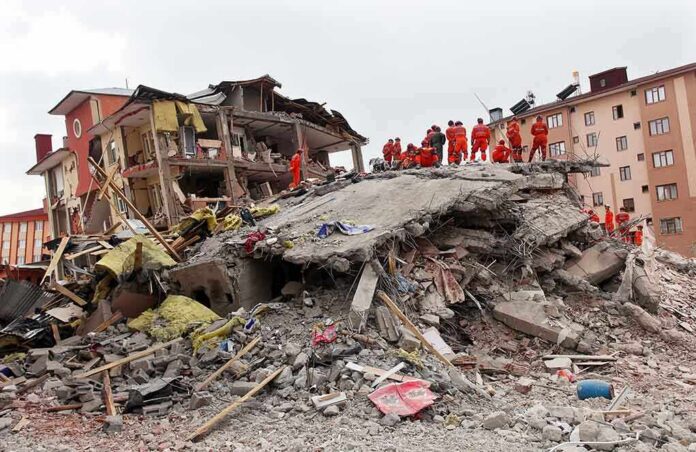
The immediate response in Venezuela remains centered on finding survivors, counting the dead, and moving aid into damaged areas. United Nations News reported that the United Nations is coordinating humanitarian help while warning that recovery “is going to take time.” Reuters also reported that foreign rescue teams flooded in as officials kept searching the hardest-hit coastal zones after the death toll moved above 1,400.
That rescue phase has not been quick or neat. National Assembly President Jorge Rodríguez said early casualty counts kept rising as teams tried to reach people trapped under collapsed buildings, and he said more than 200 people were still buried in debris at one point. The United States Geological Survey said the stronger quake measured 7.5 and called the disaster likely widespread, with high casualties and damage probable.
Why the Recovery Will Take So Long
The scale of damage points to a recovery measured in months and years, not weeks. United Nations reporting said around 12,000 people were displaced, while more than 2,000 rescue workers from 27 countries were still on the ground. The United Nations Population Fund said the earthquakes caused widespread destruction and more than 130 aftershocks, which kept emergency operations active instead of letting recovery start cleanly.
Other reports show how many parts of daily life have been thrown off at once. The U.S. Geological Survey described the event as a double quake that struck within 39 seconds, a pattern that left many structures damaged before anyone could assess the full toll. CNN reported that the first days brought hundreds of aftershocks, while Al Jazeera said rescue efforts were already turning toward recovering bodies as the search for live victims became harder.
A Test of Government Capacity and Foreign Aid
The disaster has also become a test of state capacity in a country already under strain. Reuters reported that officials later said 6,462 people had been rescued and about 17,000 had been left homeless, showing how large the housing and shelter problem has become. Relief reporting from the International Organization for Migration said damage hit hospitals and other key infrastructure, which can slow medical care, shelter, and rebuilding at the same time.
🇮🇱🇻🇪 Israel’s aid delegation completes mission in Venezuela; meets interim president Delcy Rodríguez
“Venezuela’s interim president, Delcy Rodríguez, held a meeting today to thank the joint Israeli aid delegation from the Foreign Ministry and the IDF following the completion of… pic.twitter.com/3vOvUWyJHB
— גיא עזריאל Guy Azriel (@GuyAz) July 22, 2026
For many families, the hardest part may not be the initial quake but the long wait for housing, medical help, and closure. United Nations reporting said aid needs were still rising, while international rescue teams were beginning to leave even as local authorities and United Nations agencies kept working in the hardest-hit regions. That split between emergency response and long-term rebuilding is now defining the next phase of the crisis.
Sources:
insiderpaper.com, news.un.org, aljazeera.com, theguardian.com, state.gov, unfpa.org, youtube.com, reuters.com, cnn.com
© patriotpostnews.com 2026. All rights reserved.