
Colombia’s 7.4-magnitude earthquake has triggered a fast-moving emergency, with officials racing to assess deaths, damage, and airport closures at the same time.
Quick Take
- Officials said President Abelardo de la Espriella called an emergency meeting with the United Nations Office for Disaster Risk Management to coordinate the response.
- Authorities suspended flights at several western airports while engineers checked for structural damage.
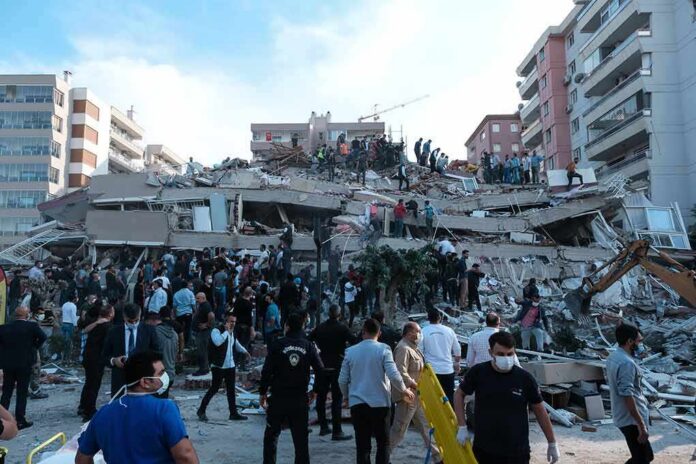
- Local leaders reported deaths, collapsed buildings, and trapped residents as rescue teams worked in damaged cities.
- The public toll changed quickly across reports, showing how early disaster counts can shift before the full picture is known.
Emergency Response Moves Into Place
Colombia’s government moved quickly after the quake, with national and local officials describing an active response rather than a pause for review. Reuters reported that aviation authorities suspended operations at several western airports while inspections were carried out, and the United Nations said search and rescue work was continuing as the death toll rose. That mix of closures, rescue work, and damage checks shows how fast the state had to react.
The quake struck near San José del Palmar in western Colombia, and the United States Geological Survey and Colombia’s geological service both placed it at magnitude 7.4. The same reports say the epicenter was in Chocó department and that the shaking was felt across a wide area. That matters because emergency planners had to respond not just to one city, but to a broad region with damaged roads, airports, and towns.
Damage, Casualties, and Local Warnings
Local officials were already giving public updates as the situation unfolded. The BBC reported that Pereira’s mayor said at least 18 people had died, while Cali’s mayor said about 25 buildings had collapsed. ABC News said casualties and damage were also being reported in Pereira, Quibdó, Cali, and Manizales, with seven airports suspending service and more than 1,600 homes damaged or destroyed. The figures changed across outlets because the assessment was still in progress.
That shifting picture is one reason early earthquake coverage can feel chaotic. Reuters, the BBC, ABC News, the Associated Press, and the United Nations all described an evolving toll as rescuers pulled survivors from rubble and officials updated counts. In the first hours after a major quake, the public often sees numbers before the command structure is fully settled, and that can make the response look less organized than it may be on the ground.
Why This Earthquake Drew So Much Attention
The scale of the damage made the event hard to ignore. The United Nations said its official tally showed 1,575 homes damaged, 37 destroyed, 61 collapsed buildings, 18 damaged health centers, and 52 damaged educational facilities. CNN also reported that the government declared a national emergency and sent military personnel to help affected areas. Those details point to a disaster that strained housing, health care, transport, and local rescue systems at once.
BREAKING / UPDATE: A powerful magnitude 7.4 earthquake struck western Colombia on the morning of Monday, August 10, 2026 (around 7:34 a.m. local time / 12:34 UTC), causing widespread destruction, collapsing buildings, and claiming at least 111 lives so far, with dozens more…
— Naija Daily Update (@9jaDailyUpdates) August 10, 2026
For many Colombians, the fear was not only the quake itself but the risk that basic services would fail next. Reports said rescue teams were still searching collapsed structures, airports were under inspection, and limited connectivity in rural areas made the full impact harder to measure. That gap between what officials know and what the public sees is where mistrust grows fast, especially when casualty counts keep moving and damage reports arrive in pieces.
Sources:
youtube.com, theguardian.com, reuters.com, abcnews.com, bbc.com, foxweather.com, nbcnews.com
© patriotpostnews.com 2026. All rights reserved.