

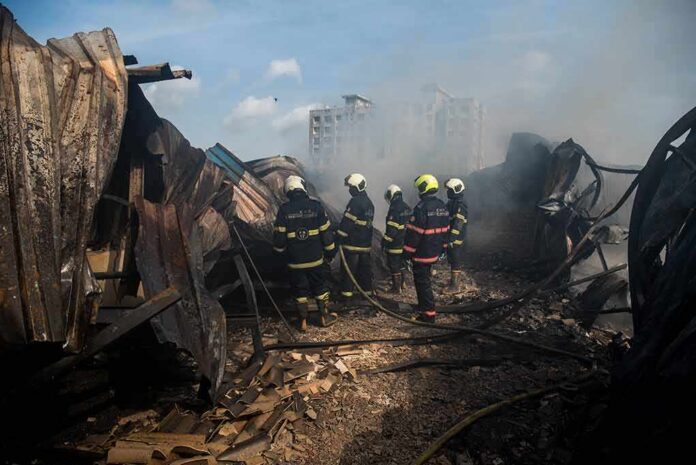
A fire and explosion tore through a munitions factory near Rome, shook a town, and, against the odds, hurt no one.
Story Snapshot
- Fire and blast hit the KNDS Ammo Italy plant in Colleferro on August 13, 2026.
- Officials reported no injuries as workers sheltered or evacuated safely.
- Investigators are probing the powder-pressing area as a likely origin point.
- Authorities opened an inquiry; the cause remains under review, with no public evidence of sabotage.
What Happened at the Colleferro Ammunition Plant
Italian media and wire services reported a fire followed by an explosion at the KNDS Ammo Italy facility in Colleferro, southeast of Rome, on August 13, 2026. Emergency crews rushed to the scene, and regional leaders focused on safety and evacuation. The owner said it is too early to confirm the cause and that teams on site are assessing the damage and sequence of events. Authorities said there were no immediate reports of injuries linked to the incident.
Local and national outlets pointed to the powder-pressing or powder-compaction department as the likely origin area. That step involves compressing energetic material, which can be risky if heat, friction, or contamination occurs. Reports said employees on duty sheltered in secure rooms or were moved to safety as responders set up an exclusion zone around the site. Officials did not release a final worker headcount; different articles cited about two dozen people on the shift.
What Investigators Are Doing Now
The Velletri Public Prosecutor’s Office opened an inquiry shortly after the event, a standard step in Italy for industrial accidents that involve dangerous materials. Early reporting said prosecutors filed an arson-related offense to allow full investigative tools, but authorities did not present public evidence of sabotage, and working assumptions pointed to an industrial accident pending results. Fire brigades and plant teams are expected to examine equipment, residues, and safety logs.
KNDS said teams are investigating the incident and asked for time to confirm facts. That aligns with how these cases proceed. When a fire and blast strike a site that handles energetic compounds, investigators must check electrical systems, maintenance records, housekeeping, and powder-handling procedures. They also review alarms, camera footage, and sensor data to trace the moment ignition began and how it spread through the line.
Why Powder-Pressing Lines Are So Hazardous
Manufacturing lines that handle propellants and explosives face known hazards. International safety research shows many unplanned blasts occur during steps like compaction, mixing, or heating, where heat and pressure can trigger runaway reactions. Small Arms Survey materials describe how storage, handling, and process conditions, plus security lapses, can combine to cause a blast. That pattern fits the narrow, practical focus now seen in Colleferro: find the ignition point and fix the failure mode.
🇮🇹 Major explosion at Italian munitions plant near Rome.
A powerful blast ripped through the KNDS Ammo Italy facility (formerly Simmel Difesa) in Colleferro, about 40 km southeast of Rome.
The plant manufactures medium and large calibre ammunition used by European forces,… pic.twitter.com/P77p8fcmFN
— 🇬🇧💥𝕾𝖙𝖆𝖓𝖉 𝕱𝖔𝖗 𝕭𝖗𝖎𝖙𝖆𝖎𝖓💥🇦🇺 (@Maxwellpainn) August 14, 2026
Past case studies by government and technical bodies also warn that single-base powders can shift from burning to detonation under certain conditions. Process upsets, equipment wear, or contaminated batches can raise risks in pressing and finishing steps. Safety lessons stress strict housekeeping, anti-static controls, temperature and humidity limits, and clear evacuation plans. The Colleferro outcome, with no reported injuries, suggests drills and shelter protocols helped protect workers when alarms went off.
What This Means for Supply Chains and Public Confidence
Media reports linked the factory’s output to European ammunition supplies, including stocks that help Ukraine. A short shutdown after a fire can slow deliveries, but the real test comes later, when inspectors decide what can restart and what must be rebuilt. Communities need honesty on risks, timelines, and air quality checks, while customers need clarity on safe production volumes. Officials said safety was the top priority as crews worked the scene.
People across the political spectrum see a pattern that worries them. Complex systems fail, and leaders often respond with slow reports and guarded language. That fuels the sense that elites protect themselves first while workers and neighbors carry the risk. Clear facts help. Here, the established record shows an industrial fire and explosion, no reported injuries, and an active investigation focused on the powder line. Those are the anchors to judge what comes next, not rumor or hype.
What to Watch Next
Watch for the prosecutor’s first public summary and any fire brigade incident log. Look for plant safety data on alarms, sprinklers, venting, and system shutdowns. Seek an exact timeline from first smoke to blast and to worker sheltering. These details will show whether the event was a process failure, a mechanical fault, or something else. Until then, the verified facts remain narrow and firm: a fire, a blast, and—remarkably—no reported injuries in Colleferro.
Sources:
planet-today.com, washingtonpost.com, albawaba.com, abcnews.com, euronews.com, livemint.com, kyivindependent.com, militarnyi.com, yahoo.com, wsws.org, exponent.com
© patriotpostnews.com 2026. All rights reserved.