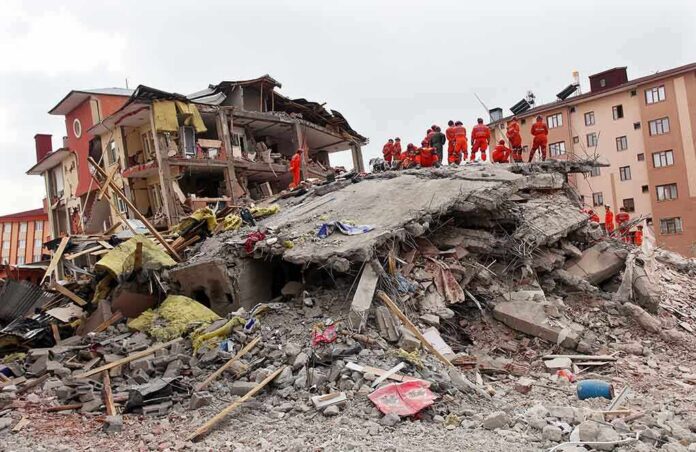
A powerful magnitude 7.7 earthquake in eastern Indonesia killed at least 47 people and forced thousands from their homes.
Story Snapshot
- A magnitude 7.7 quake struck near Flores before dawn on August 15, 2026.
- Indonesia’s disaster agency later confirmed at least 47 dead as reports grew.
- Authorities issued and then lifted a tsunami warning after monitoring seas.
- Early counts show hundreds of homes damaged and mass displacement.
What Happened: A Pre-Dawn Quake Hit the Flores Region
United States Geological Survey reports and Indonesia’s meteorological agency said a magnitude 7.7 earthquake struck off northern Flores Island shortly before 5 a.m. local time on August 15, 2026. The shaking was strong and shallow, which raises risk for buildings and people near the epicenter. Initial live coverage cited local rescue officials who reported early deaths and injuries as crews began to respond across several locations. Those first figures rose as teams reached more towns and villages through the day.
Indonesia’s meteorological agency issued a tsunami warning soon after the quake and urged people near the coast to move to higher ground. The agency later announced the warning was over after sea level checks did not show a dangerous wave, a step confirmed by several outlets tracking the alert timeline. That sequence is common in large quakes around Indonesia’s many islands, where fast alerts can save lives even if a tsunami does not form.
Confirmed Toll and Damage as Assessments Expanded
Indonesia’s National Disaster Mitigation Agency released an updated count stating at least 47 people were killed after the quake and many aftershocks hit eastern Indonesia. The number rose through the day as access improved and reports came in from more districts. Early damage tallies shared by reporters showed more than 300 houses with some level of damage, including at least 157 listed as heavily damaged, with others moderately or lightly damaged. Officials warned that figures could still change as checks continue.
Thousands fled their homes after the shaking, with emergency shelters set up in several areas. France24 reported preparations to support about 2,000 people in temporary shelters, while wider evacuations pushed displacement far higher as families camped outside or moved to safer areas. Such swift, large movements are typical after major Indonesian quakes, as people fear aftershocks and weak structures. Local teams continued rapid assessments to identify needs for water, food, and blankets as night approached.
Why Early Numbers Shift and What to Watch Next
Disaster reporting in Indonesia often starts with scattered numbers that firm up over 24 to 72 hours. Agencies lead with fast alerts, while search and rescue crews work through remote areas and damaged roads. That was the case here: first reports listed only a few casualties, but the count rose as responders confirmed more deaths and injuries across the Flores region. The final toll and the full map of damage will depend on continued access and verified reports from each district.
Thousands of people displaced by a powerful earthquake in eastern Indonesia awaited much-needed aid on Aug. 17 as they camped out at schools, police stations and government offices, with many stuck outside https://t.co/Ky50wPUpSg
— UCA News (@UCANews) August 17, 2026
For readers in any country, this event is a reminder that basic readiness still saves lives. Clear warnings, strong buildings, and fast local response matter most in the first hours. Indonesia’s fast tsunami alert and later stand-down showed the system at work, even as the land damage proved deadly. Watch for updates on road access, power and water restoration, hospital capacity, and whether displacement numbers grow as more villages report in.
Sources:
reuters.com, bbc.com, english.news.cn, x.com, dw.com, france24.com
© patriotpostnews.com 2026. All rights reserved.