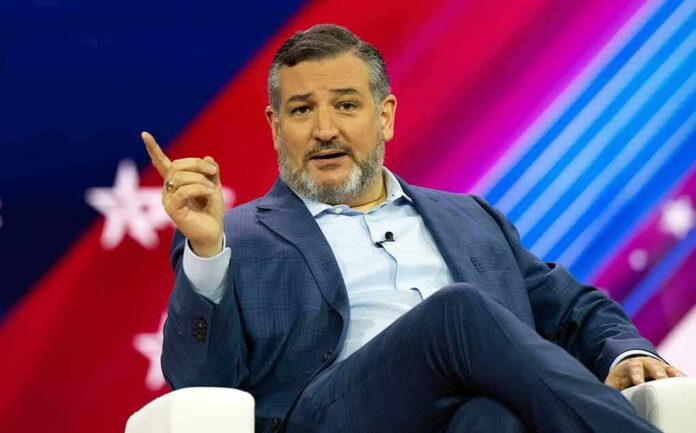
The Senate advanced Senator Ted Cruz’s nationwide college sports rules with a commanding bipartisan vote that could soon reshape how student-athletes earn money.
Story Highlights
- Senator Ted Cruz’s Protect College Sports Act cleared key hurdles with broad bipartisan support.
- The bill sets federal rules for name, image, and likeness deals and grants a limited antitrust shield.
- Cruz says the plan allows athlete pay while restoring order to transfers and eligibility fights.
- CBS aired Cruz’s extended interview on the bill and wider politics on October 3, 2026.
What Cruz’s Bill Would Do
Congress is weighing the Protect College Sports Act of 2026, sponsored by Senator Ted Cruz of Texas. The bill would set national standards for how student-athletes make money from their name, image, and likeness. It would also give schools a narrow antitrust shield to work together on selling certain media rights. Supporters say federal rules would replace a patchwork of state laws and stop constant fights over who sets the terms.
The Senate Commerce Committee described the plan as bipartisan and aimed at protecting athletes and keeping real competition. The committee said the bill seeks to preserve chances for students to play while bringing stability back to college sports. Cruz has framed the goal in simple terms: let athletes profit, but keep rules that support fair play, rivalries, and a link to education. That framing anchors the text now before Congress.
How Far It Has Advanced
The proposal moved with momentum. Committee materials say it advanced out of the Senate Commerce Committee with a 19 to 9 vote. Later, the full Senate approved a motion tied to consideration by a margin reported as 77 to 22. Those tallies signaled cross-party buy-in and raised expectations for action. Public events with athletes and coaches also helped spotlight the measure and its sponsors on Capitol Hill.
During the push, Cruz said the bill addresses specific pain points. He pointed to transfer churn, eligibility disputes, and messy recruiting battles tied to name, image, and likeness money. He argued that clear federal rules would calm the “wild west” feel of the current market while keeping student status and academic goals intact. The committee’s releases echo that view, presenting the bill as a stability play rather than a rollback of athlete earnings.
Why Congress Is Stepping In Now
Federal action follows years of legal and state-level change that weakened the old model run by the National Collegiate Athletic Association. Court rulings and state laws opened the door for athletes to get paid for their name, image, and likeness. With no single federal rulebook, colleges, conferences, and athletes faced uneven rules across states. That pressure pushed lawmakers to try a uniform standard that balances athlete rights with shared competition rules.
This debate is larger than one bill or one senator. Congress has been pulled into college sports after court defeats exposed limits on central control. The core tradeoff remains the same: national uniformity versus athlete freedom to move and earn as they choose. Cruz and his partners say the act strikes that balance by keeping pay and adding guardrails. Critics will test that claim as the exact enforcement details come into focus in the coming months.
Public Pitch And Media Spotlight
Cruz brought the message to a wide audience through national media. CBS ran an extended interview with anchor Tony Dokoupil on October 3, 2026. The segment covered the bill, midterm politics, and President Trump’s approval rating. That booking ensured the college sports plan reached viewers beyond policy circles. It also placed the bill inside the broader political season, where attention and scrutiny are both higher than normal.
Sen. Ted Cruz (R-TX) said the Protect College Sports Act would bring “order to chaos” in college athletics by creating national rules for transfers, NIL compensation and other issues.
Asked about criticism that the legislation would cap athlete pay and limit their ability to… pic.twitter.com/qLaw6GoQau
— CBS Evening News with Tony Dokoupil (@CBSEveningNews) October 3, 2026
Supporters point to visible backing from athletes, coaches, and conferences during Capitol events. Committee channels highlighted more than two dozen conferences and several sports bodies that engaged with the process. Those signals, along with the large Senate vote, set a path for continued action. Still, some fine print questions remain practical ones for lawmakers: how enforcement will work, how transfers will be handled, and how to protect both athlete pay and fair play at the same time.
Sources:
commerce.senate.gov, cruz.senate.gov, congress.gov, cbsnews.com
© patriotpostnews.com 2026. All rights reserved.