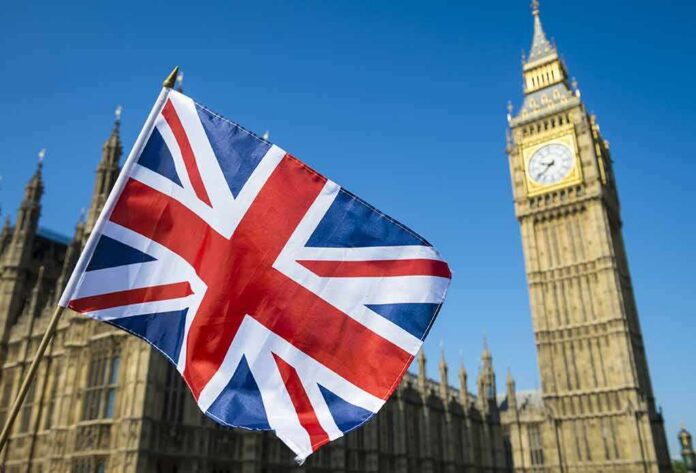
A Russian strategist’s open threat to nuke Britain and Germany has crashed into the United Kingdom’s vow to “double down” on arming Ukraine—putting deterrence and nuclear risk on a direct collision course.
Story Snapshot
- Sergey Karaganov warned Russia could strike the United Kingdom and Germany with nuclear weapons if the war continues.
- Tucker Carlson highlighted the risk of a nuclear exchange in a debate clip now circulating online.
- The United Kingdom’s 2025 review pledges £3 billion in yearly military aid to Ukraine and leans on its nuclear deterrent.
- United Kingdom defense leaders say a Russian attack on NATO remains unlikely due to allied strength.
What sparked the latest nuclear escalation debate
Tucker Carlson pushed the nuclear danger to the front of the debate by saying the world sits “on the brink of a nuclear exchange,” a line featured in a new video clip. Around the same time, Russian strategist Sergey Karaganov, long tied to Kremlin thinking, warned that Russia could eliminate the United Kingdom and Germany with nuclear strikes if the war in Ukraine keeps its pace. These statements revived public fears and forced a hard look at risk, resolve, and red lines.
Karaganov’s words hit a nerve because they describe nuclear use not only as imaginable but as a lever to force policy change in Europe. Supporters of his warning argue that more fighting raises the odds of a mistake or spiral. Critics counter that threats like these are designed to scare the West into retreat. Both views share one truth: nuclear rhetoric is now a daily part of the information fight, and it pressures leaders and voters at the same time.
How British policy answers the threat
The United Kingdom’s 2025 Strategic Defence Review commits £3 billion each year in military aid to Ukraine “for as long as it takes,” and centers national defense on a minimum, credible, independent nuclear deterrent assigned to the North Atlantic Treaty Organization. The document frames deterrence as a daily task in Europe and calls for forces “optimized for warfighting” to protect allies. In short, London’s plan is to meet risk with readiness, not to step back from the fight.
Parliament research describes Russia’s 2022 invasion as a turning point that ended old post–Cold War assumptions and renewed the need for high-intensity readiness. United Kingdom-backed analysis casts support to Kyiv as the most effective tool to impose costs on Moscow and coerce movement toward peace, while stressing that deterrence must look credible to work. This view sees sustained aid, stronger conventional forces, and the nuclear backstop as a package that lowers, not raises, the chance of wider war.
What military leaders say about the odds of attack
United Kingdom defense leaders point to NATO’s weight to argue that a direct Russian strike on alliance members is unlikely. They cite combined conventional and nuclear power, frequent joint exercises, and rapid deployment drills as proof of credible deterrence. This message aims to calm fears at home while showing Moscow that the alliance is not bluffing. It also gives political cover to keep aid flowing and keep training pipelines open.
That confidence is not the same as comfort. Deterrence depends on clear signals, steady policy, and the ability to absorb shocks. As the war grinds on, the risk is not just a planned strike, but a misread message, a failed sensor, or a tit-for-tat that moves too fast. Even if the chance of a direct attack stays low, the costs of a mistake are so high that leaders must manage escalation as carefully as they manage supply lines.
The shared public worry beneath the policy fight
British opinion often supports keeping nuclear weapons while also fearing nuclear war. That split tracks a broader mood across the West: citizens do not trust elites to manage rising risks, yet they want protection if the worst comes. In the United States, many on the right and left see a ruling class that talks tough abroad while life gets harder at home. This gap feeds doubt that leaders can balance resolve with restraint when stakes are nuclear.
New START expired in February 2026. The May Nuclear Non-Proliferation Treaty (NPT) Review Conference ended without a final document. Strategic stability is entering a more fragmented phase.
The United States, Russia, China, France and the United Kingdom remain the five… pic.twitter.com/oNH8GC3638
— Sohail Ahmad (@sohailanalysis) September 29, 2026
For readers in both parties, two truths can live together. First, credible defense can deter aggression and protect free nations. Second, nuclear threats are not empty theater, and every new shipment, strike, or sanction must be weighed against escalation risk. The public expects straight talk, not spin. That means saying what the goal is, what the limits are, and how leaders will avoid a ladder of steps that ends where no one wins and millions lose.
Sources:
youtube.com, gbnews.com, gov.uk, preprints.apsanet.org
© patriotpostnews.com 2026. All rights reserved.