

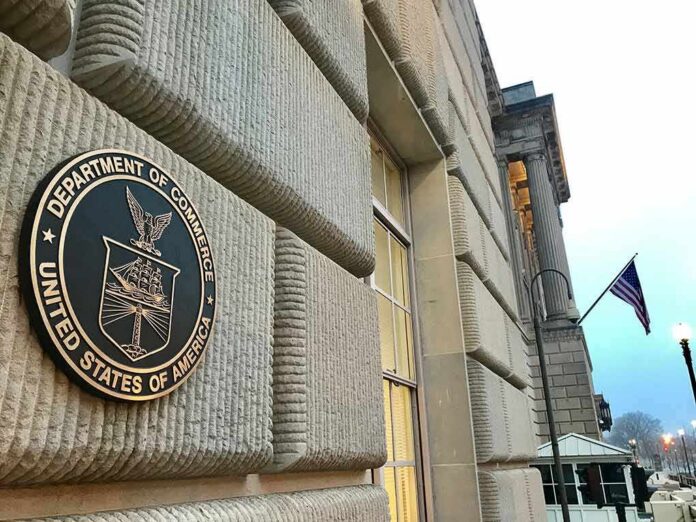
Federal bank regulators warned that California’s new climate-disclosure rules could clash with national banking law and push lenders to cut ties with the state’s economy.
Story Highlights
- The Office of the Comptroller of the Currency asked California to exclude federally chartered banks from two climate-reporting laws.
- California materials describe broad coverage that reaches large firms doing business in the state, including banking and finance.
- The fight centers on whether state reporting rules interfere with federally protected banking powers.
- Banks warn of rising costs and legal risk, while California seeks uniform climate data from major companies.
What triggered the clash: a federal letter to California
The Office of the Comptroller of the Currency sent a letter on October 29, 2026, to the California Air Resources Board. It asked the board to exempt national banks and federal savings associations from two state climate-disclosure laws, or to state they are not covered. The agency said the state rules raise legal and policy problems for banks governed by federal law. A trade outlet summarized the request as a preemption warning shot aimed at avoiding a formal legal showdown.
California wrote the rules to collect greenhouse gas data and climate risk reports from large companies. State workshops describe Senate Bill 253 as applying to United States entities with over one billion dollars in annual revenue that do business in California. The materials list banking, insurance, asset management, and other finance sectors among those covered, signaling no carveout for national banks in that framework. Proposed materials also map a second program for climate-risk reporting for firms over five hundred million dollars in revenue.
Why banks say this could be a federal-state conflict
The Office of the Comptroller of the Currency oversees national banks under federal statutes. Courts have long held that states cannot pass laws that prevent or significantly interfere with national bank powers. In Barnett Bank and related cases, the Supreme Court described national bank authority as ordinarily preempting contrary state rules. The agency has echoed that view in guidance, warning that state rules that burden core banking activities can be invalid.
The letter argues that California’s climate rules may force banks to change nationwide operations to meet a single state’s demands. That could expose banks to new liability and compliance costs that pull resources from lending and customer service. A banking journal report said the request urges California to step back before the Office of the Comptroller of the Currency moves to formalize preemption. The agency also points to its role in safety and soundness, which could be strained by overlapping mandates.
California’s stance: broad, sector-neutral reporting
California’s public materials focus on company size and activity in the state, not on a firm’s charter. Slides define covered entities by formation in the United States, revenue over threshold, and doing business in California. The deck lists banking, finance, insurance, fintech, and other capital-market firms within scope. Another set of proposed materials presents the emissions and climate-risk programs side by side, again tied to revenue tiers and state business activity rather than to industry-specific charters.
Advisory summaries of the exclusions mention nonprofits, many insurance entities, government bodies, and firms limited to wholesale power trades. They do not list national banks or federal savings associations as excluded. That suggests the default design captures any large firm active in California, including banks, unless the board creates a new carveout in rulemaking. California has not, in these materials, addressed federal preemption head-on.
What this means for customers, investors, and workers
If banks face dual mandates, they may pass costs to customers through higher fees or tighter credit. They could also limit services in California to reduce reporting exposure. That could hurt small firms and households that already struggle to get loans. On the other hand, supporters say consistent climate data helps investors judge risk and protects workers and retirees whose savings depend on stable firms. The near-term risk is confusion while agencies sort out who must report and when.
Read "Little-known California climate rule could drive banks out of the state, feds warn" on SmartNews: https://t.co/2cUzN0m4y3 #SmartNews
— Gene Melius (@gene_melius2) October 30, 2026
Both sides claim to guard the public. The Office of the Comptroller of the Currency frames its move as defending a uniform national banking system and basic access to credit. California frames its rules as needed light on climate risk for the biggest players in its economy. The deeper issue is trust. Many Americans believe powerful institutions write rules for themselves. A clear answer on who is covered, set in writing and on time, would signal that rules apply in a fair, workable way.
What to watch next: clarity or court
Watch for the California Air Resources Board to state in plain terms whether federally chartered banks are covered, exempt, or delayed. If the board does not narrow the scope, the Office of the Comptroller of the Currency could issue a preemption determination or support litigation. Either path would test how far a state can go on corporate reporting when the firm is a national bank. Investors and bank compliance teams are watching filing deadlines and any grace periods closely.
Sources:
nypost.com, occ.treas.gov, podcasts.apple.com, mlex.com, hoodline.com, ww2.arb.ca.gov, gtlaw.com, supreme.justia.com
© patriotpostnews.com 2026. All rights reserved.