
Robert F. Kennedy Jr. told a Michigan rally that 500 million Arabs “don’t produce science” or “literature,” a sweeping claim flatly contradicted by well-documented prize winners and records.
Story Highlights
- Kennedy made categorical claims about Arabs and achievement at a Grand Rapids rally.
- Newsweek identified multiple Arab Nobel laureates, undercutting his wording.
- Mediaite noted recent Arab-linked literary award winners challenging “no literature”.
- The remarks blurred criticism of the Muslim Brotherhood with claims about all Arabs.
What Kennedy Said And Where He Said It
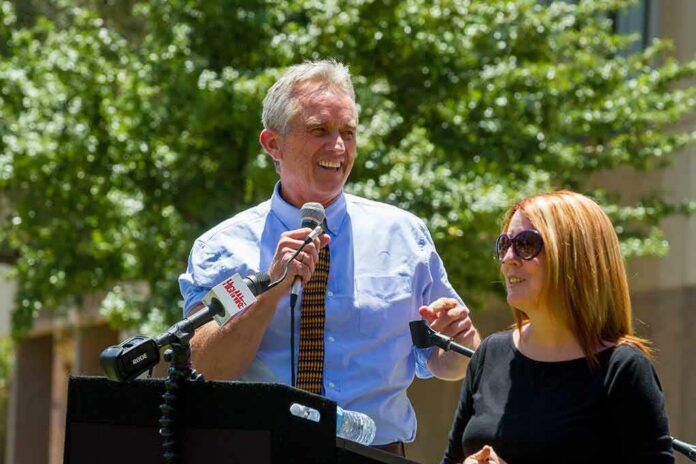
Mediaite and Newsweek reported that Robert F. Kennedy Jr. told a Republican rally in Grand Rapids that 500 million Arabs “don’t produce science,” “don’t win the Nobel Prize,” “don’t win the Fields [Medal],” “don’t win the Wolf Prize,” and “don’t produce literature”. Newsweek added that Kennedy made the comments while discussing the Muslim Brotherhood and tied the group to an ideology of “victimization, of murder, of genocide”. The statements drew fast pushback because they spoke broadly about Arabs, not a single group.
Mediaite framed the remarks as a sweeping dismissal of Arab science and culture, quoting Kennedy’s list of prizes and claims about literature. Newsweek independently reported the same core quotes and context at the Michigan event, noting that the speech moved from a point about the Muslim Brotherhood to broad statements about Arabs as a whole. That shift matters because it assigns traits to a vast, diverse population rather than to a defined organization.
What The Records Actually Show
Newsweek pointed to Nobel Foundation records and named Arab laureates that contradict Kennedy’s claim that Arabs “don’t win the Nobel Prize”. It cited Egyptian scientist Ahmed Zewail, who won the Nobel Prize in Chemistry in 1999; Egyptian novelist Naguib Mahfouz, who won the Nobel Prize in Literature in 1988; and Yemeni journalist Tawakkol Karman, who shared the Nobel Peace Prize in 2011. These examples undercut the categorical nature of Kennedy’s wording and show clear countercases.
Mediaite also highlighted recent literary awards that challenge the claim that Arabs “don’t produce literature,” naming Lebanese writer and painter Rabih Alameddine and Egyptian-American journalist Omar El Akkad as National Book Award honorees. While definitions of “Arab” can vary by ancestry, language, and nationality, the presence of well-known writers and prize recipients shows why blanket statements fail. The reporting further noted that Kennedy referred to a “Fields prize,” while the honor is the Fields Medal in mathematics.
Why Broad Claims Spark Bipartisan Concern
Americans across the spectrum worry that leaders reach for culture-war lines instead of hard facts. This case shows how a sweeping claim can distract from concrete policy debate about extremist groups. Scholarship finds that media and political talk often merge “Arabs,” “Muslims,” and specific organizations into a single category, which fuels stereotypes and public division. That pattern helps explain why Kennedy’s language set off alarms beyond partisanship: it painted hundreds of millions of people with one brush.
Voters upset with elites on both left and right want leaders to deal in data, not easy applause lines. When a speech names prizes and science output, it invites verification. Here, public records and named laureates quickly challenged the absolute terms. The lack of a defined group, time frame, or denominator also made the claim weak as a testable statistic. Clear definitions and transparent numbers help citizens judge arguments on their merits.
How To Read The Moment
Campaigns often run hot, and quick clips on social media can strip away context. But context cuts both ways: mentioning the Muslim Brotherhood does not justify claims about all Arabs. People deserve precise arguments about security and ideology, paired with accurate facts about science and culture. When leaders blur those lines, they push the country further into anger and away from shared ground, and they make it harder to solve real problems that demand focus and proof.
Sources:
© patriotpostnews.com 2026. All rights reserved.