
Washington kept the Iran blockade in place and expanded interdictions, raising both pressure and the risk of miscalculation.
Story Snapshot
- The United States kept a naval blockade on Iran and stood up Task Force Iron Gate to hit land routes.
- Iran warned of harsh retaliation while also offering a pause if the blockade ended and funds were released.
- President Trump said major escalation was unlikely, favoring economic pressure over new large strikes.
- Supporters claim the blockade grinds Iran’s finances; critics say it edges the region closer to wider war.
What Washington Did After The Midterms
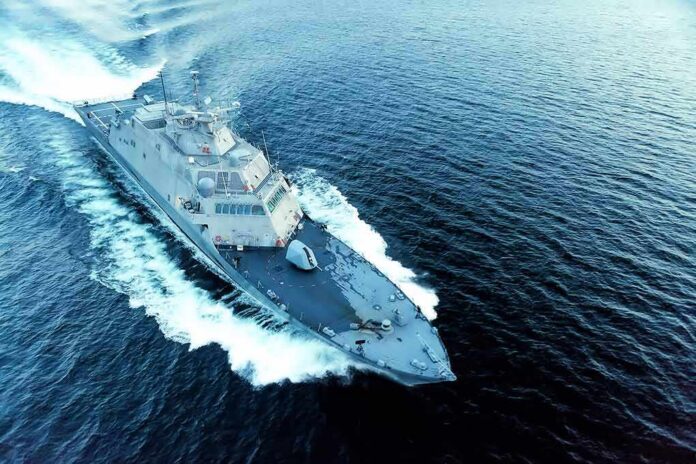
U.S. leaders kept the naval blockade on Iranian ports after the midterms and widened interdiction beyond the sea. U.S. Central Command announced Task Force Iron Gate to disrupt Iran’s trade across land routes and in the Caspian Sea, complementing the blockade effort. Reporting described the task force as part of a broader pressure campaign that continued even as public talk shifted to diplomacy and restraint. This choice signaled sustained coercion, not a rapid wind-down of the conflict.
Senior officials framed the pressure as a way to avoid new large-scale strikes while talks advanced. President Trump said further escalation was unlikely and saw no reason to renew major attacks, even as the blockade remained in force. Other reports said the White House favored economic squeeze tactics, backed by interdictions, rather than immediately returning to heavy bombing. The administration’s message stressed control and deterrence, not a push toward a wider war.
How Tehran Responded And What It Offered
Iran’s foreign minister warned that if the United States renewed major attacks, Iranian forces would “rain down hell,” signaling readiness to hit back. At the same time, Iran offered a two-day proposal: suspend hostilities and open the Strait of Hormuz if the United States ended the blockade and released frozen assets. This mix of threat and offer showed that Tehran viewed the blockade as central to the crisis, not as routine sanctions that could be ignored.
Critics argued the blockade itself raises the risk of a slide back into war. One analysis called a blockade an act of war under international law and warned that its continuation makes a return to heavy fighting more likely. That legal claim was assertive but did not include a cited treaty clause or formal legal opinion in the reporting. Still, the practical point stands: ongoing interdictions raise the number of armed encounters where a single mistake can spark a bigger clash.
Supporters’ Case For Pressure Over Bombs
Backers of the policy said the squeeze was working and reduced the need for major combat. Secretary of State Marco Rubio said sanctions and the blockade were inflicting growing damage on Iran’s economy, limiting funds for armed groups and military rebuilds. Reporting described a White House preference to maintain pressure while testing if Tehran would deal, instead of jumping straight into larger strikes. Supporters framed the blockade as a tool, not the end goal, to force talks from a position of strength.
Evidence from sanctions studies adds context but not certainty. Research on Iran finds early economic pain is real, yet long-term compliance often fades as targets adapt. Other work shows sanctions can even harden regime control by shifting blame to foreign powers. Those patterns suggest pressure can buy time and leverage, but it can also entrench resistance. That is the knife’s edge the United States is now walking with the blockade still active.
Why This Matters For Americans Watching Prices And Power
Continued interdictions in and around the Strait of Hormuz keep markets on edge. Energy traders track every hint of closure risk because one misstep can slow tanker traffic and lift prices. Reporting around this crisis tied oil flow worries to politics at home, where drivers feel price spikes fast and blame leaders for it. That feedback loop pressures Washington to look tough yet avoid war, even as on-the-water encounters become more frequent and more tense.
Trump Chooses a Third Path on Iran: Economic Strangulation Over War or Deal
* Axios
When Secretary of State Marco Rubio met his G7 counterparts in Paris on Tuesday, he told them President Trump had considered either resuming the war with Iran or striking a deal—but settled on a…
— mahmoud khalil (@sahel2212) November 11, 2026
For readers tired of double-talk from both parties, the core tension is plain. The government says the blockade is controlled pressure. Iran calls it an intolerable threat. The same U.S. move can look like restraint or like escalation. The public lacks access to the classified rules and intelligence that guide these decisions. That gap feeds the worry that small “temporary” measures harden into a forever policy that risks a big fight without a clear endgame.
Sources:
theamericanconservative.com, axios.com, usatoday.com
© patriotpostnews.com 2026. All rights reserved.