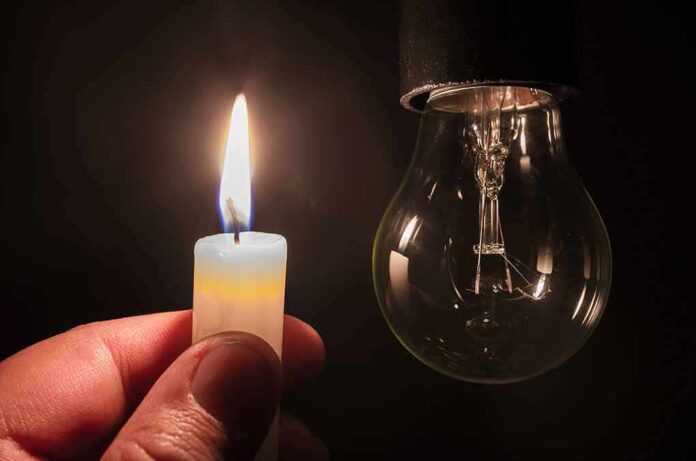
Cuba’s entire power grid collapsed Friday, plunging the island into a nationwide blackout as officials began emergency restoration steps.
Story Snapshot
- Energy ministry reported a “total collapse” causing an islandwide outage.
- Officials activated service-restoration protocols while probing the cause.
- Aging plants and fuel shortages have left the grid fragile for years.
- Repeated blackouts show how one failure can take down the whole system.
What Happened: A Nationwide Blackout Announced by Officials
On Friday in Havana, Cuba’s energy ministry said the national grid suffered a “total collapse,” triggering a blackout across the island of roughly nine million people. The Ministry of Energy and Mines posted the alert on its official account and said the cause was under investigation. The state utility said crews began procedures to restore power, a process that often starts with key plants and lines before broader service ramps back up. Authorities did not give a timeline for full recovery.
ABC News reported the ministry moved to “activate service-restoration protocols,” which usually include re-energizing priority circuits for hospitals, water systems, and communication hubs. Past outages in Cuba have taken hours or even days to stabilize as operators balance supply and demand on a stressed network. The government’s initial focus often centers on restarting baseload units and syncing regional lines, because any mismatch can cause a second trip and more delays. Residents braced for a long night without power.
Why It Keeps Happening: Fuel Shortages and Aging Infrastructure
Reuters has repeatedly documented how Cuba’s power system runs on old thermal plants, chronic fuel shortages, and thin reserve margins. When supply is tight and equipment is worn, a single fault can cascade into an islandwide disconnection. Rolling blackouts have become common even when the grid is online, reflecting a demand-supply gap and plants that fail faster than they can be repaired. These structural weaknesses make each new trip harder to fix, because spare parts and backup generation are limited.
Analysts and officials have framed the strain in different ways, but the pattern is clear: repeat collapses, slow restarts, and mounting social stress. Prior outages this year followed the same script, with pockets of power returning while large areas stayed dark. Each event disrupts homes, factories, schools, and hospitals. Food spoils. Internet and phone service drop. Public trust in core services erodes. The grid’s fragility turns every technical fault into a national crisis, felt most by people with the fewest resources to cope.
Why Americans Should Care: Fragile Grids Expose Everyday Life
Energy security is not abstract. When the lights go out, water pumps, hospital equipment, traffic lights, and stores stop. Cuba’s blackout is a stark reminder that basic infrastructure can fail when leaders postpone maintenance, burn through reserves, and ignore risk warnings. Americans across the political spectrum worry about high energy costs, aging lines, and the sense that powerful interests dodge accountability while families pay the price. A brittle grid anywhere shows how quickly life can unravel without power.
🚨 GLOBAL PULSE NEWS | CUBA
🇨🇺 NATIONAL POWER GRID COLLAPSES
Cuba has been hit by another nationwide blackout after its electrical grid suffered a total collapse, leaving millions without power.
Authorities said a failure involving high-voltage transmission lines triggered… pic.twitter.com/PgJBnTXDku
— GLOBAL PULSE NEWS (@GLOBALPULScgid) September 19, 2026
For the United States, a blackout in a nearby island can ripple through migration, trade, and regional stability. It also raises a simple test for our own system: Are we building reserves, replacing old equipment, and hardening against storms and cyber threats, or hoping luck holds? Cuba’s experience points to a hard truth. When maintenance slips and fuel planning falters, the bill comes due all at once. People sit in the dark while officials explain later why it could not be avoided.
Sources:
globalbankingandfinance.com, wftv.com, apnews.com, reuters.com
© patriotpostnews.com 2026. All rights reserved.