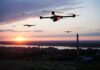
Ukrainian troops resort to shotguns as their last defense against Russia’s jammingproof fiber-optic drones, with over 60,000 soldiers now trained in this old-school but effective countermeasure.
Key Takeaways
- Russia’s fiber-optic drones remain operational despite electronic jamming efforts, forcing Ukrainian soldiers to use shotguns as a physical defense.
- Over 60,000 Ukrainian troops have been trained specifically on shotgun tactics against drone threats.
- The 12-gauge shotgun has emerged as the standard weapon of choice for drone defense in Ukraine.
- High-tech air defense systems are too costly and impractical to deploy against Russia’s low-cost drone fleet.
- Alternative countermeasures like net-firing pistols are in development but not widely available yet.
Old-School Weapons Against New-Age Threats
As Russia continues to deploy increasingly sophisticated drones across Ukrainian battlefields, Ukrainian forces have found themselves turning to surprisingly conventional weapons. Fiber-optic drones, which maintain their connection through a physical cable rather than wireless signals, have proven resistant to Ukraine’s electronic jamming equipment. This technological challenge has forced Ukrainian soldiers to adopt a straightforward solution: shotguns. The 12-gauge shotgun, a weapon that has existed for generations, has become an essential tool in Ukraine’s defensive arsenal against Russia’s advanced drone technology.
The efficacy of these shotguns stems from their simplicity and immediate impact. Unlike complex electronic countermeasures that may fail against fiber-optic technology, a well-aimed shotgun blast provides a direct and definitive solution to the drone threat. This approach reflects the practical adaptability of Ukrainian forces, who have been forced to innovate with limited resources against Russia’s technologically advanced military machine. The contrast between high-tech threats and low-tech solutions highlights the unpredictable nature of modern warfare.
Extensive Training Programs
Ukraine has implemented comprehensive training programs focused specifically on countering drone threats. Reports indicate that more than 60,000 soldiers have received specialized training in anti-drone tactics, with shotgun proficiency being a central component. This massive training initiative demonstrates the scale of the drone threat and Ukraine’s commitment to developing effective countermeasures. Training simulators are also being developed to improve soldiers’ accuracy and response time when facing fast-moving aerial targets.
The training emphasizes the unique challenges of engaging small, agile drones. Unlike traditional targets, drones require different tracking techniques and shot timing. Ukrainian instructors have developed specialized drills that teach soldiers to lead their targets appropriately and account for the drones’ erratic movement patterns. This adaptation of conventional shooting techniques specifically for drone defense represents a significant evolution in military training, driven by the immediate needs of the battlefield.
Cost-Effective Defense Solutions
The economics of drone warfare have played a crucial role in Ukraine’s defensive strategy. High-end air defense systems, which cost millions of dollars per unit, are simply not sustainable for countering Russia’s relatively inexpensive drones. This cost imbalance has driven Ukraine’s military planners to embrace more affordable solutions like shotguns, which provide a tremendous return on investment when successfully deployed against enemy drones. This approach allows Ukraine to conserve its limited supply of sophisticated air defense missiles for higher-value targets.
While shotguns currently remain the most reliable method for physically neutralizing fiber-optic drones, Ukrainian forces are exploring additional options. Pistols that fire nets to entangle drones are under development, although they have not yet been widely distributed to frontline units. These complementary technologies may eventually provide soldiers with multiple options for drone defense, creating a layered approach that combines both kinetic and non-kinetic methods to protect Ukrainian positions from aerial surveillance and attacks.
Evolving Battlefield Dynamics
The unprecedented scale of drone usage in the Russia-Ukraine conflict has created a complex and challenging battlespace. Both sides deploy numerous drones simultaneously, making it difficult for soldiers to distinguish between friendly and enemy aircraft. This visual confusion compounds the already difficult task of tracking and engaging small aerial targets, requiring Ukrainian forces to develop sophisticated identification protocols alongside their physical countermeasures. The battlefield has essentially transformed into a three-dimensional chess match where control of the airspace directly above troops has become as critical as traditional ground control.
As the conflict continues, the technological arms race between drone capabilities and countermeasures accelerates. Russia’s adoption of fiber-optic drones represents a direct response to Ukraine’s previously successful electronic warfare efforts. This cyclical pattern of innovation and counter-innovation illustrates how rapidly military technology evolves under the pressures of active combat. For now, the humble shotgun remains Ukraine’s most dependable defense against Russia’s technological advances, proving that sometimes the simplest solutions are the most effective in the chaos of modern warfare.