
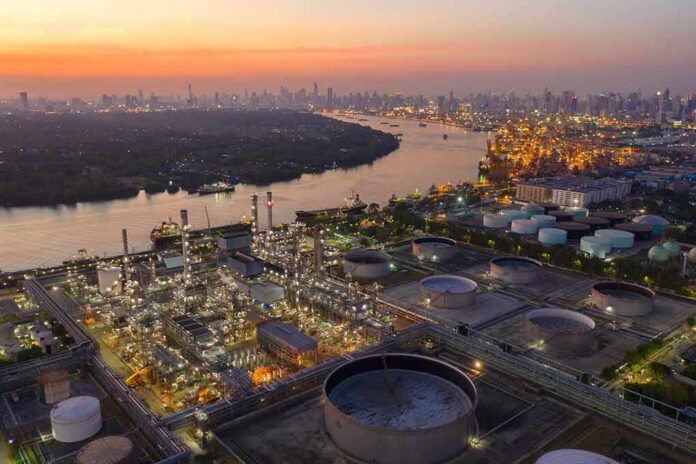
A small number of drones and missiles briefly knocked out over half of Saudi Arabia’s oil output, exposing how one strike can shake global supply.
Story Highlights
- Saudi Aramco said the September 14, 2019 attacks halted 5.7 million barrels per day — over half its output.
- Hits on Abqaiq and Khurais targeted core processing sites, not fringe assets.
- Saudi Arabia met exports by using storage and spare capacity while repairs advanced.
- Production was restored quickly, but repairs continued after output returned.
What The Attack Did To Saudi Oil Production
Saudi Aramco reported that strikes on September 14, 2019 forced a suspension of 5.7 million barrels of crude oil per day. The company named Abqaiq and Khurais as the sites and launched emergency fire control and stabilization work. The Congressional Research Service described the outage as more than half of Saudi output and about five percent of global supply. The hit was immediate and large. It was also focused on plants that handle flow from many fields, which magnified the impact.
Reuters reported that the shutdown reflected about half of Saudi crude production across both facilities, with Abqaiq and Khurais central to the loss. Abqaiq is not a simple pump station. It processes and stabilizes crude before export, so damage there bottlenecks the system. The scale of interruption showed how concentrated energy hubs create single points of failure. One strike wave changed supply math worldwide, at least for a short window.
How Saudi Arabia Kept Oil Flowing To Buyers
The Congressional Research Service reported that Saudi Arabia tapped oil in storage and used unaffected spare capacity to keep export promises while repairs moved ahead. This mattered for consumers who worry about price spikes and for countries that rely on steady flows. Using stocks bought time for crews to restore damaged lines and units. It also showed why strategic reserves and backup capacity exist — to cushion shocks when core assets go down.
Aramco’s recovery plan moved fast. The chief executive said on September 17, 2019 that suspended capacity would be fully restored by the end of that month. Aramco said Khurais resumed production within 24 hours, and Abqaiq was running at two million barrels per day at that point. Later reporting said pre‑attack production levels returned by September 25, even as on‑site repairs continued past that date. The system bent but did not break, thanks to planning and stockpiles.
Why The Facilities Hit Mattered So Much
Abqaiq and Khurais are not remote wells. They are processing hubs that treat crude from several fields before it can be shipped. When they go offline, throughput across the network drops. Analysts and officials called the volume loss one of the largest sudden outages on record by barrels. This is the “chokepoint” risk that keeps energy planners up at night. A few well‑placed strikes can have effects that far exceed the number of targets hit.
BREAKING – 🇸🇦 Oil prices eased as traders assessed Middle East tensions. Houthi attacks on Saudi Arabia are intensifying, targeting energy infrastructure, says Matthew Mullman. pic.twitter.com/QBUchw7x0j
— Technopolitik (@Technopolitik_) October 19, 2026
For families and businesses in the United States, the lesson is simple. Global energy shocks can start far away yet show up at the pump. America has its own reserves and growing production, but prices still move with world supply. Voters on the right and left worry that leaders talk more than they fix core risks. This episode shows why resilient infrastructure, honest inventories, and clear contingency plans matter — not just abroad, but at home too.
What The Recovery Does And Does Not Prove
The rapid recovery shows capacity was not permanently lost in late 2019. Aramco and independent reports said output returned fast, even as crews kept fixing equipment on site. That does not erase what the outage proved. It showed how a small number of hits can sideline a major exporter, at least for days. It also showed that storage and spare capacity can steady markets when used early and well. Both can be true at once.
What To Watch Next Time A Chokepoint Is Hit
Track three facts if a key hub is struck again. First, how much daily output is suspended, and for how long. Second, how much stored oil and spare capacity can backfill exports. Third, how quickly processing units restart after repairs begin. These signals tell you if a shock will pass or linger. They also reveal whether leaders invested in real resilience, or only in talking points that fade when the lights go out.
Sources:
zerohedge.com, congress.gov, reuters.com, my.gov.sa
© patriotpostnews.com 2026. All rights reserved.