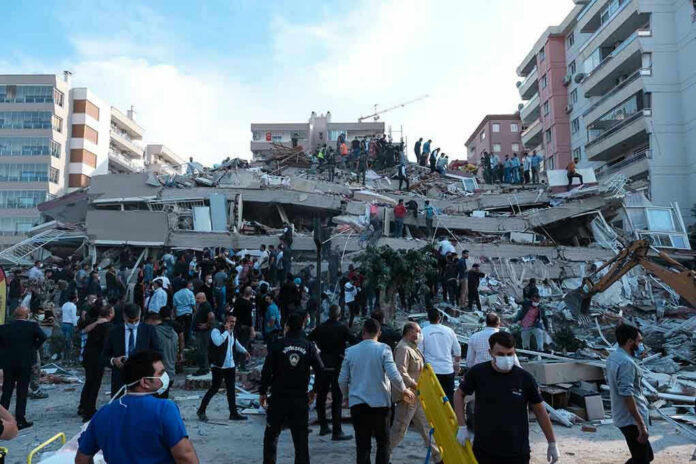
Almost 3,000 Venezuelans are now officially counted dead from the twin earthquakes, yet tens of thousands of families still have no idea where their loved ones are.
Story Snapshot
- Official death toll has climbed from a few dozen to roughly 2,954 in less than two weeks.
- Missing-person reports and satellite data suggest the true human cost may be far higher.
- Confusing numbers and slow transparency deepen distrust of a government already in crisis.
- Global aid is pouring in, but weak institutions make honest counting — and accountability — very hard.
How the Official Death Toll Exploded in Days
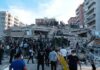
Venezuelan authorities first said 32 people were dead and about 700 injured after the June 24 quakes, numbers that sounded tragic but still limited for twin shocks of magnitude 7.2 and 7.5 hitting densely populated areas. Within 24 hours, the health minister raised the figure to around 235 deaths and 4,300 injuries. By June 26, officials spoke of more than 589 deaths and almost 3,000 injured, warning the toll would rise as rescuers reached more collapsed buildings.
Over the next three days, the count jumped again. Reports cited more than 900 dead, then at least 1,430, and then 1,450, as National Assembly President Jorge Rodríguez updated figures while hundreds of aftershocks shook La Guaira, Caracas, and nearby states. By June 29, United Nations briefings and Venezuelan officials spoke of at least 1,719 deaths and 5,034 injured. Subsequent social posts citing official data put the toll above 2,295 deaths and over 11,000 injured, with many thousands homeless.
Why So Many Are Missing — and Why the Numbers Are So Uncertain
Families, local groups, and reporters describe a scene that does not match the early official numbers. In La Guaira alone, families reported nearly 68,900 people missing just three days after the quakes, a staggering figure for any country, let alone one already in deep economic crisis. An International Organization for Migration estimate suggested over 6 million people could be affected, including about 2 million in Caracas, stressing the scale of disruption to homes, jobs, and basic services.
Satellite analysis backs up these fears. Researchers using Copernicus Sentinel-1 radar data estimated about 58,870 buildings damaged or destroyed across the region. When that many structures fail in a nation where many homes are not built to modern standards, mass casualties are likely. A United States Geological Survey model, shared by disaster experts, gave a 44 percent chance that deaths could reach between 10,000 and 100,000, underscoring how low the early figures may have been. None of these estimates are final counts, but they show why many observers believe thousands of victims are still “buried under rubble.”
Data Chaos, Distrust, and a Government Under the Microscope
The jump from 32 deaths to more than 2,000 in days looks shocking, but experts say this pattern is common when weak states face major disasters. Hospitals are overwhelmed, roads are blocked, and local officials often cannot report quickly. Bodies may remain under collapsed buildings for days or weeks. As one legal analysis noted, responsible governments admit uncertainty, correct errors, and explain how they count deaths and injuries. Venezuelan leaders have not yet given that clear, step-by-step accounting.
Every figure so far comes from the Venezuelan state or from United Nations briefings that rely on government data. There has been no full, independent audit of morgues, hospital records, or missing-person lists by international forensic teams. Media outlets like CNN, Reuters, the New York Times, and the BBC highlight this gap and warn that the official toll still seems “surprisingly low” compared with what rescuers see on the ground. That skepticism feeds a wider belief, shared by many on both the left and the right worldwide, that elites manage numbers to protect themselves instead of serving the public.
Global Aid, Political Tension, and What Honest Counting Would Look Like
Even as the numbers remain murky, help is arriving. Venezuela has welcomed thousands of foreign rescuers from dozens of countries, along with tons of supplies, search dogs, and specialized equipment to hunt for survivors in the ruins. United Nations officials estimate that up to 6.8 million people may need shelter, clean water, health care, and other relief, and say the death toll will “unavoidably and sadly keep on growing” as assessments continue. In videos and social posts, United States Marines and Canadian search teams can be seen working side by side with Venezuelans, showing the best of international cooperation even in a tense political climate.
Venezuela earthquake relief:
U.S. Marines and Soldiers work with Venezuelans to deliver supplies in La Guaira, Venezuela, June 3, 2026.At the direction of #SOUTHCOM, U.S. military forces are supporting @StateDept-led U.S. government relief operations following the devastating… pic.twitter.com/TYPOVv94mi
— U.S. Southern Command (@Southcom) July 4, 2026
Still, deeper political struggles are never far away. Long before the earthquakes, Venezuela was already facing repression, mass poverty, and a huge refugee crisis. Now, casualty figures have become another battleground. Opposition groups abroad share crowdsourced missing lists that reach tens of thousands of names, accusing the government of hiding the true scale of failure. At the same time, content rules on social platforms and hard lines from foreign governments, including Washington, can complicate neutral fact-finding and relief work.
For people watching from the United States, the story hits a nerve. Many already feel their own institutions dodge hard truths on disasters, wars, and economic pain. Guidance from bodies like the Centers for Disease Control and Prevention and the United Nations Human Rights Office lays out how casualty recording should work: clear rules, transparent methods, independent checks, and respect for every victim’s name. In Venezuela today, that kind of honest, methodical counting is still more goal than reality — and for almost 3,000 grieving families, plus tens of thousands who still do not know, the numbers are not just statistics. They are a test of whether any government still puts human life above politics.
Sources:
insiderpaper.com, facebook.com, cnn.com, reuters.com, news.un.org, aljazeera.com, youtube.com, nytimes.com, mynspr.org, diplomacyandlaw.com, linkedin.com, cdc.gov, climateknowledgeportal.worldbank.org
© patriotpostnews.com 2026. All rights reserved.