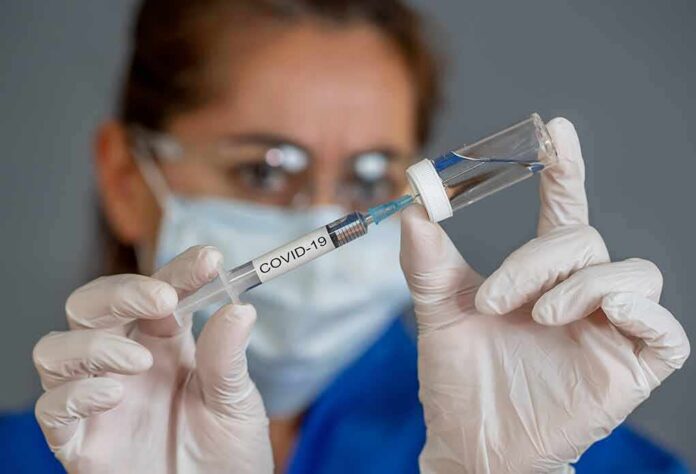
One viral miscarriage claim about the COVID-19 vaccine falls apart under the simplest math, but the larger story is how easily raw pregnancy counts can be turned into fear.
Story Snapshot
- Pfizer trial-era pregnancy data were cited as showing 28 miscarriages among 270 reported pregnancies, which some posts framed as a 10.4 percent rate.
- Public Health Collaborative says that figure came from pregnancies already in progress, not a trial built to measure miscarriage risk.
- Large cohort studies and meta-analyses found no increased miscarriage risk after COVID-19 vaccination.
- One adverse-event study found a reporting signal, but that is not the same as proof of causation.
Why the Pfizer Number Misled So Many People
The Pfizer pregnancy figure gained traction because it looked simple and alarming. But the trial did not enroll pregnant people at the start, and many pregnancies were only discovered later. That matters because miscarriage risk depends on how early a pregnancy is counted and what denominator is used. A raw count can sound like a rate, even when it is not built to answer that question.
Fact-checkers said the widely shared math was wrong for another reason too. They noted that some online claims mixed up unique cases, repeated entries, and incomplete pregnancy lists. Public Health Collaborative also said the 10.4 percent figure was within the normal miscarriage range. Taken together, the record shows why a small dataset can produce a big headline without proving a vaccine danger.
What the Stronger Studies Found
The best available cohort and review studies in the research package point the other way. A matched cohort study in Scotland found no association between vaccination and miscarriage, with an adjusted odds ratio of 1.02. A systematic review and meta-analysis found a pooled miscarriage rate of 9 percent and a risk ratio of 1.07, which is consistent with no added risk. A prospective cohort study also found no increased risk before conception.
Other studies reached the same general result. A PubMed-indexed study reported no association for vaccination during pregnancy, with an adjusted hazard ratio of 1.29 and confidence limits that crossed no effect. Yale Medicine and the Centers for Disease Control and Prevention both summarize the broader evidence as showing no increased miscarriage risk. That does not mean every analysis is identical, but it does show where the scientific center of gravity sits.
Where the Debate Still Comes From
Some dissenting arguments lean on signal detection rather than direct measurement. One Human Reproduction paper reported a higher adverse-event reporting ratio for miscarriage after COVID-19 vaccination compared with influenza vaccination. That is a real signal in a reporting database, but it is not the same as proving a true increase in miscarriage incidence. Reporting systems can be shaped by publicity, attention, and how cases are entered. That is why epidemiologists treat them as early warnings, not final answers.
The claim that the COVID-19 vaccine has an 82% miscarriage rate is a long-debunked mathematical error caused by misinterpreting preliminary data.
— Steve Cox (@SteveCox439959) August 11, 2026
The debate also shows a deeper problem in public health communication. When institutions speak in broad safety claims, they can flatten real questions about timing, denominators, and how early pregnancies were counted. That leaves room for skeptical readers on both the left and the right to feel that experts are dismissing concerns instead of explaining them. Even so, the current evidence base in this package still points to no increased miscarriage risk from COVID-19 vaccination.
Sources:
pjmedia.com, pmc.ncbi.nlm.nih.gov, nature.com, cidrap.umn.edu, academic.oup.com, sciencedirect.com, cdc.gov, publichealthscotland.scot, pubmed.ncbi.nlm.nih.gov
© patriotpostnews.com 2026. All rights reserved.