

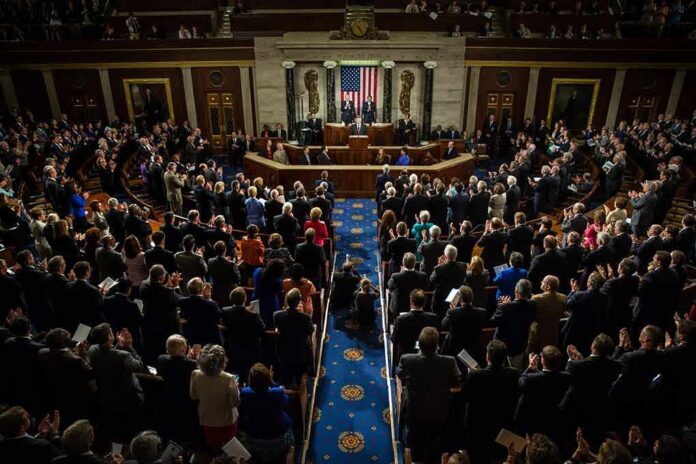
House Speaker Mike Johnson joined a cross-party chorus warning that livestreaming Nidal Hasan’s execution risks turning justice into a spectacle and fueling propaganda.
Story Snapshot
- Speaker Mike Johnson opposed making the execution a public livestream while backing the death sentence.
- Republican critics say broadcasting could aid extremist propaganda or mimic tactics used by jihadists.
- The Pentagon has not detailed what platform or safeguards a stream would use, leaving key rules unclear.
- Homeland Security Secretary Markwayne Mullin and President Trump cite deterrence and viewer choice as reasons to consider a broadcast.
What Johnson And Other Lawmakers Are Saying
House Speaker Mike Johnson voiced opposition to a Pentagon plan to livestream the military execution of Nidal Hasan, the Fort Hood shooter, while not disputing the sentence itself. Several Republicans echoed that line. Senator Thom Tillis called a public stream “beyond disgusting.” Representative Austin Scott said live broadcasts of executions are what jihadists do. These critics argue a stream risks handing extremists the stage they seek and shifts focus away from victims and families.
Democrats and some faith leaders also criticized the idea, using words like “barbaric” and “disgusting.” That reaction shows the pushback is not only from one party. Reporting described a split among Republicans as well, with at least one lawmaker praising the plan. The debate centers on whether visibility deters crime or creates spectacle. That split matters because it undercuts claims of a settled consensus even within the party in power.
The Deterrence Argument From Administration Officials
Homeland Security Secretary Markwayne Mullin argued that viewers could choose not to watch and said he saw no increased risk of radicalization from a stream. Mullin said Americans should see that attacks on the country bring serious consequences. President Trump said he had weighed both options and suggested that showing the execution might deter others from carrying out similar attacks. Defense Secretary Pete Hegseth has emphasized conveying that “serious consequences” follow such crimes.
Supporters of a stream frame it as transparency and a firm warning to would-be attackers. They reject the “martyrdom” concern, saying a public record enforces accountability rather than glorifying the criminal. Critics counter that the propaganda claim should be weighed with caution, but they argue common sense says extremists use violent images to recruit. The public record so far shows no cited threat assessment proving either side’s predictions about risk or deterrence.
Unanswered Questions About Law And Procedure
A Pentagon spokesperson reportedly confirmed plans to livestream but did not name the platform or explain access controls. That leaves major gaps. Who can watch? How will minors be kept out? Will media be allowed to record, or will redistribution be blocked? Military executions have long used controlled witness lists, unlike open broadcasts. Recent court fights over state executions show rules vary and courts have not set a clear, nationwide right for the public or press to view every phase live.
⛪ U.S. Military Archbishop Condemns Pentagon Plan to Livestream Nidal Hasan’s Execution
🔴 Archbishop Condemns Public Execution: Archbishop Timothy Broglio, who oversees Catholic pastoral services for U.S. military personnel, has strongly condemned the Pentagon’s proposal to…
— Washington Report (@Washington_Rep) October 12, 2026
This dispute fits a long history. The United States moved away from public executions in the last century because crowds and spectacle clashed with dignity and order. Today, many states allow only a small pool of witnesses and select reporters. Even then, access often starts after the condemned is restrained. The Hasan plan breaks from that pattern. It pushes the line from limited accountability toward mass display, with untested effects on victims, the public, and security.
Why This Matters Beyond One Case
Americans across the spectrum worry that elites play politics while real problems go unsolved. This fight taps those fears. On one side, leaders promise tough justice and deterrence through public display. On the other, lawmakers warn the government is chasing clicks and risking propaganda instead of doing careful, victim-centered justice. Both concerns ask the same question: does the system serve people, or does it serve itself? Clear rules and evidence should guide this, not theater.
Sources:
cbsnews.com, thehill.com, aljazeera.com, washingtonexaminer.com, huffpost.com, newsweek.com, deathpenaltyinfo.org
© patriotpostnews.com 2026. All rights reserved.