
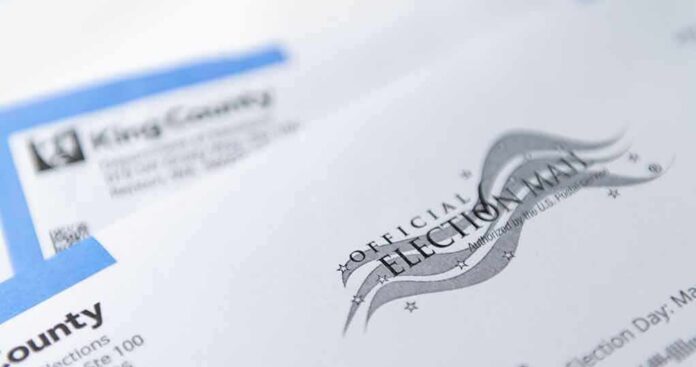
The Justice Department asked a federal appeals court to step in before California counts ballots tied to more than 20,000 voters it says are likely noncitizens, escalating a clash over how to protect elections without trampling voting rights.
Story Snapshot
- Justice Department identified over 20,000 California voters as likely noncitizens and sought ballot safeguards.
- Federal plan would set aside ballots linked to the list until citizenship is confirmed, not reject them outright.
- California officials said the government has not provided proof or methods and warned of voter disenfranchisement.
- Justice Department appealed after a self-set deadline passed, arguing the lack of a ruling was a constructive denial.
What the Justice Department Asked the Courts to Do
Justice Department lawyers sued California on October 15 and said they found more than 20,000 likely noncitizens on state voter rolls. They asked courts to block counting of any ballot tied to those names until each person’s citizenship is confirmed. They said this remedy protects ballot secrecy, because mistakes cannot be fixed after votes are mixed in with others. They filed an emergency appeal days later to move faster as ballots come in.
On appeal, the department argued that the district judge did not meet a noon deadline the department set for a ruling. It claimed that silence had the practical effect of a denial and asked the United States Court of Appeals for the Ninth Circuit to order California to sequester ballots now. The appeal seeks action before tabulation begins, to avoid counting ballots that could later be found unlawful, which cannot be untangled after the count.
How California Responded and Why It Matters
California officials, including Secretary of State Shirley Weber and Los Angeles County’s election chief, pushed back. They said the federal government has not shown proof that the listed people are noncitizens or that any cast an unlawful ballot. They also said the government has not provided the data or methods used to build the list. They argued they cannot lawfully withhold or refuse to count ballots based only on unverified claims so close to an election.
State officials warned that treating the listed voters as ineligible unless they prove eligibility would be an unprecedented suspension of voting rights. They said the requested changes could violate election law and would be unworkable at this late stage. Local election officials said early checks suggest the list may include United States-born citizens, showing the risk of false matches. California has asked the court to dismiss the case for lack of proof that any illegal ballot exists.
The Core Tension: Security, Speed, and Voter Rights
The fight turns on a simple but hard problem. If officials count a ballot that should not count, they cannot pull it back later. But if they set aside ballots based on a suspect list, they could delay or deny lawful votes. The Justice Department says setting ballots aside protects the count while checks proceed. California says the list is not verified and that mass segregation would disenfranchise voters without due process.
California got a federal list of 20,000 confirmed non-citizens who were mailed live ballots this month. Their answer: no thanks, we’d rather count them.
USCIS and Homeland Security Investigations reviewed every name. Bill Essayli says 20,000 is the floor. A July DHS letter… pic.twitter.com/WardgQ9mw7
— GRANDPA’s FREE ADVICE (@GOP_is_Gutless) October 23, 2026
The appeal also raises a process question that could shape future election cases. The Justice Department asked the appeals court to treat the trial court’s silence as a “constructive denial.” That is unusual. Reported accounts note it is unclear whether the Ninth Circuit will accept that move. If the court rejects it, the case may slow down at a moment when speed is the main point of the government’s request.
What We Know, What We Do Not, and Why People Across the Spectrum Care
The record shows a federal list of more than 20,000 suspected noncitizens and a plan to hold related ballots until checked. It also shows that California has not received the underlying data and says it cannot verify the list. There is no public proof that any specific unlawful ballot has been returned or counted. There is also no final court finding that California broke federal election law. The case is still in the emergency stage.
Voters on the right see a system that mails ballots broadly and fails to verify citizenship fast enough. Voters on the left see a rush that could sideline lawful voters based on opaque data. Many Americans, regardless of party, see agencies and courts that move slow, fight turf wars, and sometimes dodge clear answers. This dispute hits that nerve. It asks whether institutions can act with speed, accuracy, and fairness when trust is already thin.
What to Watch Next
Watch for whether the appeals court accepts jurisdiction and orders any ballot segregation. Look for any release of matching methods, error rates, and sample checks of the list. Track county reports on how many people on the list actually returned ballots and whether signatures and citizenship can be confirmed before canvass deadlines. Those concrete numbers, not claims, will show the real scope of risk and the real risk of wrongful disenfranchisement.
Sources:
zerohedge.com, washingtontimes.com, thehill.com, yahoo.com, washingtonpost.com, valawyersweekly.com, democracydocket.com
© patriotpostnews.com 2026. All rights reserved.