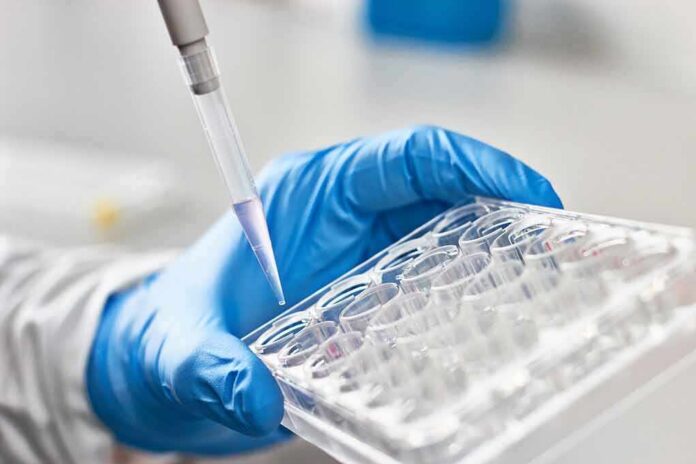
CRISPR-armed phages have moved from lab promise to a real human case, but the strongest data still stop short of proving broad cure power.
Quick Take
- A new report says an engineered phage cocktail helped a man with a severe antibiotic-resistant E. coli infection improve.
- The same platform, SNIPR001, already showed targeted activity in mice and minipigs and reduced gut E. coli in early studies.
- The first human trial was phase 1, so it mainly tested safety and early biological effect, not full treatment success.
- The evidence base is encouraging, but it remains mostly preclinical and still leaves key questions about durability, resistance, and real-world use.
A Severe Infection Draws Attention
New Scientist reports that a man with a very serious antibiotic-resistant E. coli infection improved after treatment with bacteriophages armed with CRISPR systems. The report places the case in a fast-moving field that is trying to turn virus-like particles into precise bacterial weapons. That makes the story more than a medical curiosity. It shows how far researchers have pushed a once niche idea toward patient care.
The treatment center of gravity is SNIPR001, a cocktail of four engineered phages built to target a wide range of E. coli strains. The original study says researchers screened 162 wild-type phages and chose candidates with broad coverage and complementary receptor binding. In mice and minipigs, the engineered phages lowered gut E. coli burden and were well tolerated, which helps explain why the platform drew attention beyond the lab.
What the Research Actually Shows
The strongest scientific claim is not that CRISPR-phage therapy is proven, but that it can hit the right bacteria with useful precision. The Nature study reports that the engineered cocktail reduced the rise of phage-tolerant E. coli and outcompeted ancestral wild-type phages in coculture. That matters because resistance can quickly wreck simpler phage approaches. It also suggests the CRISPR payload adds a second layer of pressure on the bacteria.
Other reviews point to a wider pattern. Phage-delivered CRISPR systems have shown strong results against resistant bacteria in in vitro tests, mouse models, and gut microbiome proof-of-concept work. Some studies describe selective strain targeting, while others show that phage-CRISPR tools can resensitize bacteria to antibiotics. Even so, those findings remain early-stage and do not yet amount to broad clinical proof across different infection sites.
Why the Human Data Still Matters Most
The human evidence in the provided material is limited. CIDRAP says a phase 1 SNIPR001 study in 36 people was designed to test safety and pharmacodynamics, and that oral dosing was well tolerated with only mild to moderate side effects. It also says gut E. coli levels fell numerically. That is promising, but it is not the same as showing cure, relapse prevention, or better outcomes in patients with active infection.
That gap is where the public debate will stay for now. Supporters can point to targeted action, reduced bacterial burden, and a first human signal. Skeptics can fairly note that the evidence still leans on animals, lab systems, and a small early-stage trial. Both views can be true at once. The technology looks real, but routine medical use still depends on larger trials that prove it works, lasts, and can be made reliably.
What Comes Next for CRISPR-Phage Therapy
The next test is not hype, but hard clinical measurement. Researchers need randomized trials in patients with confirmed resistant E. coli infections, clear treatment endpoints, and follow-up that tracks relapse and resistance. They also need head-to-head comparisons with standard therapy and fuller data on microbiome impact. Until then, CRISPR-armed phages remain one of the most promising tools in the superbug fight, but not a finished answer.
Sources:
newscientist.com, pmc.ncbi.nlm.nih.gov, crisprmedicinenews.com, cidrap.umn.edu, pubmed.ncbi.nlm.nih.gov, sciepublish.com, pnas.org, journals.plos.org, cell.com
© patriotpostnews.com 2026. All rights reserved.