President Trump said he will soon declare the Strait of Hormuz a U.S. territory, turning a naval standoff into a test of law and power.
Story Snapshot
- Trump says the United States has “total control” of the Strait and may “keep it”.
- International law experts say no country can claim the Strait as its territory.
- Iran rejects U.S. control claims and disputes the legal basis for any takeover.
- Global energy and shipping face new risk if words harden into policy.
What Trump Said and Why It Matters
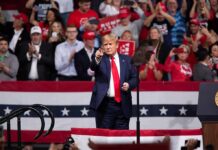
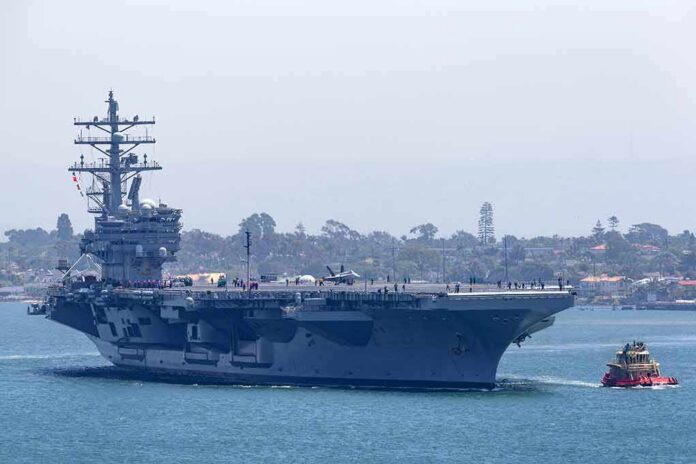
President Trump said the United States has “total control” of the Strait of Hormuz and suggested the country might “keep it,” calling a U.S. naval blockade a “wall of steel”. He also said he will “pretty soon” declare the strait U.S. territory, tying that to defeating Iran. These are sweeping claims. They signal resolve to his base and aim to project strength abroad. They also raise hard questions about what U.S. policy is, and where the legal lines are.
Trump’s phrasing blends military control with sovereign ownership. Control can be a fact on the water for a time. Ownership is a legal status. Declaring a busy global chokepoint to be U.S. territory would challenge decades of maritime rules. It would also invite pushback from allies who depend on steady oil flows and from rivals who watch for any chance to rewrite the map by force.
What the Law Says About the Strait
The Associated Press reports that under the United Nations Convention on the Law of the Sea, no country can claim international waters, and ships enjoy passage rights through international straits. Legal scholars add that Hormuz is an international strait overlapped by Iranian and Omani territorial seas, where transit or innocent passage applies, not exclusive ownership by a third state. In short, experts say no nation can simply declare the whole strait its sovereign territory.
Iran disputes U.S. claims of “total control” and asserts authority within its territorial sea. A recent Reuters report described international guidance urging states not to accept Iranian sovereignty claims over the entire strait and not to recognize efforts to close or obstruct transit there. That stance protects global shipping. It also shows the core tension: coastal states claim security powers, while most nations defend navigation rights. Neither side’s view supports U.S. territorial ownership of Hormuz.
Geopolitical Stakes for Energy and Trade
The Strait of Hormuz carries a large share of the world’s seaborne oil and liquefied natural gas. Any hint of blockade, closure, or a claim of annexation rattles energy markets and insurance pricing. Even small delays raise costs that hit families through higher gas and heating bills. When leaders talk about “keeping” a chokepoint, shippers hedge routes, premiums rise, and smaller firms get squeezed first. That is how far-off crisis talk turns into higher prices at home.
All sides know this leverage. Trump’s strong language raises pressure on Iran and signals resolve to voters who want decisive action and cheaper energy. Iran’s rejection seeks to preserve dignity and bargaining power near its shores. But the world pays when this duel escalates. The people least connected to the decision makers—the middle class and working poor—take the first punch from price spikes and supply shocks.
Why Both Sides of America Are Worried
Conservatives hear “we own it” and think deterrence, lower energy costs, and secure lanes. Liberals hear the same line and worry about endless war, mission creep, and the rule of law. Both hear the grind of a machine that rarely listens. Many feel elites make the calls while regular people cover the bill. If Washington turns a crisis into a victory lap while prices climb, frustration with the federal government’s priorities will deepen on both the right and the left.
Trump says US will claim Strait of Hormuz after Iran war https://t.co/hEFfVSrSfx
— Matt Clarke 🔴⚪🇻🇦🦅🇹🇷🇸🇦 (@sophianictract) August 15, 2026
Hard facts still matter. Reuters quotes Trump’s claim of total control. The Associated Press explains why international law does not allow one country to own the strait. Legal commentary shows Hormuz is an international strait, not “free real estate” for any power. If policy follows the podium, the courts of world opinion, allied cabinets, and oil markets will respond fast. Clear goals, clear limits, and clear respect for law are the only way to avoid a costly spiral.
Sources:
feedpress.me, cnbc.com, reuters.com, wsj.com
© patriotpostnews.com 2026. All rights reserved.